Refugees, Rockets and Rumours. Stories from the Borderlands.
In Mae Sot, a dusty Thai border town pressed against one of the world’s most overlooked conflicts, Evie Jones, a young university student, worked alongside aid staff supporting Burmese refugees and communities displaced by Myanmar’s civil war. What she found was a borderland suspended between danger and hope.
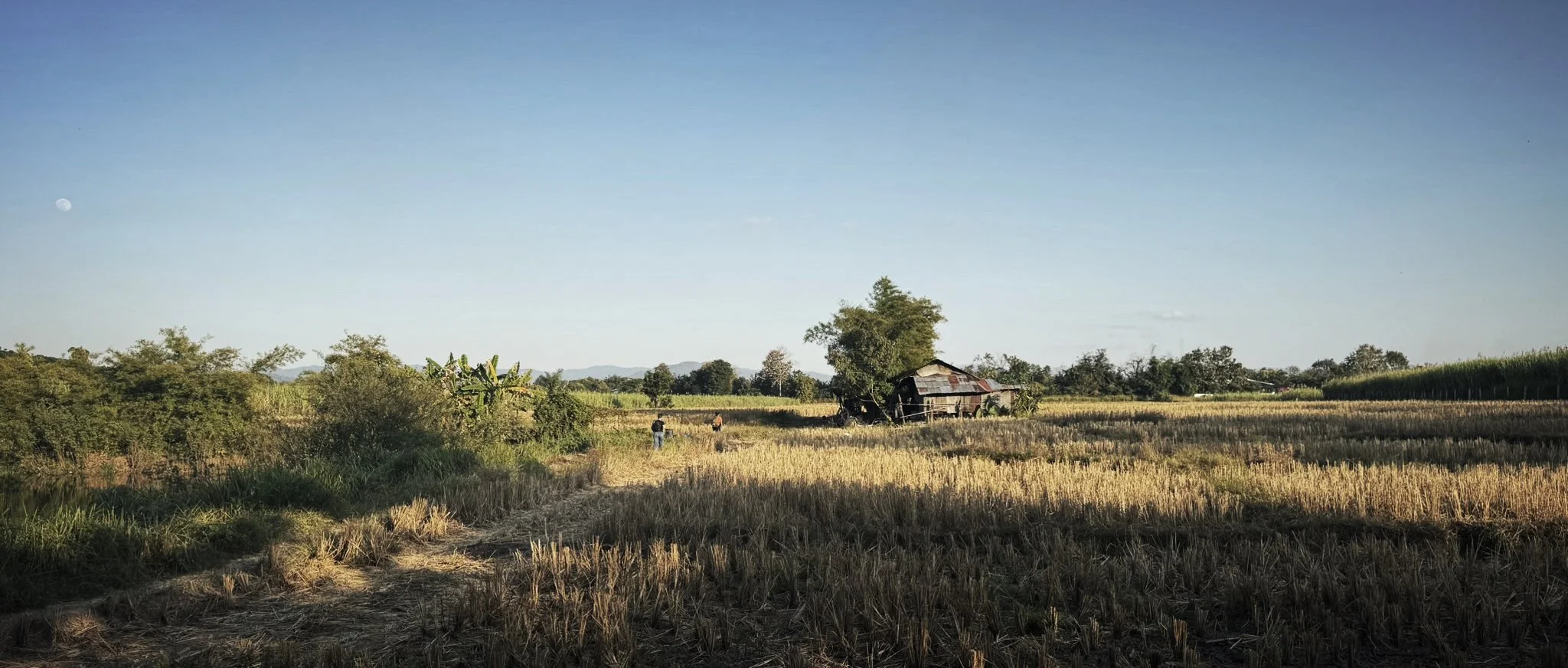
Within a minute's walk from central Mae Sot, rice paddies that have been harvested during the dry season wait to be cultivated for the soon-to-arrive monsoon rains. Photo: Evie Jones
Tun’s family and friends thought he was dead.
“Somehow, I just woke up… next to a freshly dug grave. It was some sort of fate,” says the 27-year-old law student turned resistance fighter as he sits in a wheelchair on the Thai–Myanmar border, waiting to be fitted with a prosthetic arm and a protective plate to cover the part of his missing skull. “I was alive,” Tun frowns, looking down at his missing arm. “But I never imagined ending up like this.”
Once a university student, Tun’s life took a drastic turn as he became a commander in Myanmar’s People’s Defence Force – one of thousands of young students who traded classrooms for conflict after the military seized power in 2021. “I fight for democracy,” he tells me. “I fight for my people. I fight because the military is evil.”
Myanmar has been in turmoil since February 2021, when the military Tatmadaw overthrew the democratically elected government of Aung San Suu Kyi.
Since the coup, the country has spiralled into a nationwide civil war. Armed Conflict Location and Event Data (ACLED), a conflict monitoring organisation – estimates as of 2026 – 93,000 people have been killed and more than three million displaced. According to Human Rights Watch, entire villages have been burned, airstrikes have targeted civilian areas, and millions now rely on humanitarian assistance.
Yet despite the scale of the crisis, the conflict receives limited international attention. With homes destroyed and lives under constant threat, many civilians have little choice but to flee. Some escape to neighbouring Thailand, crossing the Moei River, ending up in border towns like Mae Sot.
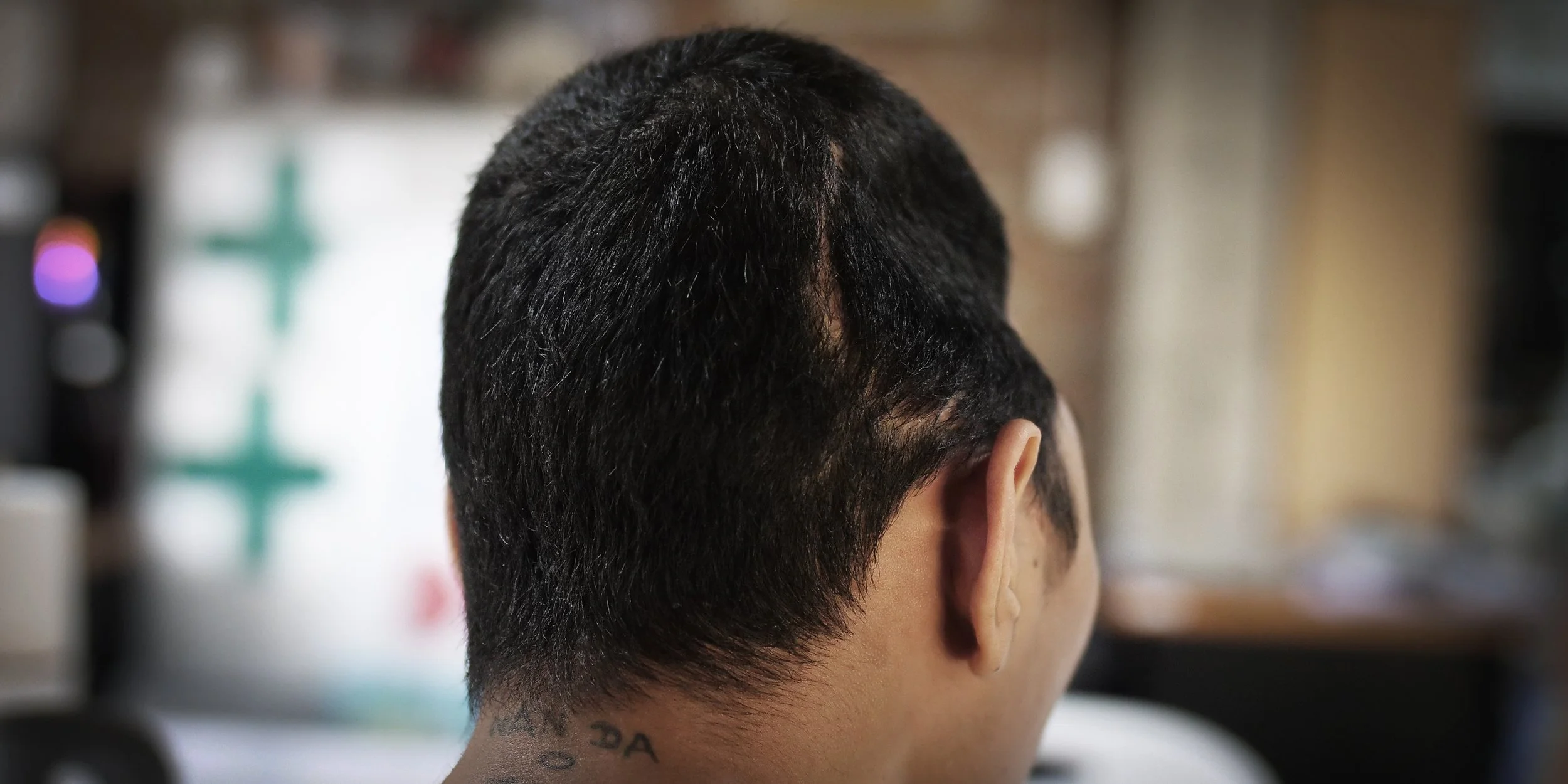
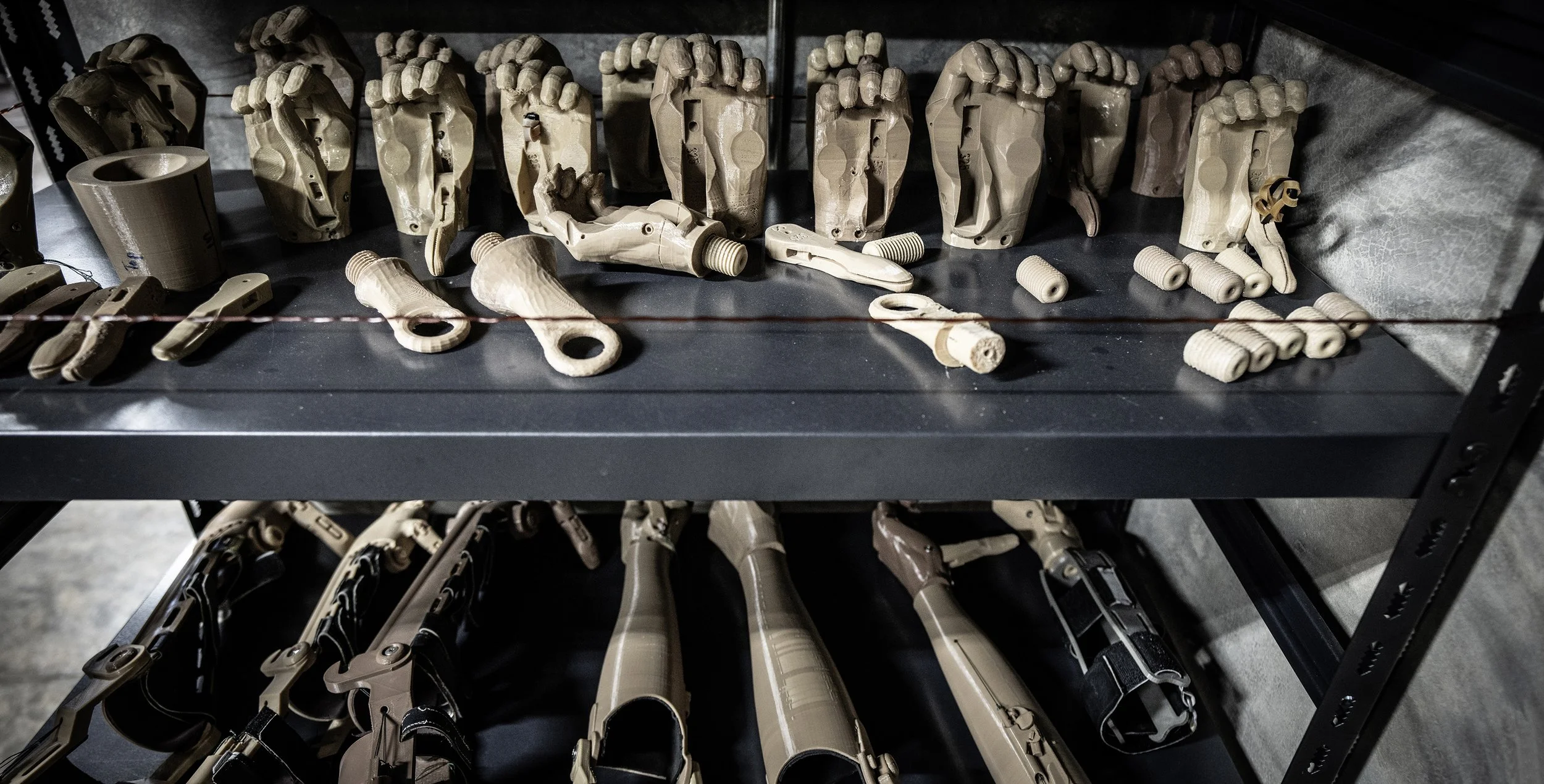
Tun, an ex-commander in Myanmar’s People’s Defence Force, waits to be fitted with a 3D printed prosthetic arm, along with a protective plate to cover part of his missing skull. Photos: Evie Jones.
Living on the Frontline of Someone Else’s War.
Mae Sot is a bustling Thai border town set against the Moei River – a narrow stretch of brown water that separates relative safety from an active war zone.
I had come here as a university student, trading beaches and summer holidays for a three-month placement with an aid organisation working along the Thailand–Myanmar border. Back home, my friends were filling their calendars with music festivals, road trips and late afternoons at the pub. My world, suddenly, was checkpoints, border crossings and a crash course in the realities of conflict and survival.
Based in Mae Sot for the last 25 years, is Australian writer and journalist Phil Thornton. He is more than familiar with the Thailand-Myanmar border and the everyday goings-on in the small, busy border town. “On one side you have Thailand – imperfect, but safe, on the other side, you have war and chaos.” Explains Thornton.
The author of such books as Restless Souls: Rebels, Refugees, Medics and Misfits on the Thai-Burma Border has seen and heard about countless struggles for the people fleeing Myanmar. “The river that Mae Sot is settled on marks the point between justice and injustice, freedom of speech, and persecution, torture, hunger, poverty, disease and imprisonment. For many people, crossing the river is the only chance they have for a future, yet for those caught in the crossfire along the border, it can also mean death.”
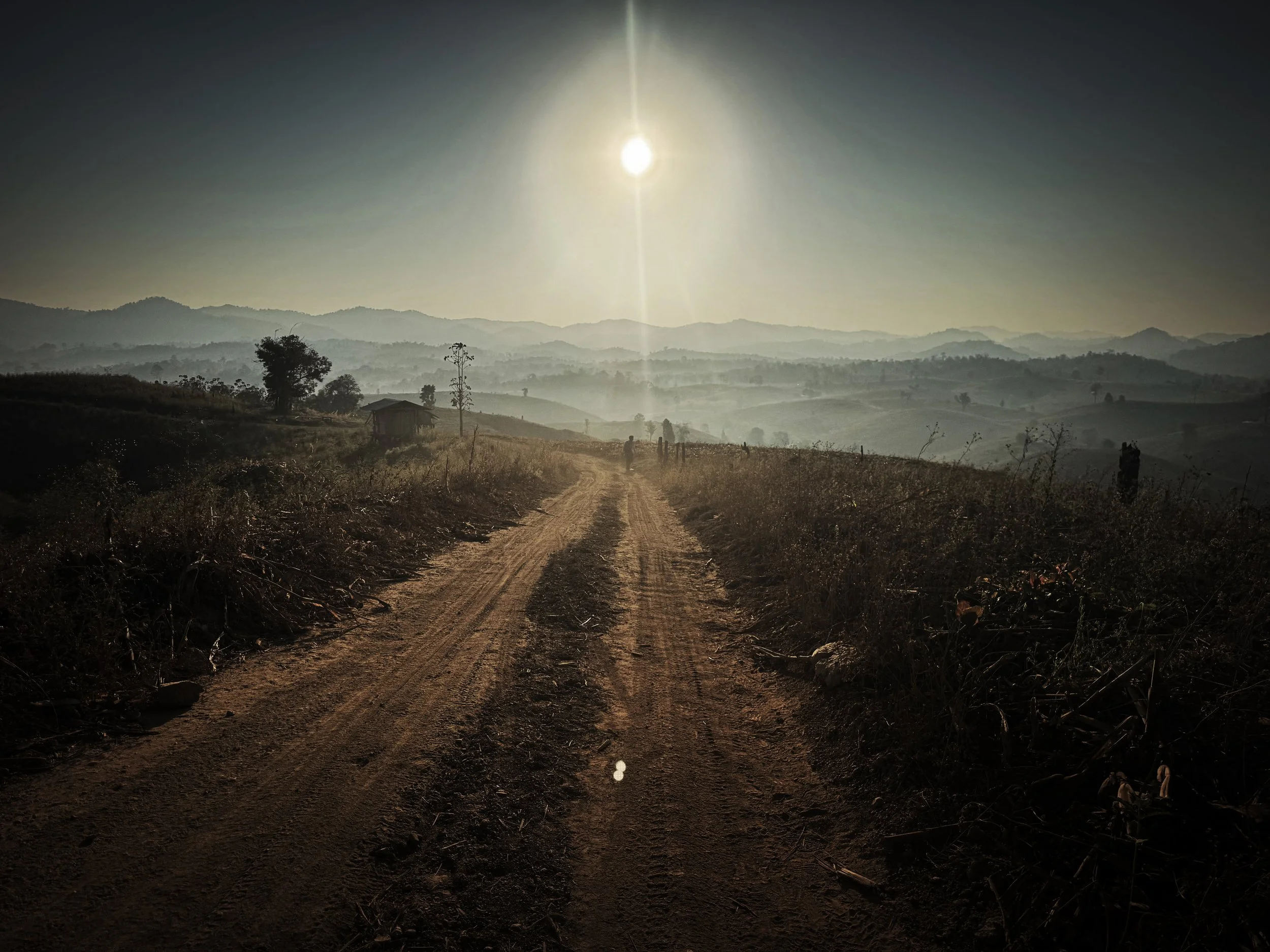
On the outskirts of Mae Sot, Thailand. One of many dirt roads that leads to the Myanmar border. Photo: Evie Jones.
Between Peace and Panic.
Mae La refugee camp sits just over sixty kilometres from Mae Sot. Many Burmese, crossing the border in search of a new life, will eventually end up in Mae La. The journey to the refugee camp consists of potholed roads crowded with motorbikes, utes and overloaded trucks carrying people and goods to unknown destinations. Every fifteen minutes or so, our vehicle slows to a stop.
The zig-zagged, red-and-white barriers marked Thai military checkpoints. My colleagues –Thai and Burmese – tell me to stay calm, be polite and keep my passport ready. “Documentation, please.” Asks a young Thai soldier as he peers through the car window. Eyeing me up, he seems somewhat shocked. “What are you doing here? Where do you live? Are you from Mae Sot?” He looks somewhat like a very young teenager dressed in military fatigues, complete with an M-16 machine gun. After some polite small talk, he waves us through.
Karen photojournalist, Saw Bway, tells me after we start moving again, the Thai military are looking for undocumented migrants whom they can possibly extort money from or to stop from the human trafficking problem that seems to be forever increasing around the area. With a shrug of the shoulders and a sigh, Saw explains, “for most of us, this becomes normal. Daily interrogation. After a while you stop thinking about it.”
We arrive at Mae La refugee camp as a football match is underway. The pitch is a stretch of orange dirt and rock. Each tackle sends clouds of dust rising into the air. The boundary lines are barely visible, just worn grooves etched into the ground rather than painted markings. The gathered crowd is a mix of monks in saffron robes, families, and teenagers shouting encouragement from the sidelines. Behind them, the Dawna Ranges rise silently on the Myanmar side of the border. As one soccer fan points out to me, “Close enough to see. But impossible to return to.”
Mae La is home to around 45,000 refugees. It is the largest of nine camps along the Thai–Myanmar border. “And it is running out of food,” according to Kanchana Thornton, director of the aid organisation, Burma Children Medical Fund (BCMF), which provides humanitarian aid to those within the camp.
Due to the U.S. government’s massive cuts to foreign aid and the effective closure of USAID, global health and humanitarian aid have been slashed worldwide. “Before, organisations would provide us with rations at the camp, but they are getting less and less,” a heavily pregnant Naw Wah tells me. Just like her baby will be, Naw Wah was born in the Mae La refugee camp and has survived on International Rescue Committee-supplied food rations for the majority of her life.
“We’ve been told all the food rations will stop soon. I don’t know what we will do.” She says. “Her husband works in a Thai factory,” Kyaw, a local translator who has tagged along with our team, explains. “They get money from family members living in Bangkok… but it is not enough. Especially with a baby coming. Not for living. Not for healthcare.”
As Kyaw shows me around the refugee township if bamboo huts and wooden structures she introduces me to more of the locals, we come across a shared kitchen where food is being prepared. Large pots are precariously balanced over open fires, and a squad of women portion out what little there is. Most people only eat once or twice a day.
“Most of the time we only eat rice and vegetables. Meat is very rare and very expensive,” says Pah Khet, a 50-year-old man who has lived in the camp for nearly twenty years. He survives by weaving bamboo mats and baskets to sell within the camp. As we wander around, everyone I speak with seems to bring up the same thing. Food. Or more like, the lack of it.
An aid worker from BCMF, Bae Pa, tells me the situation is getting worse. Cuts to foreign aid – particularly from Western Nations – are rippling through camps like Mae La. “Ration cards are being phased out. Resettlement pathways are closing, it’s getting grim.”
My aid worker colleague, Kar Fu, who was raised in a refugee camp similar to Mae La just down the river Moei, highlights the false realities of border crossing. “You cross over and enter a camp for temporary refuge. Yet somehow it only feels more permanent. My parents raised me in Umpiem refugee camp and that's been around since 1999!”
Another member of our aid team, Wah Wah, grew up in Mae La but now lives in Mae Sot tells me due the hopelessness of the refugee situation suicides are increasing. “People are sadder now,” she says. “They feel abandoned and can’t see a way out.”
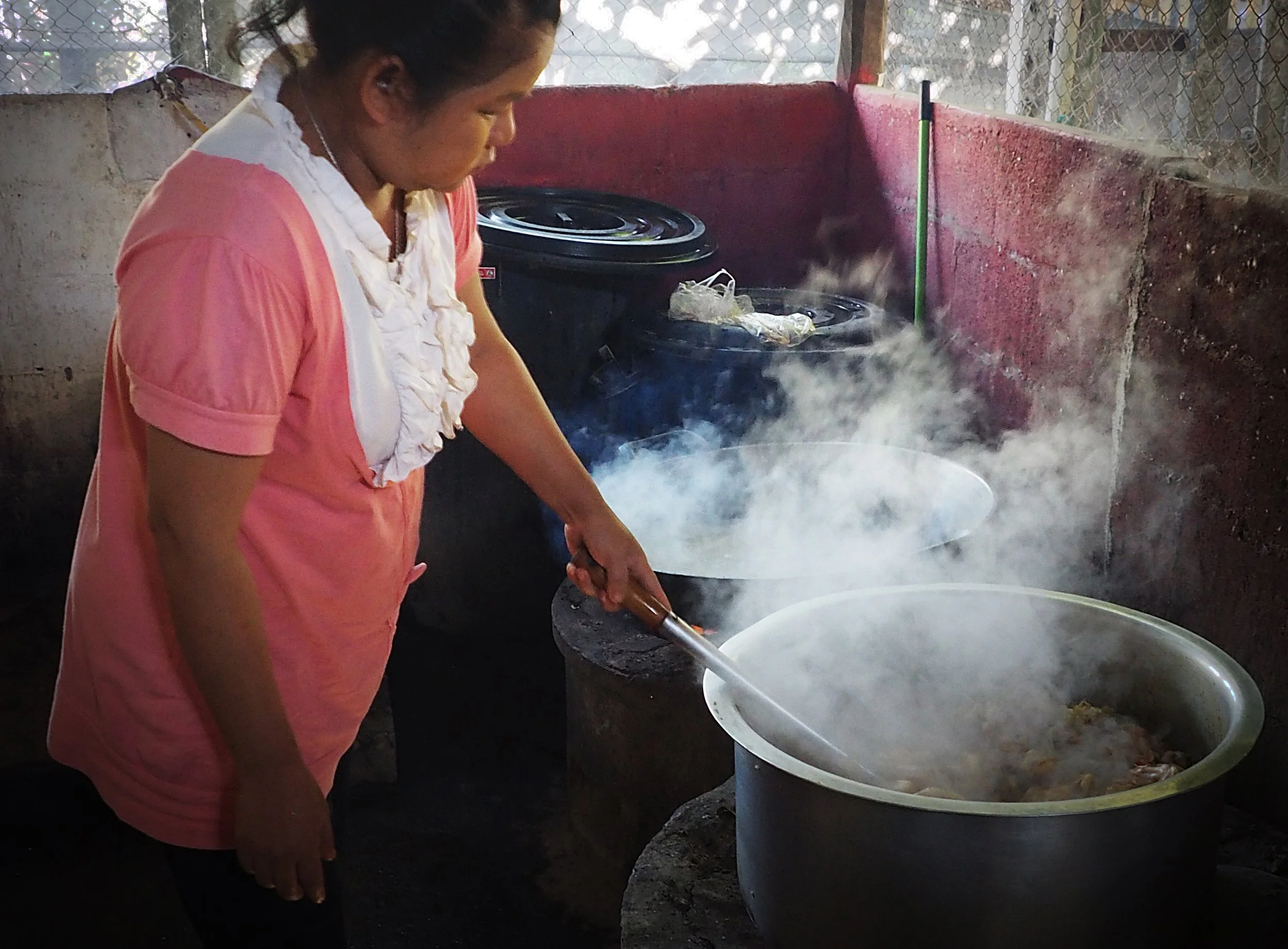
A woman cooks in a communal kitchen in the Mae La refugee camp. Over 45,000 Myanmar refugees live in the small Camp. Photo: Evie Jones.
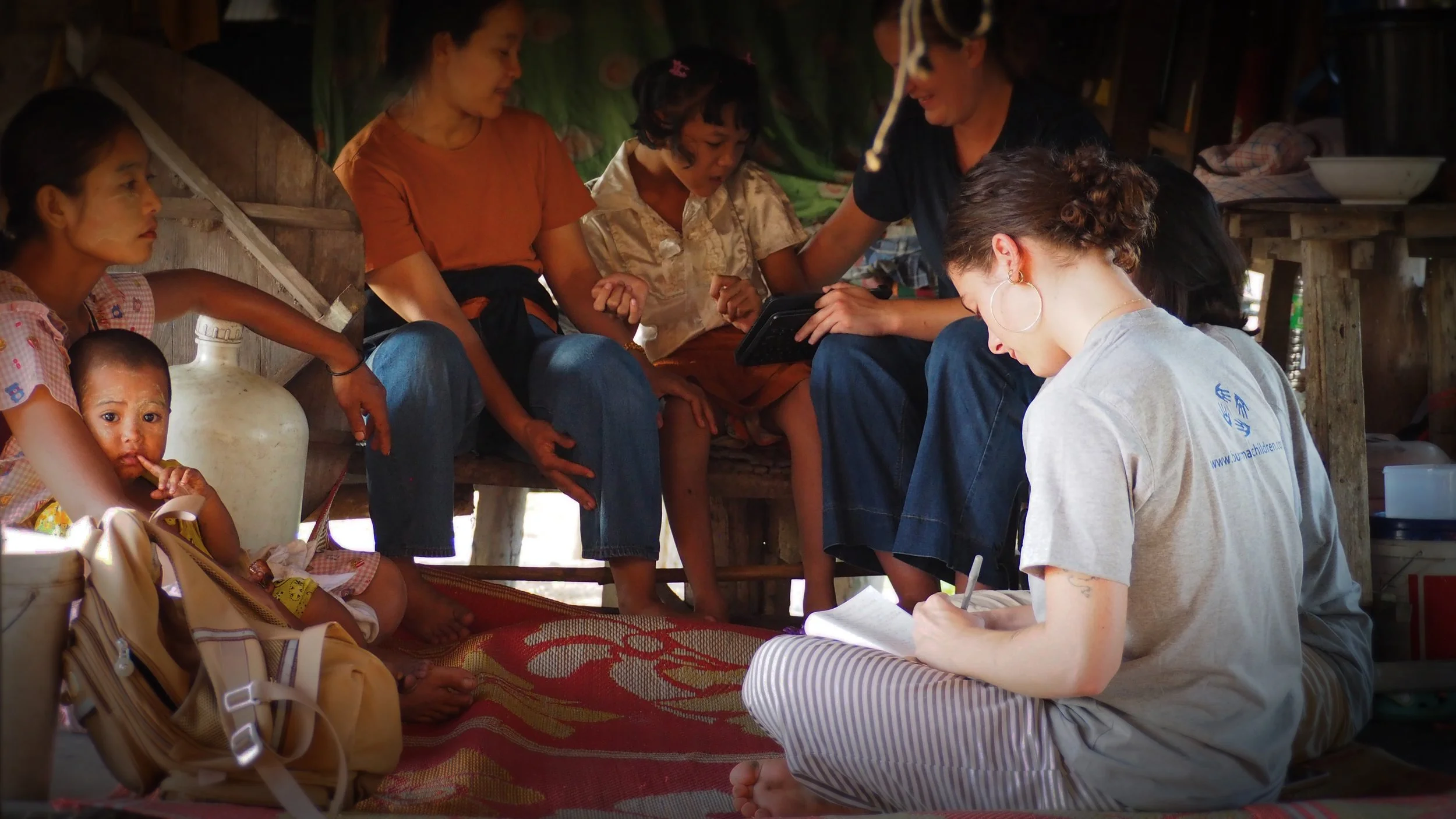
Volunteer intern aid worker, Evie Jones interviews women and their families at the Mae La refugee camp about the pressures of everyday living. Photo: Wah Wah.
The Hidden Costs of a Neighbour’s Civil Conflict.
Back in Mae Sot, crossing borders for survival takes on a different shape. Barbu lights a cigarette with his right hand, steadying the lighter against a prosthetic arm. “The war is like an infection, it is getting out of control,” he says. Just days earlier, two young Burmese men shot and killed a Thai police officer in Mae Sot. Barbu shakes his head.
“They shouldn’t be doing these wrong things just to survive,” he says. “But the young people are desperate. Former soldiers have nothing here and will do anything just to survive.” Barbu understands that better than most. Three years ago, he was testing a grenade launcher for Myanmar’s resistance forces when the grenade accidentally detonated in his hand. The blast took his left arm. “After my arm was amputated, I felt like I was useless,” he tells me. He looks down briefly. “To be honest, I still struggle to accept it.”
Now, he runs a small bakery on the outskirts of town. Pointing his prosthetic limb to the inside of his small shop front, I can see women and men stirring pots over stoves, packaging food and preparing the next order of baked goods, all of whom have missing limbs.
“We make Burmese desserts,” Barbu says. “But it’s not just about profit.” Many of the workers, like Barbu, are former fighters or medics who can no longer return to the frontlines and cannot safely return home. Yet in Thailand, they live in a legal grey zone. Without proper documentation, they risk arrest or deportation.
“We produce energy bars for soldiers,” he explains. “And food for people living in the jungle.” He knows what that life is like. “I’ve been there,” he says. “There is very little food. People cannot cook. When I started this, I wasn’t thinking just about myself, I wanted to share it with others.”
Barbu now trains ex-soldiers in cooking skills, giving them a way to earn money and to rebuild some form of independence. “Helping them gives us all purpose, and it helps me forget my own pain.” He says.
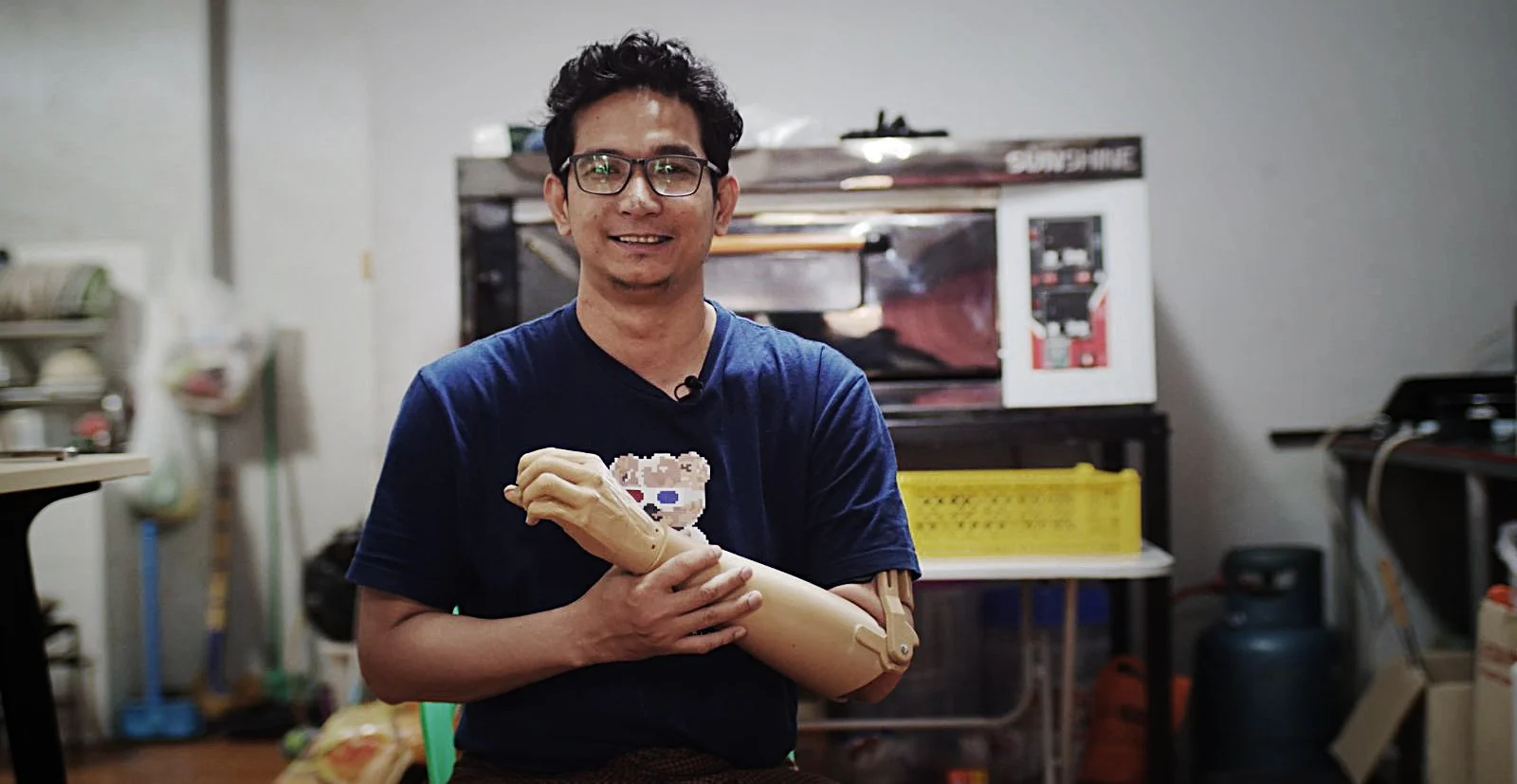
Barbu now trains ex-soldiers in cooking skills, giving them a way to earn money and to rebuild some form of independence. Photo: Evie Jones.
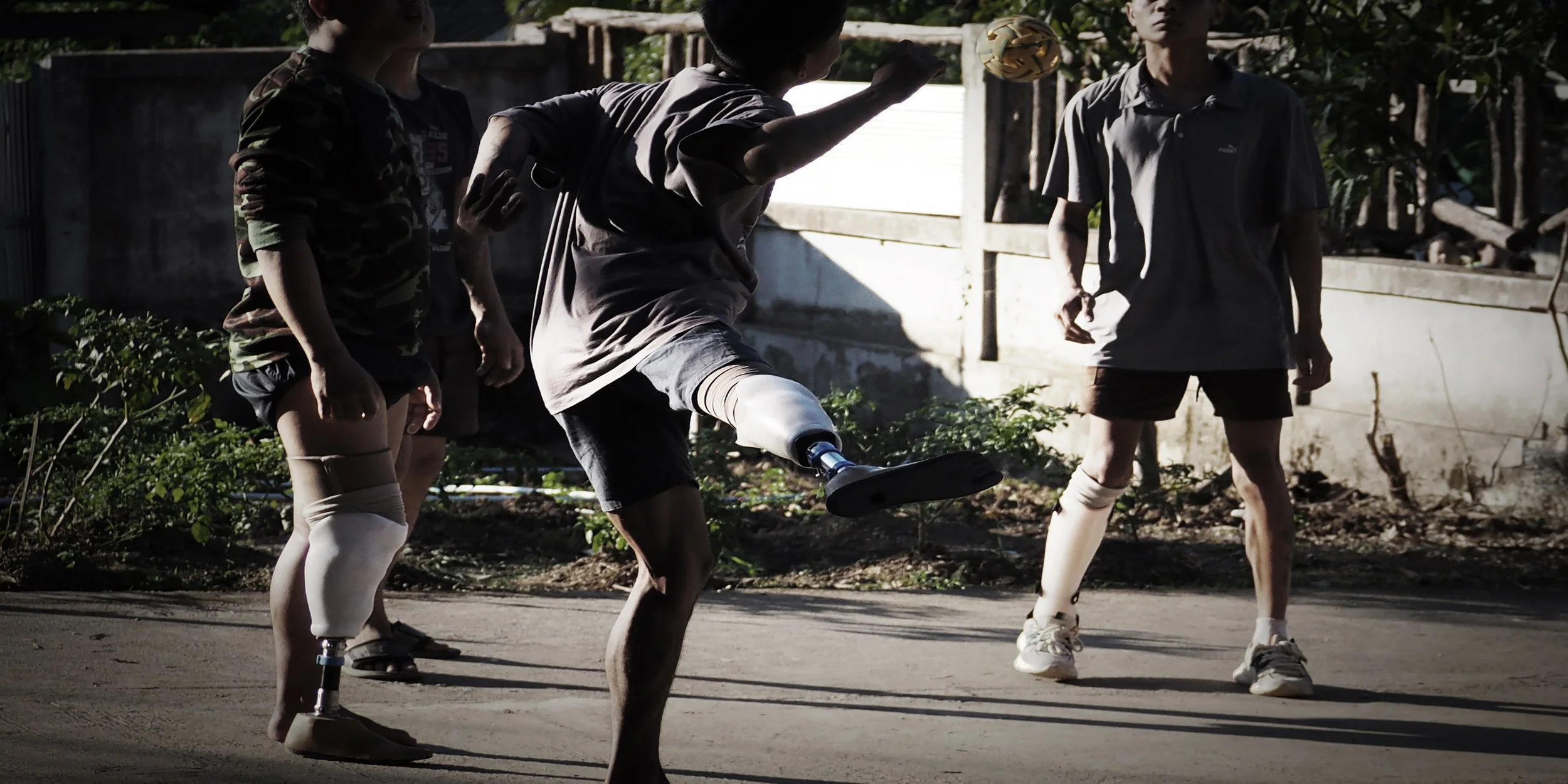
Young men play Sepak Takraw on a local street in Mae Sot. Throughout the town and its district, old wooden houses are safe houses sheltering recovering wounded resistance fighters. Photo: Evie Jones.
How Close Is Too Close? Crossing into Chaos
We gather at a non-descript wooden bridge that stretches across the Moei River — about 25 metres long and two metres wide. It is one of many unofficial crossings used by locals, aid workers and resistance fighters moving quietly between the two countries.
Crossing the other direction into an active war zone, some would say, is insane. My aid team had warned me before we left. “You will stand out immediately,” they said. I ask for advice before I cross myself. “If anything happens, mortars or gunfire, drop to the ground, protect your head, and listen to the doctors, they’ll get you out safely.”
The doctors bringing me across are part of a network of what they call “backpack medics”. They carry as many supplies as they can across the border and into jungle clinics along the frontlines. After passing through the Democratic Karen Buddhist Army post and several landmined paths, we arrived at an undisclosed Internally Displaced Peoples (IDP) camp in Karen State, Myanmar, keeping about 350 people in relative safety.
The camp is makeshift and lined with small bamboo huts. The clothing we have brought is dumped into piles as young resistance fighters immediately begin sorting through it. The moment quickly turns comedic. Within minutes, several of the young men emerge wearing bright dresses and oversized women’s clothing pulled from the donated bags. They strike exaggerated poses, drawing laughter from across the camp. For that brief moment, the war and fighting seem far away.
We are guided to a larger hut that serves as the camp’s church and gathering space. A small, raised stage sits at the front, with several wooden pews lined in rows. Children gather near the stage singing Burmese Christmas carols while camp leaders accompany them with guitar and percussion. Parents and elders watch proudly from the benches. The universality of it makes me smile. Children fidget, giggle, whisper to one another and occasionally forget the words. Not everything has been taken from them by war.
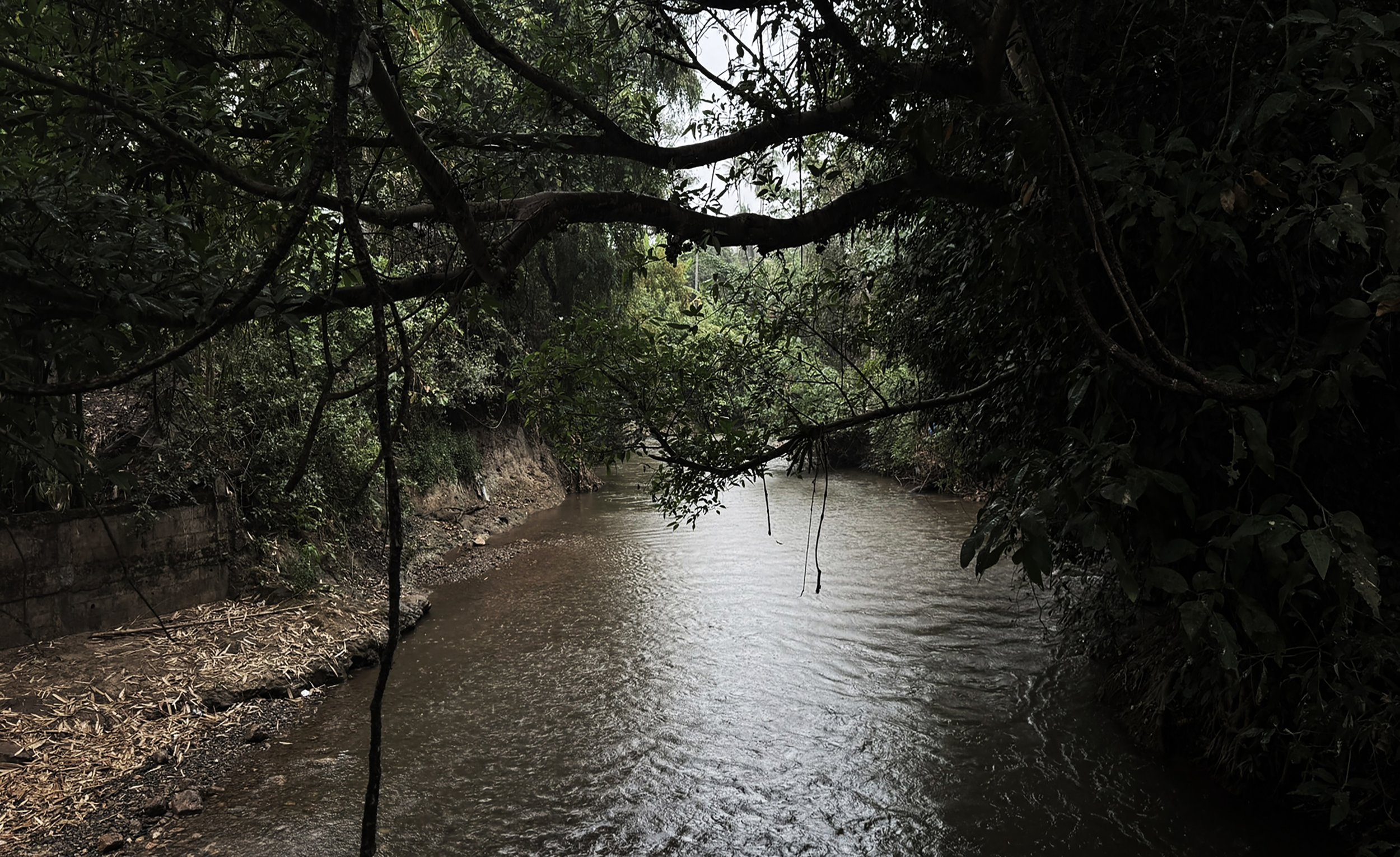
Not every border crossing features razor wire fences, floodlights, and checkpoints. Photo by Evie Jones.
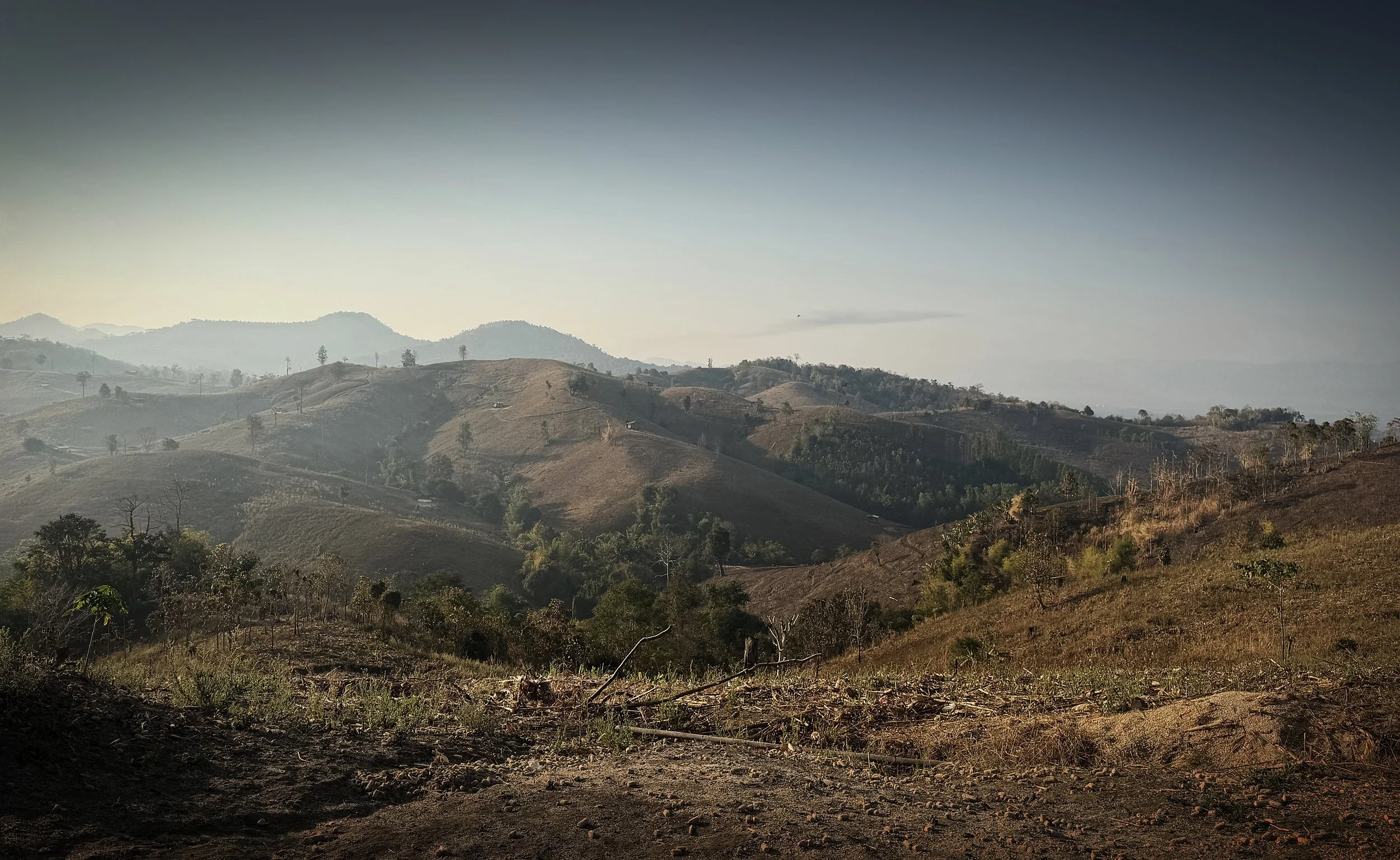
Karen State, Myanmar, where a large number of internally displaced persons (IDP) are camped. Photo: Evie Jones.
From a Noisy Border to a Quiet Country.
Growing up in suburban Australia, war was something distant – something you read about, watched on the news, something that happened somewhere else. In Mae Sot, that distance disappears. It is everywhere. And yet, beyond this narrow stretch of river, much of the world continues to look away. The crisis in Myanmar is often described as a “forgotten war.” But for the people living it, there is no forgetting. Only survival.
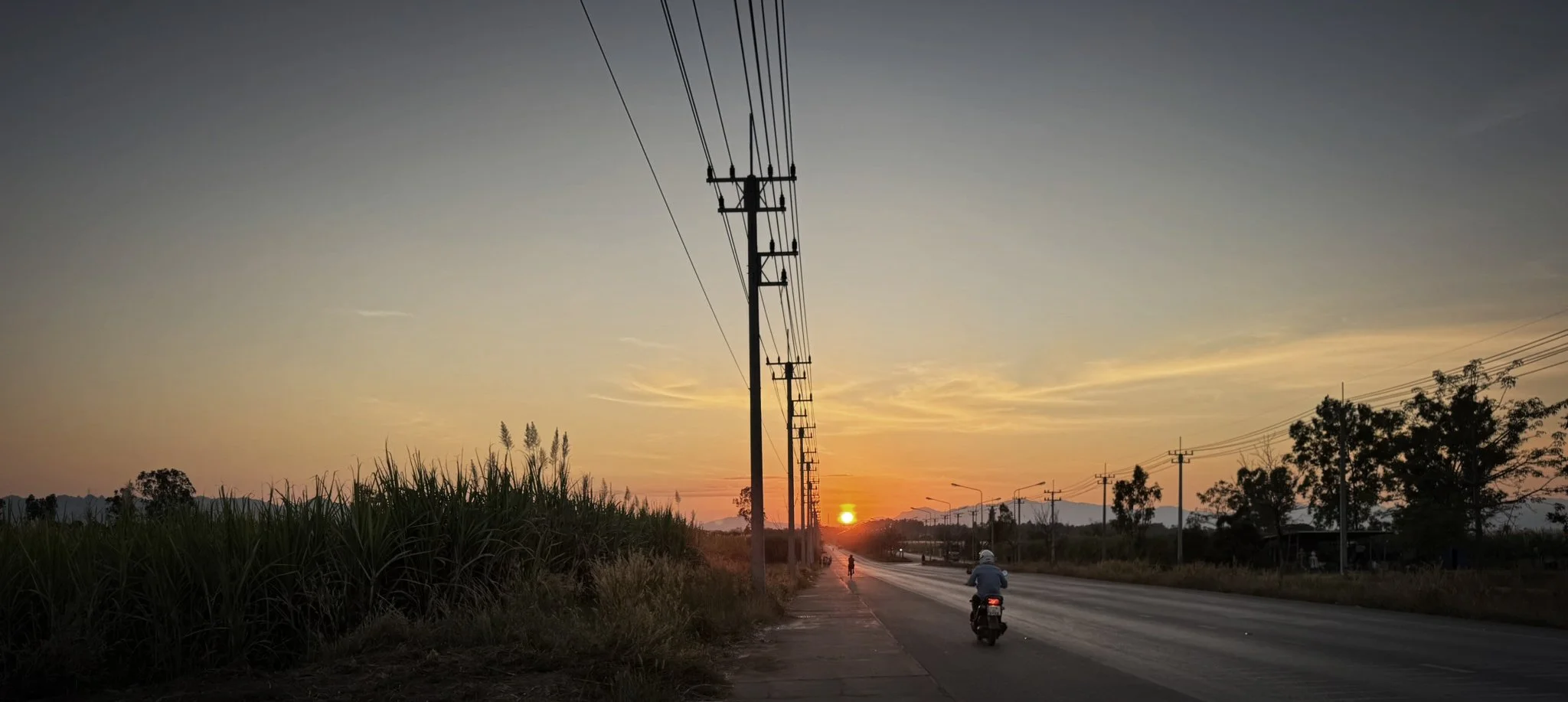
After witnessing such sorrow, such systemic deprivation, such unmitigated wickedness, such diverse iterations of hell, I can only count myself among the most fortunate. Evie Jones.