How did the general public in Sydney respond to the presence of African American soldiers during World War II, and to what extent did their presence challenge dominant racial ideologies in White Australia?
A Research Essay. By Evie Jones.
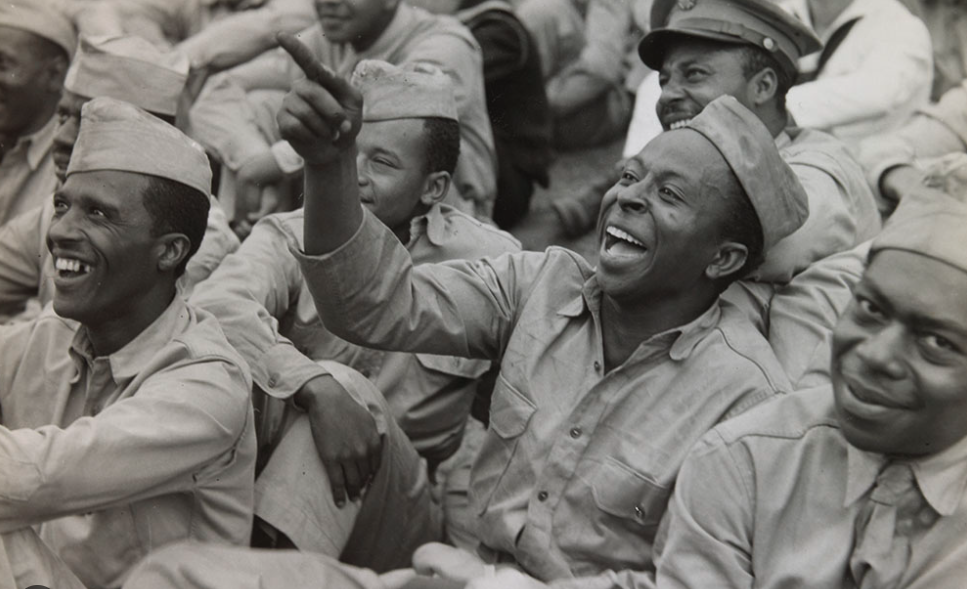
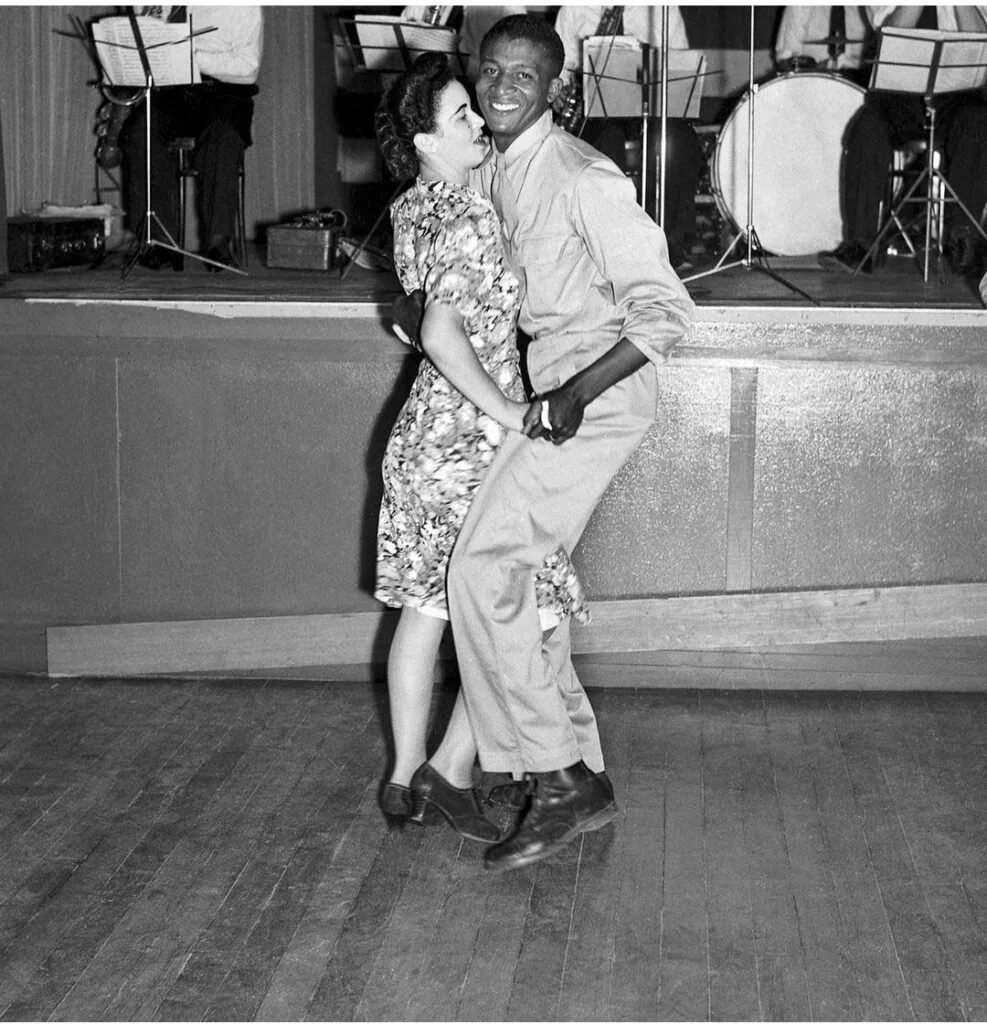
The prevailing social norms that operated within Sydney’s walls were temporarily disrupted during World War II. As American forces, both white and Black, arrived en masse, the visibility of African American soldiers challenged Australia’s racial order. Their presence was one that was politically and ideologically jarring, thus exposing the deep racial contradictions within a country that prided itself on its White Australia Policy. Most oral testimonies regarding the arrival of U.S. troops in Sydney tend to centre on white American servicemen, leaving the complexities of Black soldiers’ reception underexplored. Historians continue to debate how African American troops were perceived. However, what is consistently noted is that their temporary status and American identity played a crucial role in shaping their reception. While their presence occasionally challenged local racial attitudes, these moments ultimately had little lasting impact on dominant racial thinking in Australia. This essay explores how the arrival of African American troops during World War II unsettled, but ultimately reinforced, Australia’s racial boundaries, and how their presence illuminated the enduring logics of settler colonialism and the limits of transnational Black solidarity.
Australia, once considered a distant outpost of the central theatres of World War II, suddenly found itself vulnerable as the war intensified in the Pacific. The February 1942 fall of Singapore and the subsequent bombing of Darwin had shattered the illusion of distance and safety, bringing the war right to Australia’s doorstep, triggering moral panic over the threat of a Japanese invasion. This panic struck at the core of Australia’s national identity, a fear that the foundations of the White Australia Policy would come undone. The White Australia Policy was Australia’s defining nation-building project since Federation in 1901.1 It was a collection of laws and immigration restrictions designed to maintain a racially homogenous white society.2 The Policy was built under global eugenicist thinking and white supremacist ideologies, and effectively limited immigrations of non-Europeans and people of colour, particularly Asians and Pacific Islanders.3 While the policy is most often remembered for its exclusion of non-white migrants, it also underpinned genocidal policies against Aboriginal and Torres Strait Islander people.4 The Policy legitimised exterminationist efforts to “breed out”5 Aboriginal6 identity through forced integration into white society, essentially enacting a calculated and biological erasure, sanctioned under the guise of national progress. Thus, the White Australia Policy was, as many believed, to create a white nation fantasy, an attempt to construct and protect the racial purity of the Anglo-Celtic nation from racial dilution.
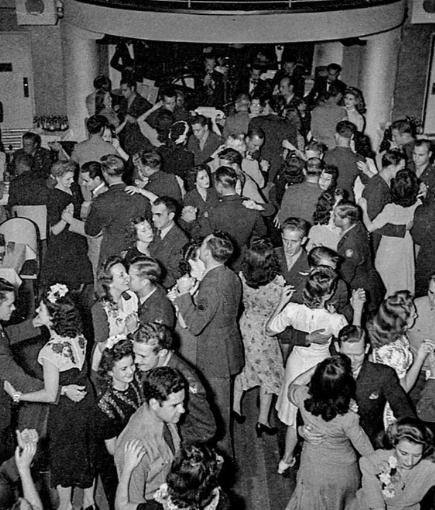
The looming threat of Japanese invasion, however, had thrown this racial fantasy into chaos. The common narrative of the “yellow peril” had caught ablaze, reigniting a long-standing racial fear that Asian populations would overwhelm white nations.7 The threat of Asian populations entering white civilisations amplified national anxieties; thus, as “a signal of white solidarity”,8 historian Hardy explains, Australia turned to its wartime ally, the United States. Prime Minister John Curtin published in December 1941, “I make it quite clear that Australia looks to America”.9 Australia’s shores bear the arrival of mass reinforcement troops, establishing major military bases in Sydney and across the eastern seaboard. Their arrival was widely celebrated and warmly received. The public press went so far as to hail the arrival of General Douglas MacArthur as “the best news Australians have had for many a day.”10 The Bulletin went further, asserting that the Americans had taken on “the responsibility of saving [Australia] as a free white English-speaking nation.”11 It was clear that the arrival of the American allies was not simply a relief in relation to military survival, but one of racial preservation. Bob Bahnsen, a Sydney machinist, epitomises this relief by expressing, “without the Americans a whole generation of Australian-born people… would have been half-caste Japanese... and you can imagine how that traumatised the entire Australian population.”12 The arrival of American soldiers was hence welcomed as a necessary disruption to protect the racial integrity of the nation. Paradoxically, embedded within these deployments were over 100,000 African American soldiers.13 While they arrived under the flag of protection, their very visibility may rattle the racial hierarchies that the White Australia Policy had worked to cement.
The Sydney public perceived their new arrivals as not only as military allies but as saviours of the nation. Historian John McKerrow asserts that American soldiers were met with widespread admiration and reverence as they came to be the symbols of modern power and prestige.14 American soldiers brought not just military might, but a mythology of the American dream, draped in an aura of glamour and affluence.15 Their presence embodied a superior culture, one that deeply impressed many Australians. As Bahnsen recalled, “they were noisy, more outgoing than Australians… pretty likeable… they were our saviours.”16 The Americans were prolific in their presence as “thousands and thousands of Yanks poured off ships”17 and their arrival transformed cities like Sydney into chaotic yet thrilling social hubs. Kings Cross became a hotspot. Sydney filmmaker, Ken G. Hall, described it as “an absolute riot… the girls were very excited… all the Yanks wanted to come to Sydney.”18 Their gentlemanly behaviour was welcomed as a breath of fresh air during a time of fear and uncertainty. The social impact was tangible as this admiration translated into a visible shift in social dynamics in which women flocked to the Americans, with relationships and marriages becoming increasingly common. As one American soldier candidly stated, “About 90 per cent of the boys were single when we came across… but there’s been a lot of marriages since we got here.”19 Overall, the warm reception afforded to these soldiers reveals the extent of their influence over wartime Australian society. The Americans were adored not just for their military role, but because they symbolised a powerful, glamorous future. They were prolific in number and charm, yet this adoration was not universal.
Wartime necessity forced the government into a contradictory position. That being said, it had to temporarily suspend the principles of White Australia in order to accommodate its American allies. Under normal circumstances, African American soldiers would never have been permitted into the country. As Bill Bentson, an American stationed in Sydney, recalled, “The Australian government… wasn’t too keen on American Negroes being shipped here.”20 The hypocrisy was blatant, in that Black soldiers were being deployed to defend Australia against a war that was partly about protecting a racial order that explicitly excluded them. However, Dixon reveals that “historiography diverges”21 from expectation, as they were welcomed, not as Black men, but as American soldiers, temporary allies against a greater threat. Their presence unsettled dominant racial assumptions. Australians were reportedly surprised by how well-dressed, polite, and well-paid the Black soldiers were, and it could be argued that they were more receptive than their white counterparts were. While historian Kay Saunders has made the argument that Australians’ responses were negative and “irrational,”22 primary sources reveal it was the white American authorities who were really to blame. Sydney’s Laurie Aarons recalled inviting Black soldiers to social events because “they really were treated very badly by the Command and by the white American soldiers.”23 It becomes obvious that what shocked many Australians most was not the presence of Black men, but the extreme racism displayed by the white American forces. African American troops were often placed in segregated units, commanded by white officers, and subjected to systemic racism by their own fellow soldiers. It was clear that while Australia was a racially discriminatory nation, its brand of racism did not mirror the violent segregation and dehumanisation embedded in American military culture. White Americans expressed their belief to white Australians that “negroes [sic] are not really people, they don't have a soul like you and I,”24, exposing a dehumanised sentiment that shocked many Australians, despite their own racially exclusive society. It is important to emphasise, however, that despite being afforded more dignity in Australia than in their home country, African American troops were still subject to exclusionary measures. Their acceptance was conditional as they were viewed as guests, and more importantly, their status as Americans, not their Blackness, was what shielded them from harsher racism. They did not threaten the foundations of whiteness in Australia because they were never intended to stay. Thus, while their presence may have disrupted racial perceptions momentarily, but it did not dismantle the racial order.
The African American press played a critical role in documenting and commenting on the racial contradictions that accompanied Black soldiers’ service in Australia. As early as March 1942, editorials and cartoons in leading Black newspapers such as the Chicago Defender and the Baltimore Afro-American began reflecting on the strange racial dynamics emerging from this wartime arrangement. The Chicago Defender’s editorial titled “Undemocratic Australia”25 described the situation as a “strange twist of fate,”26 highlighting the paradox of Black men defending a country built on White supremacy. The editorial concluded with a powerful wish that “the Black man’s blood might serve to nourish the tree of democracy,”27, underscoring the enduring injustice of asking Black Americans to risk their lives for societies that denied them equality. Another cartoon published in the Afro-American showed a bomb labelled “Invasion Threat”28 falling on Australia, prompting an Australian soldier to quickly amend a sign to read “All Colored People Admitted.” Dixon understands these visual critiques as images that drove home the fact that it took existential crisis for Australia to momentarily suspend its White Australia policy.29 However, historian Longley, reaffirms the understanding that this was simply by “virtue of their position as Americans”.30 Despite the editorial critiques, there were also glimpses of lived optimism. Some African American soldiers described Australia as a refreshing change from life in the Jim Crow South. African American, Lieutenant H. L. Ross, wrote to a female friend in Washington that he had “plenty of fun”31 in Sydney. These testimonies reflect the complexity of their experience, where even while the Black press denounced the structural racism of Australia, some individuals found interpersonal kindness and a relative sense of freedom from the oppressive racial order of the United States.
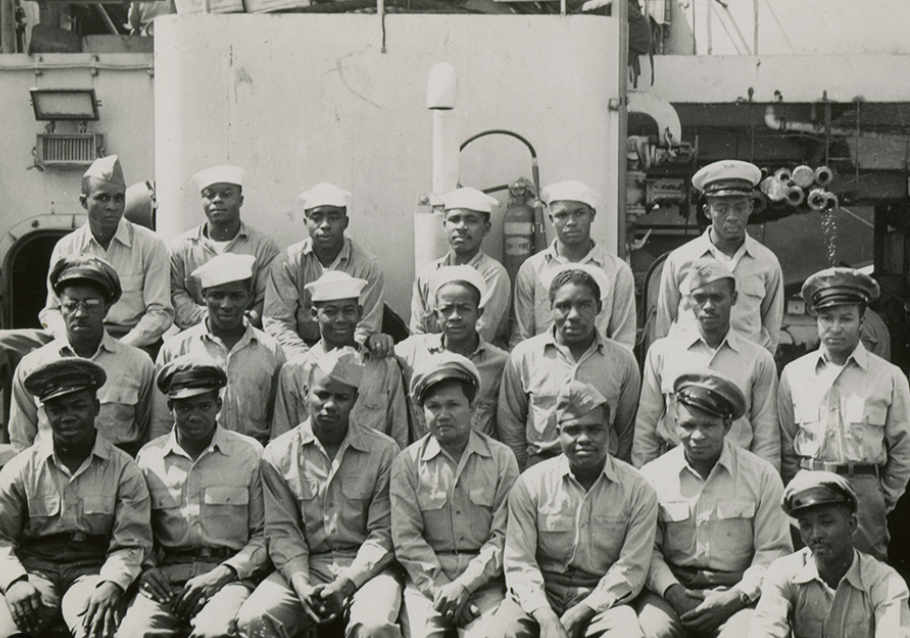
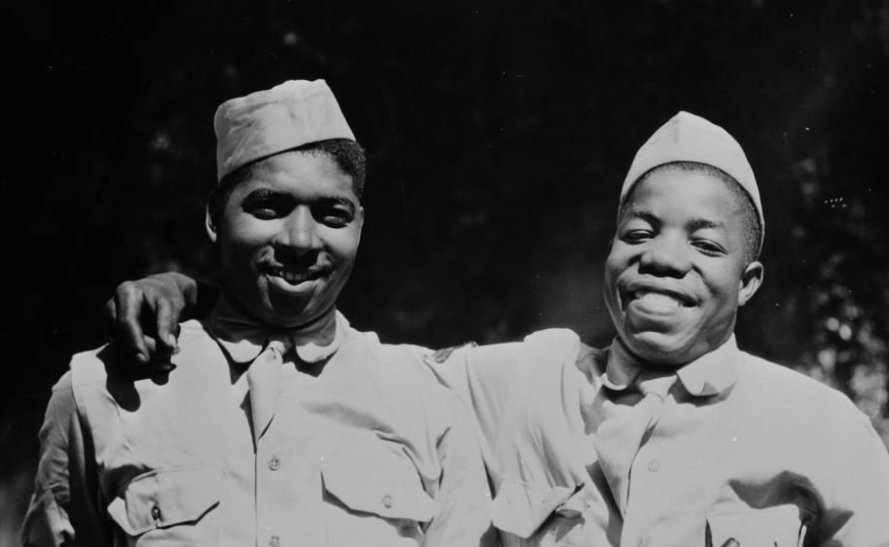
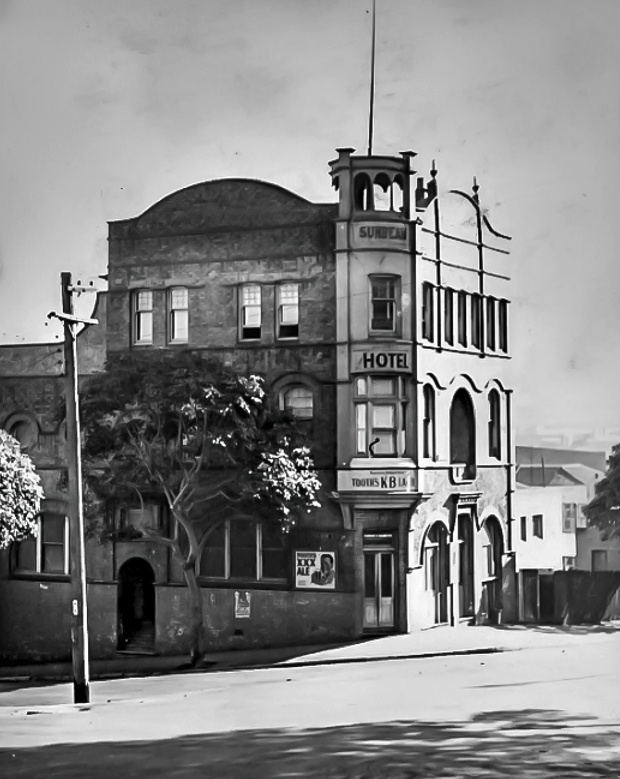
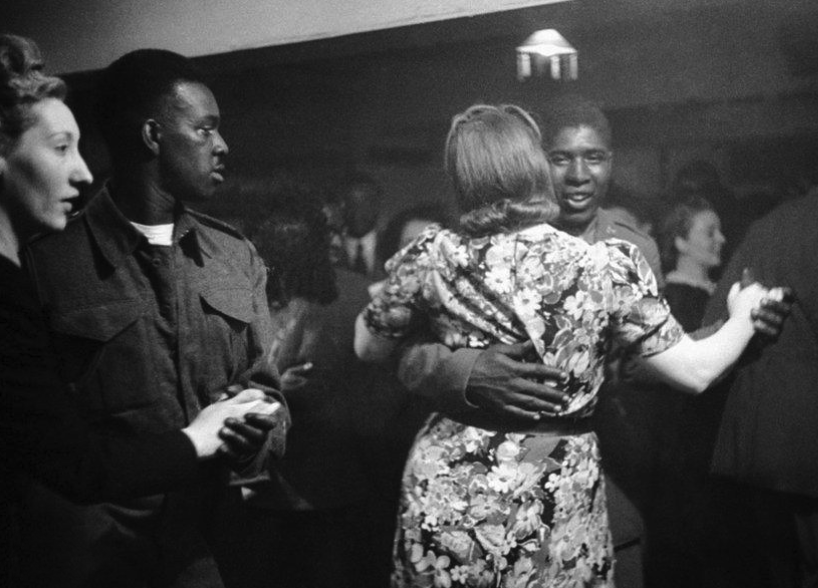
Historians can glean a lot from the physical spaces where African soldiers congregated within Sydney’s walls. These sites offer a unique window into the complex racial dynamics of wartime Australia through interactions between Black soldiers and Aboriginal peoples. One notable site was Durham Hall, at the time known as Booker T. Washington Service Club, a Surry Hills venue which the Red Cross adapted to provide entertainment for African American troops.32 As segregation within Sydney was still rigidly enforced, largely by white American authorities, Durham Hall became one of the rare locations where Black troops could mingle and interact deeply with the Sydney population.33
These spaces revealed a lot about the solidarity and tension between Aboriginal peoples and Black soldiers. To Aboriginal peoples, the African American soldier was a type of Blackness that embodied a vision of strength and financial independence. Pansy Hickey, an Aboriginal woman living as a textile worker in Sydney, recalls them as having “an abundance of everything”.34
Christine Hinton, another Aboriginal textile worker in Sydney, remembered how “they were very friendly, very happy… and always had money for the little ones.”35 As historian Robert Hall points out, “the black U.S troops presented Aborigines [sic] with a different model of the Black man,”36 offering a powerful contrast to the subjugated status many Aboriginal peoples faced at home. Yet, as articulated by Hickey, this difference was deeply felt. She recalled perceiving herself as “a totally different race”37 to the African American troops. Their self-assurance was at once admirable and alienating. While she acknowledged that they “made her [us] feel like we were someone,”38 her statement also gestures to the profound dislocation Aboriginal peoples experienced, not merely as an inferior racial category, but as subjects positioned outside the realm of humanity and national belonging altogether. Similarly, Ken Cunningham, a Sydney Navy seaman, remembered how “Black Americans thought that they were superior to the Aborigines [sic]… a very depressed, shy community”.39
Though African American soldiers expressed affinity with Aboriginal people, their worldview, as historian Chris Dixon quotes, was often shaped by “civilisationist precepts and the ideology of racial uplift”.40 In this way, transnational Black solidarity was complicated by structural hierarchies. Patrick Wolfe’s seminal theory of settler colonialism offers critical insight into this ontological disjuncture. Unlike classic colonial formations oriented around extraction and governance, settler colonialism is predicated upon the elimination of Indigenous peoples to facilitate the establishment of a sovereign settler society. As Wolfe argues, settler colonialism “is a structure, not an event,”41 one that persists into the present and undergirds the political and cultural logics of the Australian nation-state. This mode of domination does not simply subordinate the Indigenous subject; it seeks to negate their existence entirely, rendering them spectral or alien within their own lands.42 In this context, the divergent experiences of Blackness become more comprehensible. African American soldiers, though racialised and subject to discrimination, were still incorporated within the imperial order as citizens of a powerful settler nation.43 Aboriginal peoples, by contrast, were subjected to a colonial logic that refused them such recognition. The settler state’s ongoing imperative to erase Indigenous presence positioned them not only as inferior, but as fundamentally outside the moral and political community.44 Thus, Aboriginal peoples in places like Redfern and Booker T Washington welcomed the African American soldiers, who brought music, dance, and a glimpse of a different life. It is evident that the presence of African American soldiers helped to dismantle some of the internalised self-doubt within Aboriginal communities. Yet, a clear racial hierarchy persisted, one that reinforced Aboriginal peoples at the bottom of the racial order. While united in their struggle against racism, these two groups occupied very different positions within the global racial hierarchy, underscoring the complexity and contradictions of transnational Black solidarity during this period.
While it is true that the presence of African American soldiers during World War II momentarily unsettled the racial dynamics in Australian cities like Sydney, their presence ultimately did not disrupt the overarching structures of White Australia. Public responses to African American troops were often surprisingly positive, especially when compared to the more overt racism of white American soldiers, whose segregationist attitudes were often more visible and jarring to Australians. Despite their racial inferiority within the U.S. military hierarchy, African American troops were still part of a broader American force that symbolised power, protection, and modernity. Importantly, they were never seen as permanent fixtures within Australian society. Their temporary presence meant they did not represent a lasting threat to the White Australia policy or to the settler fantasy of an all-white nation. For Aboriginal peoples, the encounter was both empowering and alienating. While their interactions proved moments of solidarity, ultimately both communities saw themselves as fundamentally different from each other. Crucially, the departure of African American soldiers saw no real shift in the political or cultural landscape. The White Australia policy remained firmly in place, and institutional racism continued to define the lives of Aboriginal peoples and non-white migrants. The social order quickly reasserted itself, revealing that the structures of white supremacy were never truly at risk. Rather than serving as a turning point, the African American soldiers’ presence ultimately exposed how durable and deeply embedded racial ideologies were in Australian society.
1 Laksiri Jayasuriya et al., Legacies of White Australia: Race, Culture and Nation (Crawley: University of Western Australia, 2003), 1.
2 Ibid.
3 Mary Purcell, “Towards Unsettling the Racial Nation-State: Affective Interventions in an Australian Literature Classroom,” Critical Studies in Education 66, no. 1 (April 1, 2024): 54–60, https://doi.org/10.1080/17508487.2024.2333295.
4 Ibid.
5 Russell McGregor, “‘Breed out the Colour’ or the Importance of Being White,” Australian Historical Studies 33, no. 120 (October 2002): 286, https://doi.org/10.1080/10314610208596220.
6 Please note that in this essay Aboriginal and Torres Strait Islander peoples will be referred to as Aboriginal peoples, with respect to the word limits.
7 Travis J Hardy, “Race as an Aspect of the U.S.Australian Alliance in World War II,” Diplomatic History 38, no. 3 (2014): 553, https://doi.org/10.2307/26376581.
8 Ibid.
9 John Curtin, “The Task Ahead,” The Herald (Melbourne), December 27, 1941, https://trove.nla.gov.au/newspaper/article/245352066.
10 Joanna Penglase and D M Horner, When the War Came to Australia: Memories of the Second World War (St. Leonards, Nsw, Australia: Allen & Unwin, 1992), 102.
11 Ibid.
12 Bob Bahnsen quoted in When the War Came to Australia, 105.
13 Department of Veterans' Affairs, “Yanks down under - ‘Over-Sexed, Over-Paid and over Here’ | Anzac Portal,” anzacportal.dva.gov.au, February 1, 2019, https://anzacportal.dva.gov.au/wars-and-missions/world-war-ii-1939-1945/resources/all-australian-homefront-1939-1945/emergency-home-defence/yanks-down-under-over-sexed-over-paid.
14 John McKerrow, The American Occupation of Australia, 1941-45 (Cambridge Scholars Publishing, 2013), 60.
15 Ibid.
16 Bahnsen quoted in When the War Came to Australia, 105.
17 Ken G Hall quoted in When the War Came to Australia, 106.
18 Ibid.
19 Isabelle Grace, “They Think Our Girls ‘Just Swell’ but Don’t Call Them Yanks,” Daily Mirror, March 19, 1942, https://trove.nla.gov.au/newspaper/page/30480546.
20 Bill Bentson quoted in When the War Came to Australia, 117.
21 Sean Brawley and Chris Dixon, “Jim Crow Downunder? African American Encounters with White Australia, 1942––1945,” Pacific Historical Review 71, no. 4 (November 1, 2002): 611, https://doi.org/10.1525/phr.2002.71.4.607.
22 Kay Saunders, “Conflict between the American and Australian Governments over the Introduction of Black American Servicemen into Australia during World War Two,” Australian Journal of Politics & History 33, no. 2 (June 28, 2008): 13, https://doi.org/10.1111/j.1467-8497.1987.tb01215.x.
23 Laurie Aarons quoted in When the War Came to Australia, 119.
24 Ibid.
25 Chicago Defender, March 28, 1942. Quoted in “Jim Crow Downunder,” 614.
26 Ibid.
27 Ibid.
28 Baltimore Afro- American, March 28, 1942. Quoted in “Jim Crow Downunder,” 615.
29 Dixon, “Jim Crow Downunder,” 615.
30 David J Longley, “Vincent Tubbs and the Baltimore ‘AfroAmerican’: The Black American Press, Race, and Culture in the World War II Pacific Theater,” Australasian Journal of American Studies 35, no. 2 (2016): 65, https://doi.org/10.2307/44779791.
31 Ross quoted in “Jim Crow Downunder,” 615.
32 State Library NSW, “Booker T Washington Club ,” The Dictionary of Sydney, 2021, https://dictionaryofsydney.org/organisation/booker_t_washington_club.
33 Wendy Lewis, “Bepop, Blues & Dancin’ Shoes,” RCPA, 2004, https://www.rcpa.edu.au/Library/Publications/PathWay/Pathway/Other/BEBOP,-Blues-and-Dancing-Shoes.
34 Pansy Hickey quoted in When the War Came to Australia, 113.
35 Christine Hinton quoted in When the War Came to Australia, 122.
36 Robert Anthony Hall, The Black Diggers: Aborigines and Torres Strait Islanders in the Second World War (Canberra: Aboriginal Studies Press, 1997), 75.
37 Hickey quoted in When the War Came to Australia, 113.
38 Ibid.
39 Ken Cunningham quoted in When the War Came to Australia, 120.
Pansy Hickey (right) with friends Barbara. Christine Hinton (second left) and an American serviceman known as 'Slim' at the Booker T. Washington Club in Surry Hills, Sydney. Image sourced in Joanna Penglase and D M Horner, When the War Came to Australia: Memories of the Second World War (St. Leonards, Nsw, Australia: Allen & Unwin, 1992), 102.
40 Chris Dixon, “Confronting the ‘Bulwark of White Supremacy’: The African American Challenge to White Australia, 1941–1945,” The Journal of African American History 106, no. 1 (January 1, 2021): 101, https://doi.org/10.1086/712043.
41 Patrick Wolfe, “Settler Colonialism and the Elimination of the Native,” Journal of Genocide Research 8, no. 4 (2006): 388, https://doi.org/10.1080/14623520601056240.
42 Ibid., 390.
43 Dixon, “Confronting the Bulwark of White Supremacy”, 102.
44 Ibid.