The Passage History Walk:
Customs House to Millers Point.
Tutorial Paper, Sydney University. By Evie Jones.
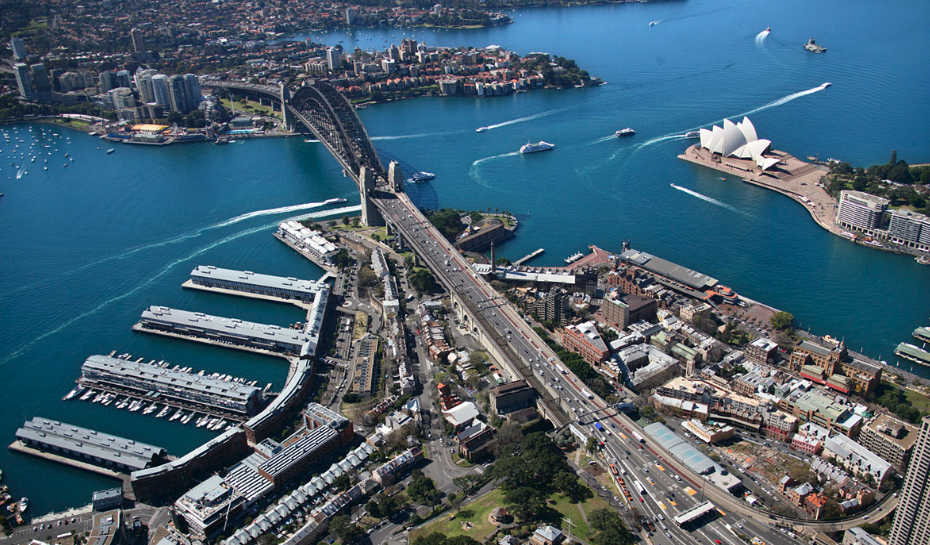
The Passage History Walk, designed by the City of Sydney, takes you on a tour showcasing the grandeur of imperial colonialism while disguising the exploitation of Aboriginal peoples and the land itself. The tour’s emphasis on the physical structures of colonisation, such as government buildings, churches, and roads, demonstrates how colonialism imposed an economic materialism in which land is treated as a commodity rather than as a living entity. The buildings and infrastructure encountered along the tour physically manifest the ideology that Aboriginal peoples and land are something to be possessed, controlled, and exploited, rather than respected.
Sydney’s colonial beginnings is presented through a narrative of progress, where convict labour and British enterprise transformed a “challenging landscape”1 into a bustling settlement. However, this perspective ignores how these very transformations of dispossession stripped Aboriginal life of an interconnected ecosystem. The sites of Bridge Street and Argyle Cut forcibly reshaped land, severing Aboriginal connections to Country. The tour speaks to the transformation of the shoreline, the excavation of sandstone, and the construction of shipping docks and marketplaces to build colonial Sydney. This monopolisation of land all contributed to the physical and symbolic overwriting of Aboriginal sovereignty. The tour inadvertently exposes the stark difference between Aboriginal and colonial understandings of land: Aboriginal peoples saw Country as a sacred, living entity, whereas the British sought to reshape the environment to suit their needs, simultaneously erasing Aboriginal knowledges and presence.
The tour makes effort to acknowledge Aboriginal history by encouraging reflection through art installations such as Edge of the Trees. However, this recognition is limited and undermined by the broader colonial narrative. The installation’s goal was to acknowledge the traditional owners, the Gadigal people while portraying “a newfound cultural unity” through the collaboration of Aboriginal artist and non-Aboriginal artist, Fiona Folley and Janet Laurence. However, it has been positioned at the periphery of the Museum of Sydney, easily “ignored”2 by the might of the towering buildings that neighbour it. This is ironic as it simply reinforces how Aboriginal histories are often pushed to the margins of public consciousness. Furthermore, the installation has the inscribed botanical names in both Eora language and Latin. The dual classification subtly reinforces the colonial practice of classification and “empirical scholarship”3 that justified European expansion.
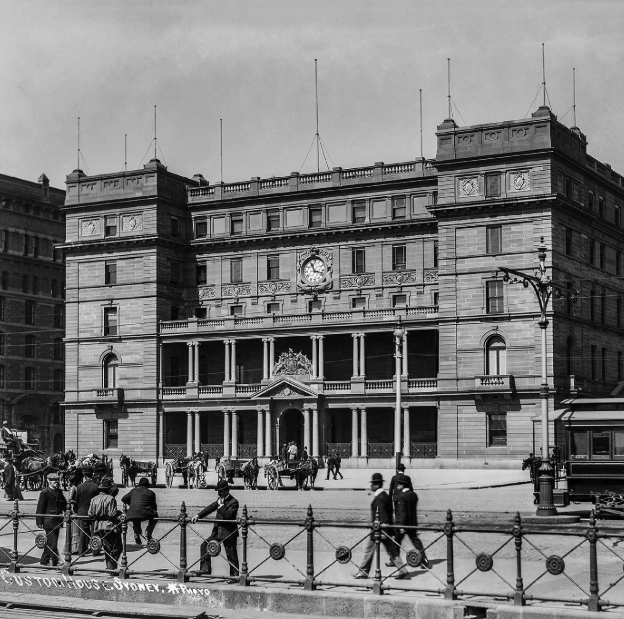
Beyond symbolic gestures, the tour’s focus on grand colonial structures overlooks the realities of their creation through “violent seizures of land”.4 Many of these sites were built atop Aboriginal remains, yet this fact is often omitted or understated. The First Government House, for instance, was not only an administrative centre but also a burial site where Aboriginal heroes such as Arabanoo were laid to rest. Rather than acknowledging the full weight of these histories, the tour instead glamorises the architectural beauty of these buildings, obscuring the bloodshed and displacement upon which they stand.
The tour’s presentation of Sydney’s history ultimately reflects a tunnel-visioned perspective that prioritises colonial narratives while minimising the ongoing presence and resilience of Aboriginal communities. The grandeur of colonial architecture is often celebrated without due recognition of the suffering and displacement that accompanied its construction. The irony of admiring these buildings without acknowledging the bloodshed and destruction that made them possible is evident throughout the tour. Sydney’s landscape is not simply a backdrop for history, it is a contested space where colonial ideologies continue to dominate, sidelining Aboriginal perspectives in favour of a Eurocentric legacy.