Raves and Doofs…
An Infrastructure of Intimacy?
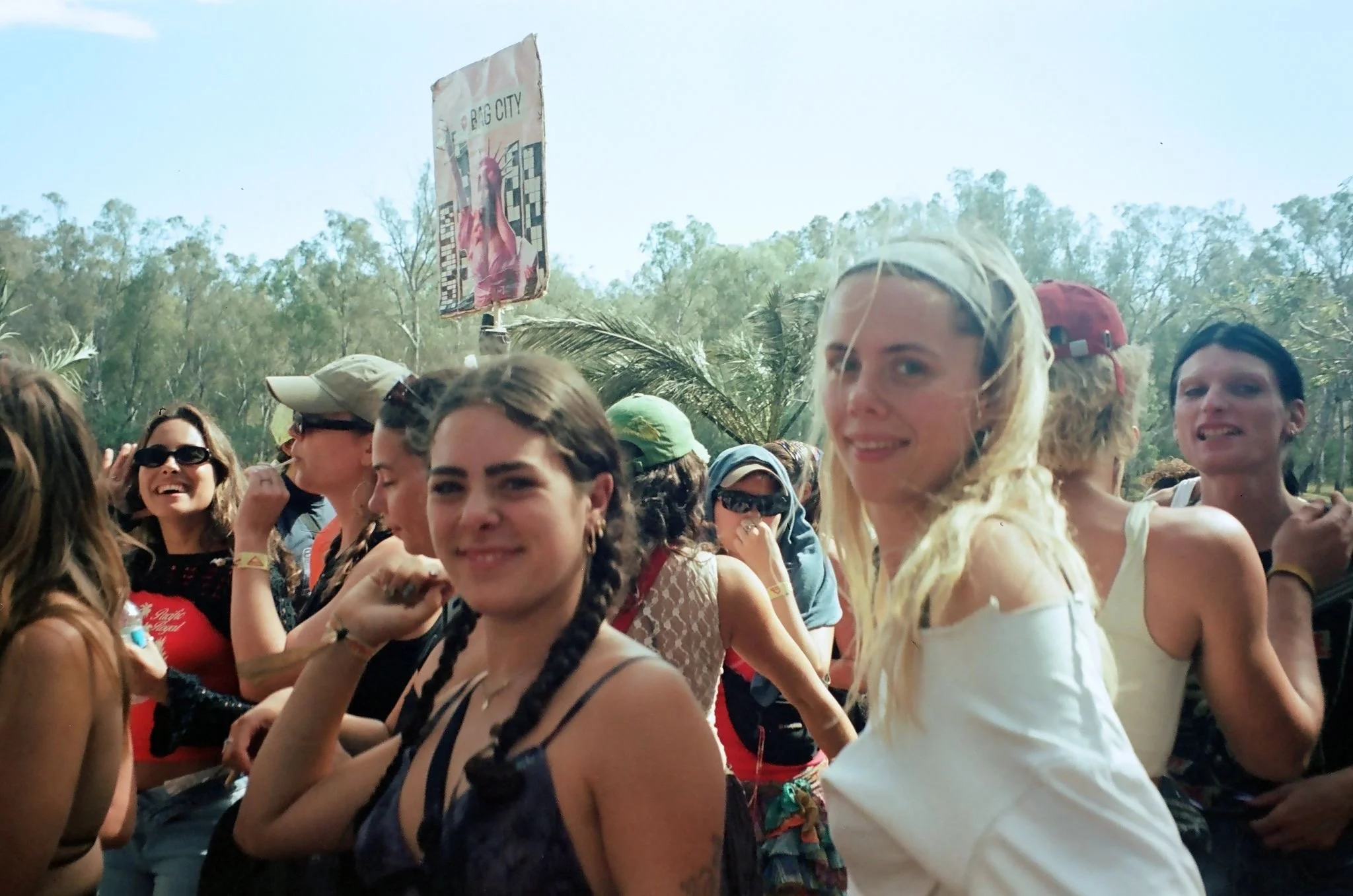
The convoy of cars crawled toward the entrance, dust rising in the heat as we inched closer to another multiday bush doof. In the backseat, I felt the familiar weight of anticipation. Sitting amongst us our contraband had been carefully concealed, the drugs sealed in packets of snacks, alcohol disguised as hand sanitiser. The car had become “a chill-out room, a drug den, and a meeting point, all in one,”1 an intimate home, which Beate argues is created before even arriving. We were performing the small rituals of transgression that mark the boundary between ordinary life and whatever lay ahead. Everyone is sitting in their own cars, all waiting for the same thing: to dance, yes, but also to find something unavailable in the regulated spaces of everyday urban life.
I let out a breath as we were waved through and eventually found our group. The energy was liminal, expectant, as though everyone understood we were entering a different kind of social space entirely. Walking toward the sound systems through clouds of dust, the bass becoming physical in our chests, the whimsical installations emerging from the dark, I felt the trip starting and faces warping. What struck me most was the atmosphere, an unguarded happiness, an ease of affection between strangers. There was an absence of the social surveillance I had learned to anticipate, and I realised I had arrived braced for judgment that never came.
Wilson provides a crucial framework for thinking about infrastructure as shaping intimate life. It is argued that “relationships take place in environments comprised of these material and immaterial, functional or failing networks”.2 Infrastructure, in this sense, is not just physical; it includes the systems, norms, and platforms that structure how we connect with one another. Dating apps are just one form of intimate infrastructure, acting not only as mediators to facilitate connection but also to actively shape which connections become possible.3 This concept of mediation applies powerfully to rave culture, an intimate infrastructure that operates according to different rules than those governing most social spaces. Raves don't simply provide a venue for socialising; they fundamentally alter the terms on which intimacy can occur.
Berlant and Warner define heteronormativity as “the institutions, structures of understanding and practical orientations that make heterosexuality… privileged”.4 Heteronormativity operates through a sense of rightness that is often going unnoticed. It structures everything from life narratives to social institutions, making heterosexual coupling appear most valued. Similarly, mononormativity is a concept in which “the ideals, institutions, and practices make monogamy appear coherent, normal, natural, and right”.5 This infrastructure is embedded in law, economics, and social recognition. Hence, those who fall outside a couple, heteronormative, monogamous relationship, face stigma and marginalisation. The infrastructure makes certain connections easy and legible while rendering others invisible or illegitimate. It is these dominant social norms that rave cultures actively counteract.
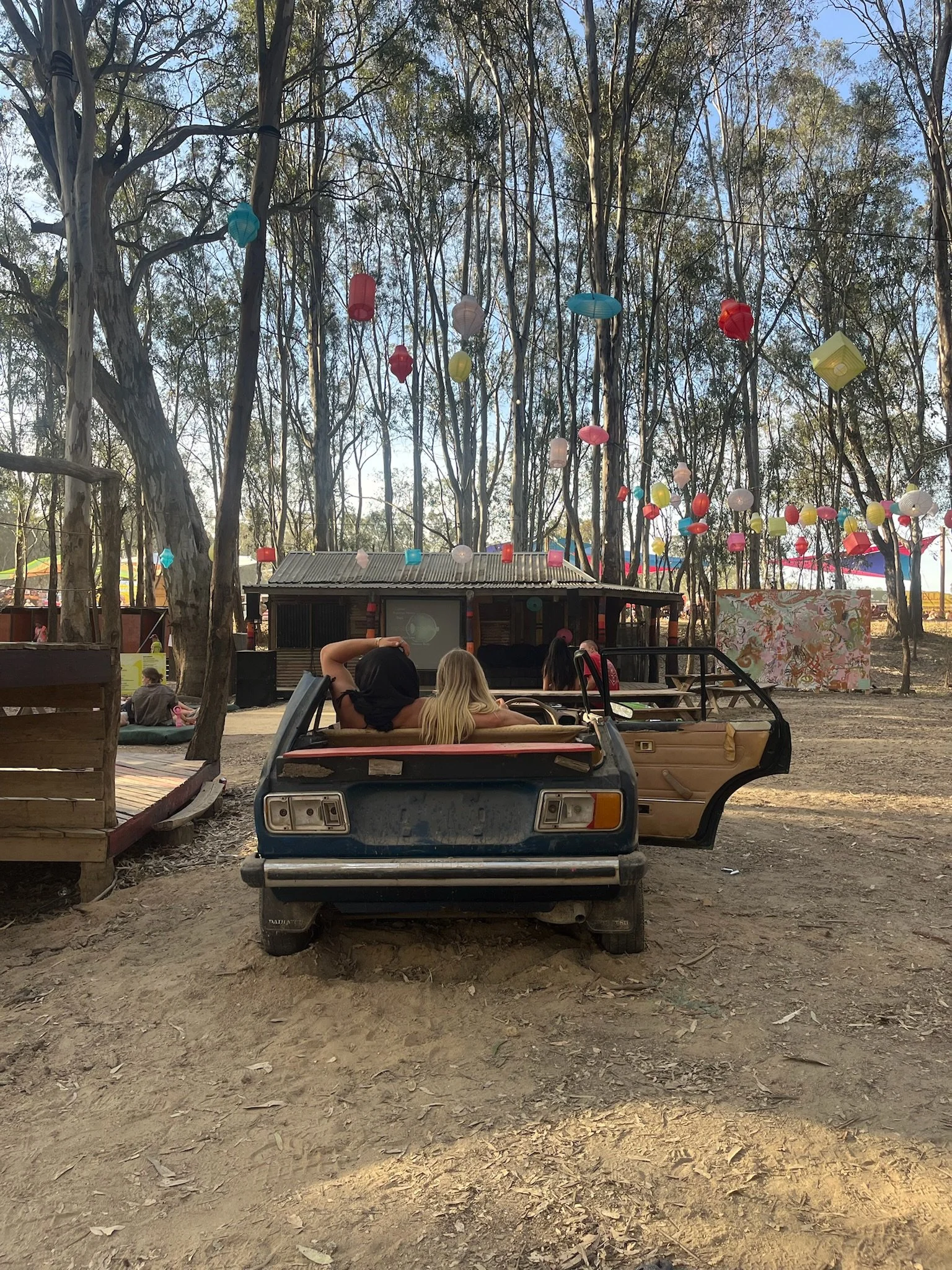
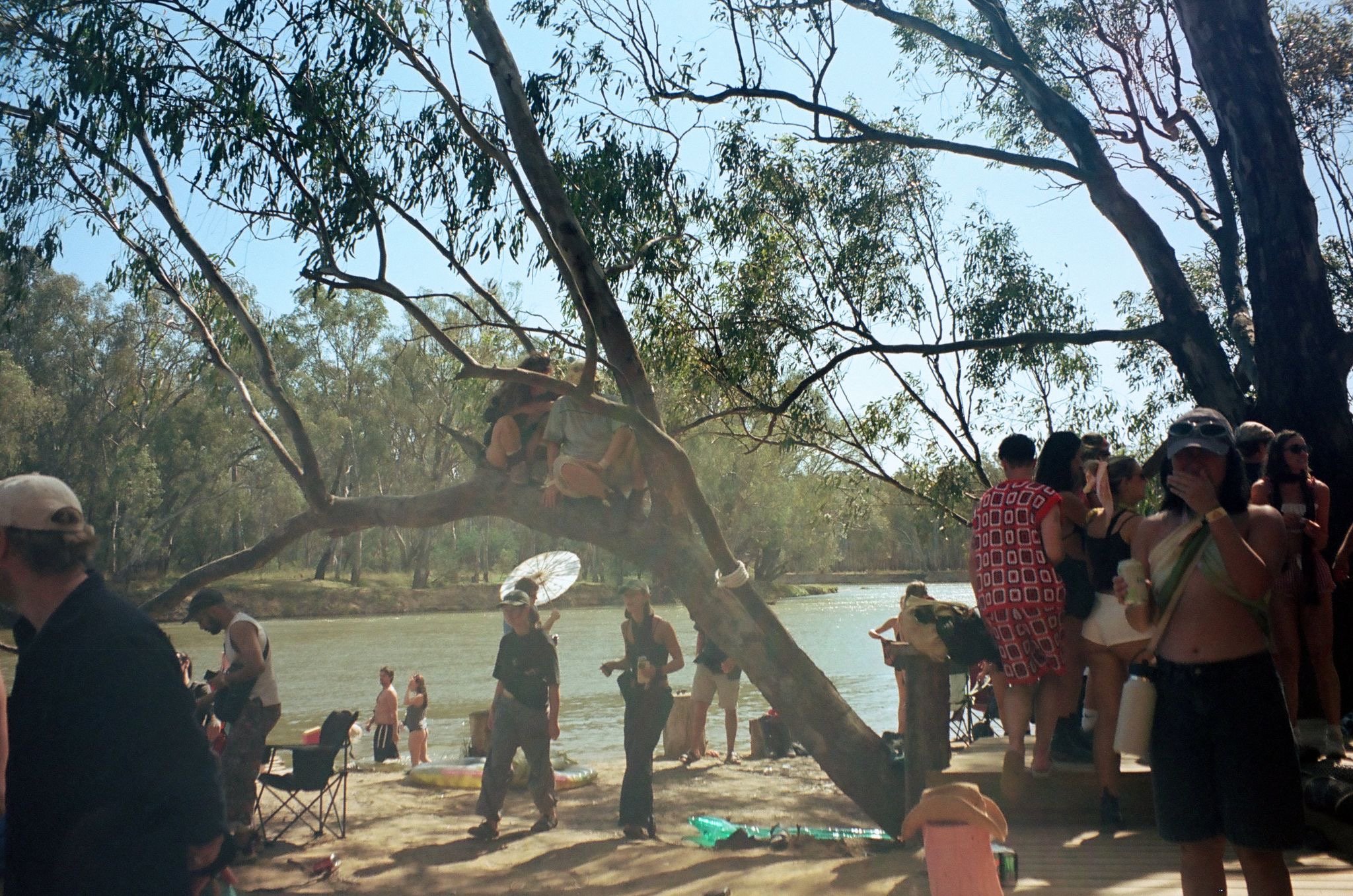
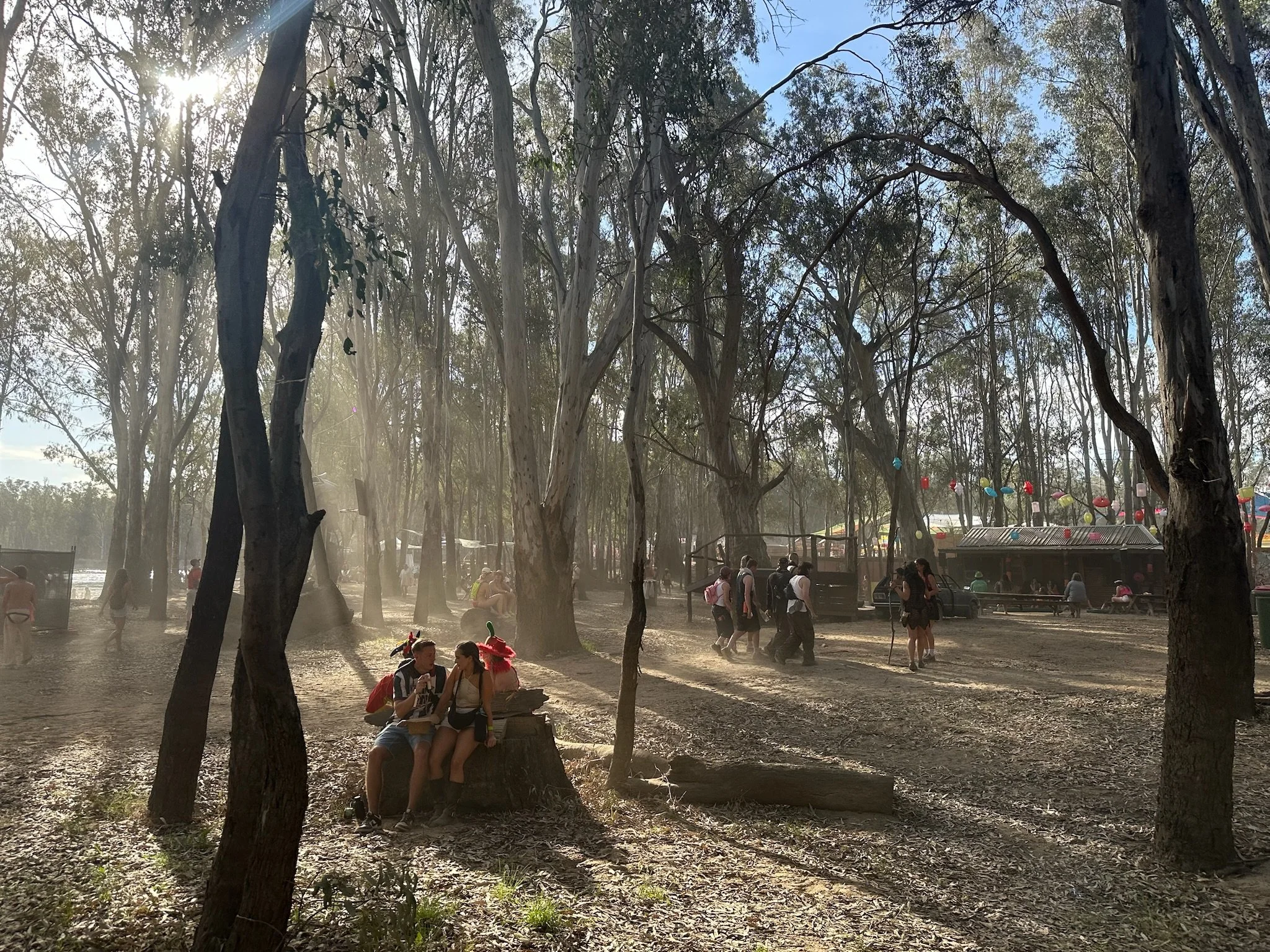

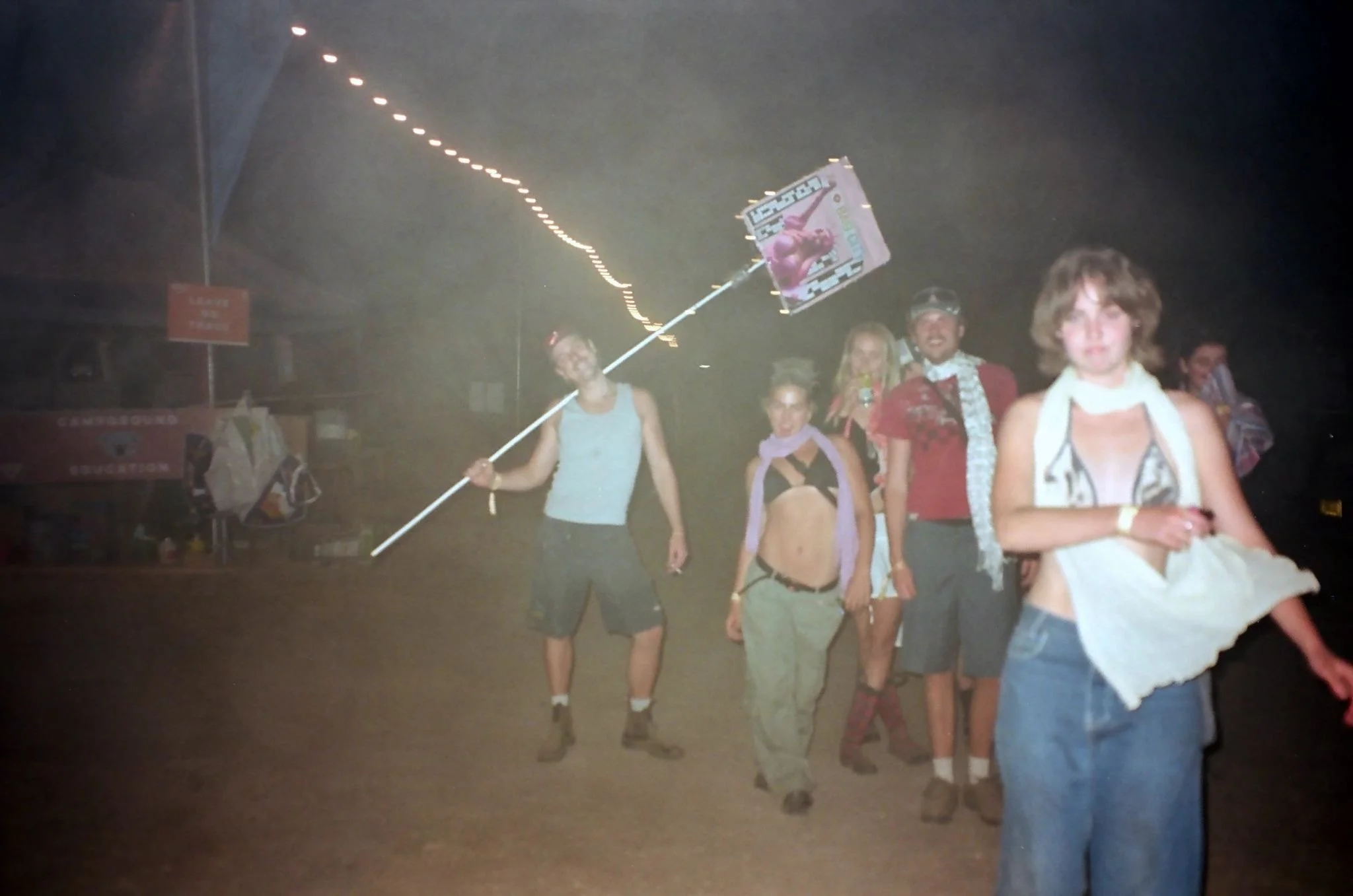
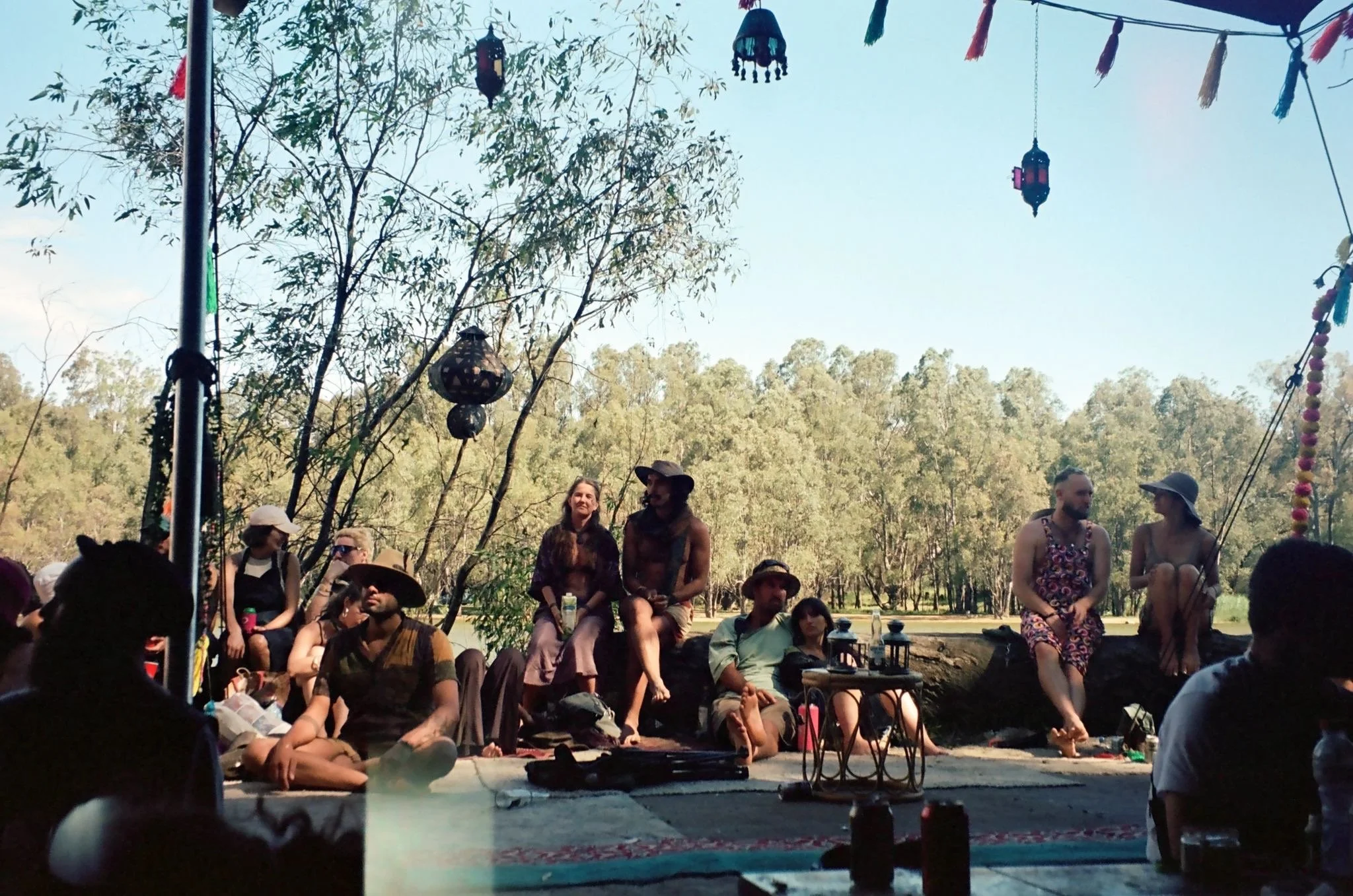
Rave culture is frequently reduced to a pounding bass and dismissed as simply an opportunity for people to get intoxicated for the weekend. But these understandings are deeply misrepresentative of what rave culture actually facilitates. In its purest form, it is an intimate infrastructure built for those who do not conform to societal norms of love, intimacy, and friendship, an infrastructure for openness and exploration within a subculture that rejects the regulations of capitalistic and heteronormative societies.
Within a time when POC were actively excluded from social nightlife through discriminatory laws and policing, rave culture’s roots began to grow as an outlet to create party venues in their own homes and later in warehouses, building community and safety from racism and homophobia.6
6 The Chicago house movement of the 1980s was a predominantly Black and queer scene and is where we see the most immediate parallel to what rave culture represents today. At the time, there was an explicit need for spaces where queer communities could socialise and play with presentation and expression without the threat of violence, in part due to rampant homophobia and the AIDS crisis. These underground raves and concealed parties were defined by resilience and defiance, fuelled by the spirit of LGBTQ+ solidarity. In an interview, Steve Redhead, a Berlin DJ, defines early rave culture as both a “youth culture and a deviant activity”7 that rejected dominant norms. The unifying thread among these formative scenes was creating spaces for people society excluded, allowing them to connect with others like them, feel the support of the community, and exist freely. The phrase "P.L.U.R." (Peace, Love, Unity, Respect) emerged as an ethos encapsulating these values. Rave culture was never just about music; it was about creating an alternative infrastructure of intimacy rooted in collective care.
In Australia, rave culture has evolved into a distinctly local form. "Bush Doofs" form the backbone of the country's modern underground party scene. They are outdoor dance music festivals held in remote bushland. Despite their scale, they share core values of self-expression and connection with nature, offering an escape from commercial venues and authority. However, Sydney's rave scene has faced significant structural challenges that reveal governmental attitudes toward alternative intimacy infrastructures. A series of lockout laws, introduced in response to the following incidence of alcohol-related violence, left a lasting and disproportionate impact on independent venues, leaving many of which were never able to reopen.8 This reflects a broader governmental view of nightlife as a public safety risk rather than a cultural asset. We have to ask, then, why does rave culture face such hostility? Many who haven’t dared to step foot into this world will never truly know what happens at raves or why they attract so many people of all ages. These spaces represent a fundamental challenge to heteronormative and mononormative infrastructures. Raves are places of non-conformance within intimacy and intense explorations of sexualities. It facilitates an intimacy that exists outside the regulated, privatised forms that dominant infrastructure privileges, as there are no clear rules governing behaviour.
Unlike spaces that centre romantic couplehood and privilege exclusive dyadic bonds, raves facilitate collectively shared intimacy, a mode of connection that is simultaneously deeply personal and radically communal. The ethos of P.L.U.R sets an expectation to look out for strangers, to share resources, to form temporary kinship bonds that may last only hours but feel profoundly real.9 Beyond that, rave culture fosters gender and sexual identities that are marginalised elsewhere. A growing acronym being used within the subculture is FLINTA - Female, Lesbian, Bisexual, Transgender, Asexual, and Agender. This is an intention to actively centre these identities, in an effort to “claim space, rewrite the rules, and remind people that rave culture was always meant to be about liberation".10 The infrastructure doesn't just tolerate difference, it celebrates and centres it, making gender experimentation and sexual fluidity a welcome exploration. Cis men, camply dressed without question. Orgies - or something of the like - happen openly. Polyamorous triads dance together. The assumption at these nights is freedom. Within a heteronormative culture that hides deviation, rave culture is an infrastructure that encourages it.
While rave culture enables many forms of intimacy that heteronormative infrastructure constrains, it is not without its own exclusions and assumed users. Bourdieu argues that “'elective affinities' are always partly based on the unconscious deciphering of expressive features”.11 This suggests that taste is what brings together things and people that go together; it's not natural affinity but learned class behaviour. Rave culture, while presenting itself as radically inclusive, still operates through systems of taste and cultural capital. Knowing how to dress, which DJs to name-drop, how to behave on substances, and when to arrive are forms of cultural knowledge that signal belonging. The infrastructure assumes a user with certain aesthetic sensibilities, certain consumption patterns, and certain ways of performing authentic participation. Those without access to this cultural capital may feel excluded even when physically present.
Moreover, while organisers may prioritise community over profit, attending raves still requires resources, meaning the infrastructure assumes a certain level of economic privilege and flexibility. Doofs can cost hundreds of dollars when all expenses are accounted for. This is increasingly true as rave culture becomes commercialised; what began as free or donation-based underground parties now often requires significant financial investment.12 This creates a double-edged sword in that the music industry is dying in this economy, and organisers genuinely need to charge to cover costs and pay artists fairly. But the rising costs mean fewer people can access these acts of intimacy.
Further, in parallel to dating apps as an infrastructure, rave culture, particularly within Australia, demonstrates what scholars call “platformed Whiteness”.13 While rave culture originated in Black and queer communities, mainstream commercial raves in Australia are often overwhelmingly white spaces. This represents a painful irony, an infrastructure built by marginalised communities for survival and resistance becomes gentrified and commercialised, ultimately excluding the very people who created it.
As an infrastructure of intimacy, raves make visible the usually invisible norms that structure how we connect. By creating spaces where collective care, gender fluidity, sexual openness, and non-capitalist relationships become the default, these events reveal how constrained intimacy is within heteronormative and mononormative structures. The continued popularity of rave culture testifies to a hunger for alternative forms of connection. It demonstrates that when mainstream infrastructures fail to accommodate diverse ways of being intimate, people will build their own systems. As noted by a frequent attender, “when they remove our right to exist openly… we make our own spaces”.14
14 However, the commercialisation and whitening of mainstream rave culture threatens to replicate the very exclusions it was designed to resist. Nonetheless, it enables liberation through intimacy, demonstrating that intimacy does not have to be coupled, private, permanent, or property-based. It can be collective, public, temporary, and freely given. It can flow between strangers on a dance floor at 3 AM. It can exist outside the gaze of state regulation and capitalist exchange. When done correctly, true rave culture does not discriminate. It is an infrastructure that assumes not conformity but difference.
1 Mark Duffett and Beate Peter, Popular Music and Automobiles (Bloomsbury Publishing USA, 2020), 85.
2 Ara Wilson, “The Infrastructure of Intimacy,” Signs: Journal of Women in Culture and Society 41, no. 2 (January 2016): 248, https://doi.org/10.1086/682919.
3 Ibid., 274.
4 Lauren Berlant and Michael Warner, “Sex in Public,” Critical Inquiry 24, no. 2 (January 1998): 548, https://www.jstor.org/stable/1344178.
5 Jessica Kean, “A Stunning Plurality: Unravelling Hetero- and Mononormativities through HBO’s Big Love,” Sexualities 18, no. 5-6 (August 13, 2015): 699, https://doi.org/10.1177/1363460714561718.
6 Melanie Takahashi and Tim Olaveson, “MUSIC, DANCE and RAVING BODIES: RAVING as SPIRITUALITY in the CENTRAL CANADIAN RAVE SCENE,” Journal of Ritual Studies 17, no. 2 (2003): 73, https://www.jstor.org/stable/44368995.
7 Beate, “Popular Music”, 84.
8 Oscar Ellis, “How Sydney’s Underground Scene Is Thriving amidst Restrictions,” Dance Policy, August 16, 2025, https://www.dancepolicy.com/stream/how-sydneys-underground-scene-is-thriving-amidst-restrictions.
9 Kyrsten Schneider, “PLUR: Understanding the Rave about EDM,” Strike Magazines, November 5, 2024, https://www.strikemagazines.com/blog-2-1/plur-understanding-the-rave-about-edm.
10 Mahoro Seward, “How Femme, Trans and Non-Binary Partygoers Reclaimed Rave Culture,” British Vogue, August 31, 2025, https://www.vogue.co.uk/article/how-queer-trans-and-non-binary-partygoers-reclaimed-rave-culture.
11 Pierre Bourdieu, Distinction: A Social Critique of the Judgement of Taste (Cambridge: Harvard University Press, 1984), 241.
12 Christine Siokou & Chris Moore, “This Is Not a Rave!': Changes in the Commercialised Melbourne Rave/Dance Party Scene,” Youth Studies Australia, 27(3), (2008), 51.
13 Haili Li and Xu Chen, “From ‘Oh, You’re Chinese . . . ’ to ‘No Bats, Thx!’: Racialized Experiences of Australian-Based Chinese Queer Women in the Mobile Dating Context,” Social Media + Society 7, no. 3 (July 2021): 2, https://doi.org/10.1177/20563051211035352.
14 QueerAF, “Raves Are Inherently Queer, with Lessons for Trans+ Liberation Now,” QueerAF, May 12, 2024, https://www.wearequeeraf.com/raves-reflect-my-transness-back-at-me-theyre-joy-as-a-form-of-rebellion/.