What are the Main Themes and Concerns of Palestinian Feminist Activists?
Women in History Essay. By Evie Jones.
“I have learned that a woman can be a fighter, a freedom fighter, a political activist, and that she can fall in love, and be loved, she can be married, have children, be a mother… Revolution must mean life also; every aspect of life” — Leila Khaled1
Palestinian feminism challenges Western feminist frameworks in important ways, not only as a movement that advocates for gender equality but also as a comprehensive decolonial project intertwined with the struggle for Palestinian liberation. Drawing on key themes and concerns defining Palestinian feminist activism, this essay explores how settler-colonial context shapes feminist praxis by staging occupation as the primary oppressor of Palestinian women. This essay argues, through an analysis of Palestinian feminism's theoretical foundation, that Palestinian feminism constitutes a very specific decolonial framework that centres collective liberation and requires the end of occupation as, quite simply, a prerequisite for women's freedom. Understanding Palestinian feminist activism requires abandoning Western assumptions about what feminism should look like and instead centring Palestinian women's articulation of their struggles, strategies, and visions for liberation.
Palestinian feminism is at once "an analytical lens and a political project"2 that is inherently different from Western feminist theorisations. Having structural violence due to settler colonialism at its core, such decolonial feminism places anti-colonial struggle at the heart of feminist liberation. Its themes are positioned with "reclamation and decolonisation",3 addressing deep inequalities to promote transformative liberation rather than gender parity within oppressive systems.
This decolonial approach embraces struggles against all forms of oppression and enables essential bonds of solidarity, actively rejecting the individualism promoted by Western capitalism.4 Central to this framework is the theme of community-building as a revolutionary act, allowing feminists to build futures while expanding space and reducing isolation. This proves particularly vital for diasporic Palestinians who are "not surrounded by their society",5 creating transnational networks that transcend geographic boundaries. Such communities are essential for "building paths of survival in Palestine and beyond”.6
Ultimately, Palestinian feminism is anchored in "a praxis of decolonial love".7 Such a praxis "uplifts Palestinian life without reproducing patriarchal structures of colonial violence".8 This decolonial feminist approach reconfigures the practice of care and healing. Addressing the politics of care, it provides answers to gender-based violence that actually meet victims' needs rather than imposing solutions that may or may not prove transferable into local spheres of action.9 Thus, Palestinian feminism is rooted in local struggles, yet it is open toward transformation by transnational solidarity.
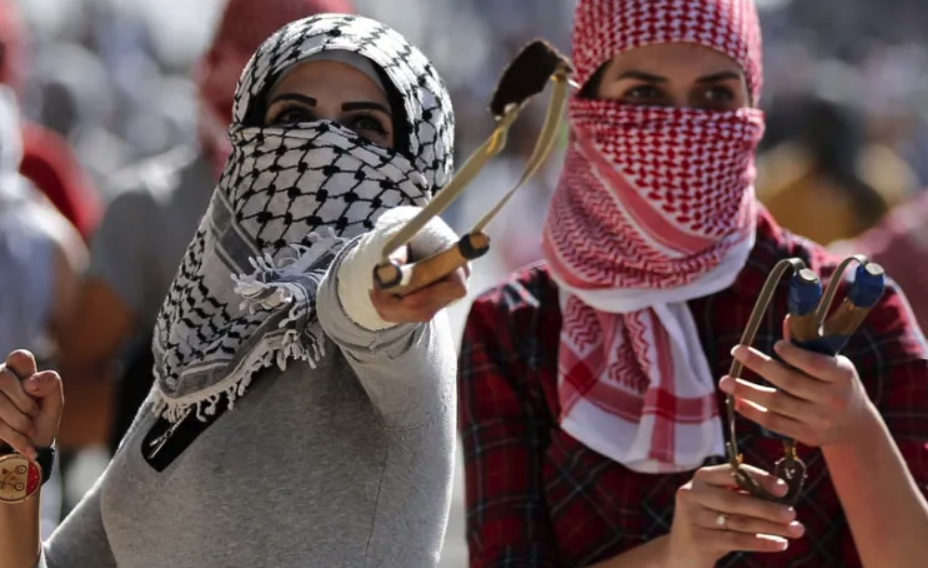
Pitted against the backdrop of Palestinian liberation, one gets a serious glimpse into how limited and complicit Western liberal feminism is, which has also been described as "coloniality-toxified feminism."10 The framework fortifies the colonial power relations and acts to enforce the very hierarchies it seeks to dislodge. Consequently, instead of displacing them, Palestinians are further embedded within systems of oppression, including settler colonialism and patriarchy.11 Many Palestinians and other colonised peoples experience liberal feminism as externally imposed rather than a product of organic development, an externally rooted framework that requires people to adhere to Western standards and priorities that "do not reflect the local realities"12 of their lives. By framing their resistance in these terms, it becomes clear that such feminism can be just another implementation of colonial control, rather than liberation.
More distressingly, Western-founded feminist associations have refused to take real steps toward meaningful confrontation with colonialism and racism in league with patriarchy. Instead, Palestinian feminists and their allies have seen the perpetuation and reinforcement of racialising stereotypes, the very same narratives that have historically been marshalled to solidify imperial domination.13 Such selective engagement brings to mind what bell hooks calls "oppressive talk,"14 by which certain feminist voices are used to condemn violence based on gender but then maintain a deafening silence regarding the violence of colonialism and occupation.
Underpinning this complicity are deeply entrenched Orientalist constructions that fundamentally misrepresent Palestinian women and queer Palestinians.15 Ihmoud argues that these Orientalist stereotypes serve to actively undermine feminist solidarity through the reduction of Palestinian women and queer individuals to two limiting narratives, either that they are expendable casualties or objects in need of Western salvation. These portrayals cast Palestinians alternately as "hypersexualised pawns … or passive victims in need of saving".16 Such representations reflect broader patterns within which Black, Brown, and Indigenous women and queer people are represented within racist and colonial frameworks.
But these failures also urgently signal the need for transformation. Palestinian feminism represents this transformation, a detoxified feminism which confronts the ongoing settler colonialism in Palestine and refuses to be silenced or complicit.
The context of Palestinian feminism is one in which gendered violence has been weaponised as a tool of colonial domination since the Nakba. The current violence has its roots in the Nakba of 1948, when over 750,000 Palestinians were displaced by mass uprooting. The establishment of the State of Israel on 78% of Historic Palestine, resulting in the displacement of 80% of Palestinians from their home and land.17
Critically, colonial violence runs along gendered lines, deliberately targeting women as the social and cultural foundation of Palestinian society. Pratt documents how rape and sexualised violence were systematically deployed as weapons against Palestinian women during the Nakba, functioning as an integral component of colonial power mechanisms.18
It reflects a calculated strategy of colonial elimination, targeted against Palestinian women's bodies.19 These are attacks on Palestinian reproduction and futurity, a logic of reproductive violence, to which the term "reprocide"20 refers. This has continued unabated today, as Palestinian women have faced this attack. The linkage of feminism and resistance to occupation reflects a vision that perceives women's liberation as part of the liberation of Palestinian society as a whole, a liberation which must be a fundamental transformation of the existing social and political structures. It comes directly out of the material realities of settler-colonialism and the particular ways colonialist violence has targeted Palestinian women's bodies, families, and communities for more than seven decades.
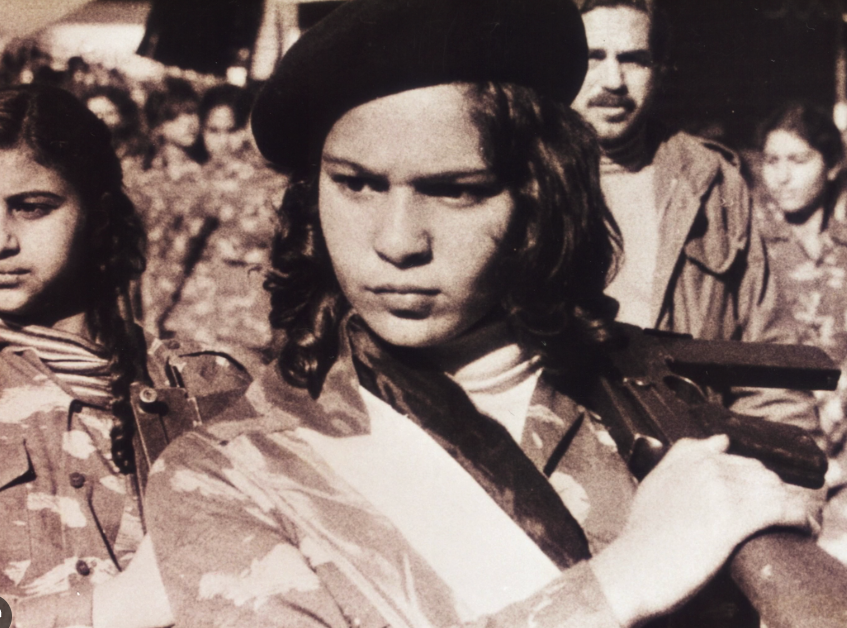
Palestinian women's activism dates back at least to the early twentieth century. Their political activism "proliferated" in demonstrations against the Balfour Declaration of 1917 and the waves of Aliyah.21 During the 1936 rebellion against British authorities, women delivered weapons, food, and water to fighters and organized support for destitute families. Their efforts consisted of providing aid and shelter to the rebels throughout the confrontation.22 This state of emergency energised unity and clarity in the women's movement.
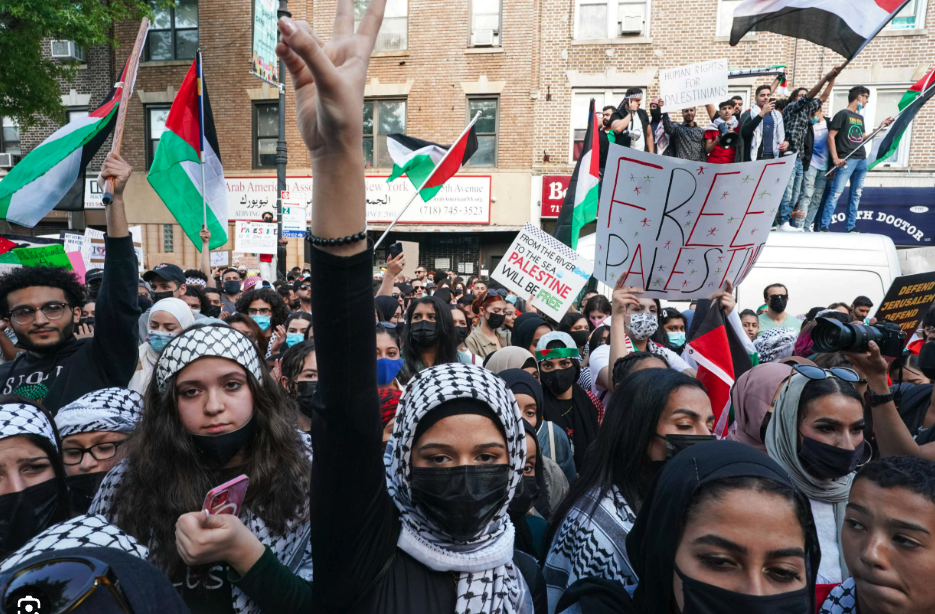
However, the Nakba fundamentally disrupted women's organising. The women's movement, like Palestinian society more broadly, was scattered across multiple territories, severed from its roots, and broken into disconnected fragments.23 In the immediate aftermath of the Nakba, most Palestinian women were preoccupied with basic survival, leading to a precipitous decline in women's public activism.24 When organising re-emerged in the 1950s and '60s, women carved out a distinctive role within the evolving nationalist movement, functioning simultaneously as active participants in the struggle and as powerful symbols of Palestinian identity and resistance.25
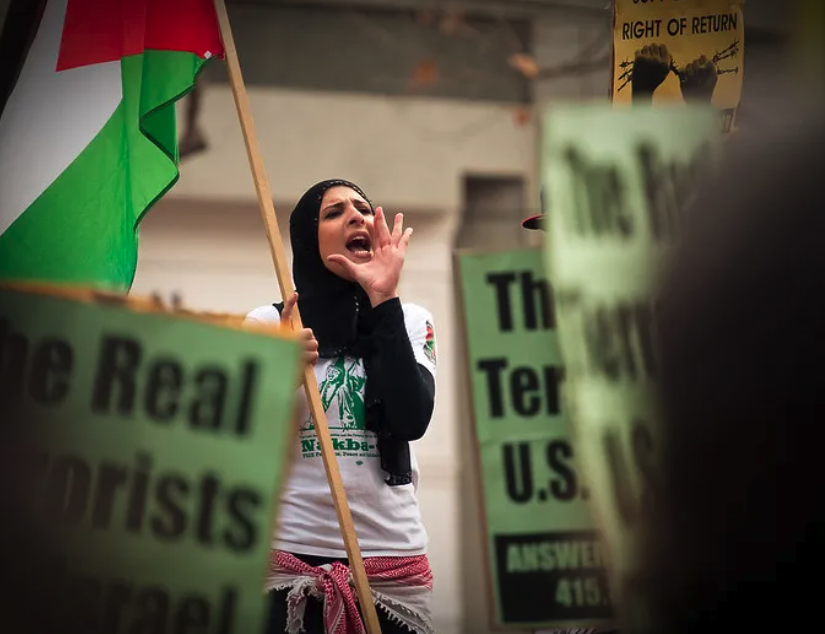
The First Intifada was a particularly transformative moment. Beginning in 1987, Palestinian women established both the grassroots foundation and leadership of this popular uprising, an experience that equipped them with crucial skills for their subsequent feminist organising. A network of women's committees organised child care centres, literacy campaigns, economic cooperatives, and boycotts of Israeli goods, "carving space for Palestinian alternatives"26 across social, political, and economic dimensions of daily life. Women's leading roles in this movement forged what amounted to "a social revolution".27
Yet this revolutionary potential was disrupted by the Oslo Accords. During the post-Oslo period, women's activism fragmented into competing interests and power dynamics rather than representing a unified movement for all women.28 While women activists pursued projects focused on women's rights, these initiatives often overlooked the everyday concerns of women struggling with their basic material needs and survival under occupation.29
Throughout this history, persistent tension existed between women's contributions to the nationalist struggle and their relegation to traditional roles. Both Palestinian and Western feminist commentators have highlighted the chasm between respect given to individual high-profile women militants and the multiple oppressions facing women in patriarchal society, which is also a largely refugee community living under military occupation.30 For "ordinary"31 women activists, their activism often resulted in pressure or rejection from family members who wanted them to return to more "respectable"32 female roles.
The relationship between Islamist feminism and secular Palestinian feminism reveals not a fundamental ideological split, but rather diversity of approaches within a shared anti-colonial struggle that demonstrates the expansive nature of Palestinian feminist praxis. Jad's work investigates the often tense relationship between gender and nationalism, complicated by the secular/Islamist divide between the Palestinian Authority in the West Bank and Hamas in Gaza.33 However, through the analysis of Islamist movements, it demonstrates how Palestinian feminism, as a decolonial project, creates space for multiple feminist expressions emerging from specific contexts and lived realities.
These diverse manifestations of Palestinian womanhood emanating from Islamist and secular movements reflect not a contesting vision of liberation, but a diversity of ways Palestinian women navigate and resist occupation while asserting their agency. The portrayal by Islamists was that of "modest…pious"34 caretakers devoted to family and responsible for the rearing of sons to continue the resistance, essentially positioning "the woman as 'giver'"35 of the national struggle. We could understand these as different strategies for claiming space within national liberation, rather than mutually exclusive. This is how Hamas has tried to differentiate Islamist women from their secular sisters, who are supposed to take greater
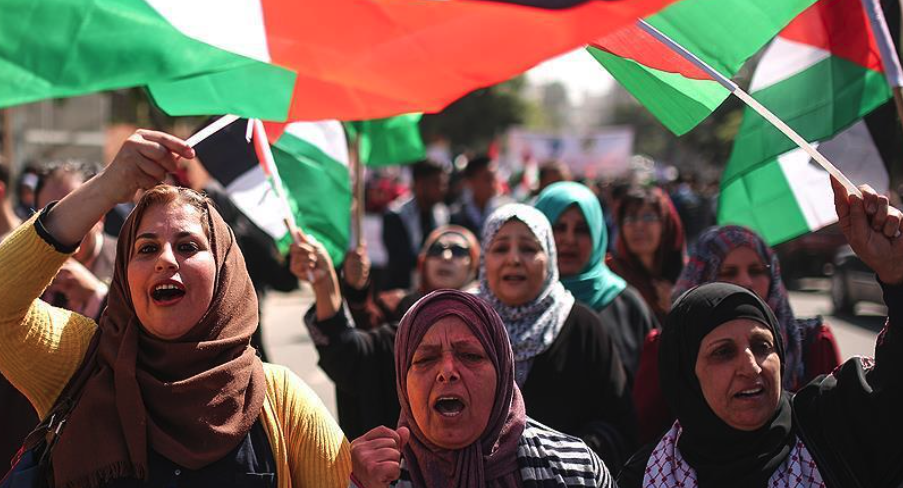
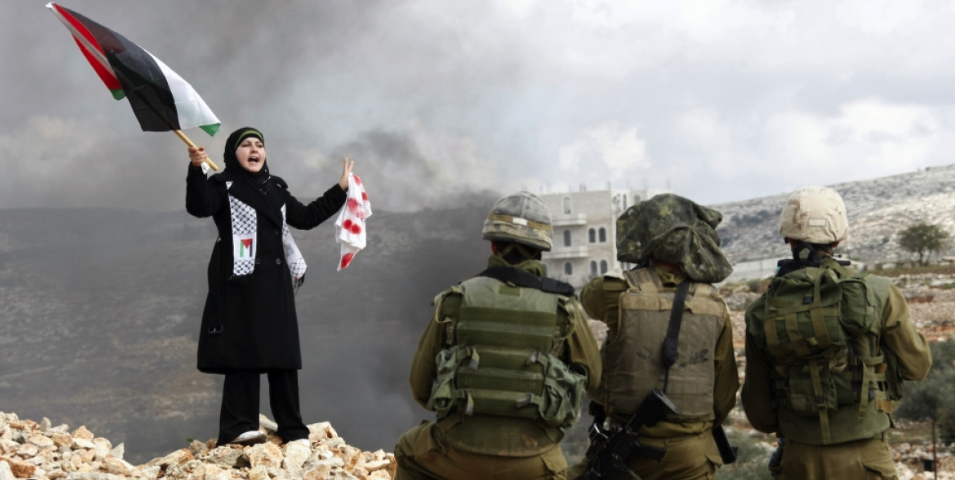
interest in individual rather than collective issues. The former insists "a people under occupation could only benefit from mounting a collective resistance".36 Yet, both approaches basically put forward collective resistance at their core. The difference is in how individual and collective liberation are thought to relate, not in whether collective struggle matters.
Most importantly, Jad's work fills a serious gap in scholarship on Palestinian women's activism by focusing on Islamist women, whose efforts have been virtually ignored by many feminists despite comprising a large part of Palestinian civil society. Jad proves that "Hamas' gender ideology was not static, and changed continuously to reflect the living conditions of Palestinian women",37 thus proving that Islamist feminism is as fluid and attentive to material conditions as is secular feminism. More importantly, Hamas did what the Palestinian Authority was unable to do, which was link women's rights to the rest of the national and social concerns of Palestinians. This shows that Islamist feminism succeeded, at least in practice, in implementing one of the key premises of Palestinian feminist thought, namely refusing the separation between individual rights and collective liberation espoused by Western liberal feminism. Ultimately, the diversity between secular and Islamist feminism does not represent fragmentation but embodies the expansive vision of Palestinian feminism in all its complexity, sharing core goals of ending occupation and genocide, ensuring Palestinian survival, and building communities of solidarity and care.
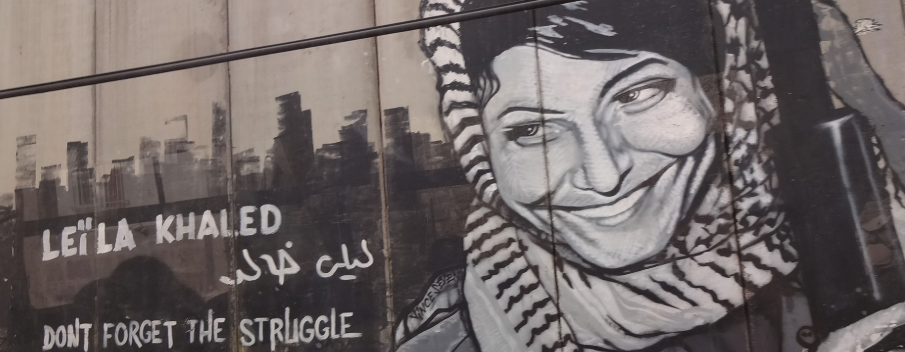
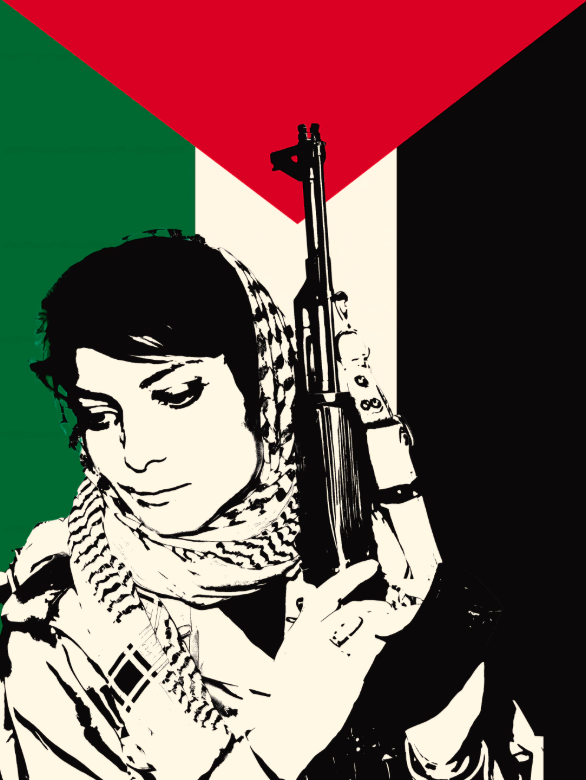
Leila Khaled is arguably one of the most visible and contentious figures in Palestinian feminist history, a member of the Popular Front for the Liberation of Palestine who participated in two aeroplane hijackings in 1969 and 1970 as part of the Palestinian armed resistance movement, becoming one of the most recognisable faces of Palestinian militancy.38 She embodies complex tensions between armed resistance, women's liberation, and Western feminist perceptions. As feminist writer Robin Morgan observed, in the eyes of many in the West, "there are two well-fostered stereotypes of the Palestinian woman: she is a grenade-laden Leila Khaled or she is an illiterate refugee willingly producing sons for the revolution".39 This generalisation says more about Western perceptions than Palestinian reality but illustrates the extent to which Khaled joined a small pantheon of individuals who, along with Yasser Arafat and assorted suicide bombers, spring to Western minds when Palestine is mentioned.40 This hypervisibility proves distinctly ambivalent, as it means Palestinians became "irrevocably linked with terrorism",41 reducing the complexity of Palestinian resistance and women's roles to reductive stereotypes.
One result is that Khaled's legacy within feminist discourse is deeply polarised, with fundamental disagreement over what does or does not constitute authentic feminist resistance. Many find Leila inspiring as a woman operating within the traditionally male-dominated sphere of armed political struggle. Placing her alongside figures such as Assata Shakur as one who embodied lived resistance rather than conceptualising it.42
According to Kuttab, fighters like Leila "tied the national liberation struggle to their struggle for social liberation,"43 laying the foundation for women to be equal partners in resistance by the beginning of the First Intifada. This perspective positions Khaled as a revolutionary who expanded the possibilities that existed for Palestinian women's participation in national liberation.
However, Khaled received significant criticism, most strenuously from Western feminists who viewed her embracing of armed struggle as a capitulation to patriarchal violence. For instance, the work of Morgan roundly criticises Leila for following a macho ethos of terrorism and betraying the needs of Palestinian women, arguing that "Leila Khaled 'has not survived being female'",44
44 Instead, her decision to engage in this form of rebellion was made “via the male mode”.45 Such critique epitomises tensions between liberal Western feminism's rejection of violence and decolonial feminism's understanding of anti-colonial struggle at times requiring armed resistance. The double standard applied to Palestinian resistance, especially when performed by women, always reveals a much deeper orientalist and colonial rationale that is informing much Western feminist critique.
Khaled's own life demonstrates how she navigated and challenged patriarchal restrictions while prioritising national liberation. She flamboyantly overcame patriarchal restrictions of Arab society.46 Yet her relationship to feminist identity remained complex. The men in her organisation resented the attention she got, while women were frustrated that she never spoke about women, only revolution. Her stance reflects understanding that under settler-colonial conditions, survival and liberation must be collective projects where women's freedom cannot be achieved independently of the broader struggle against occupation.
At the core of Palestinian feminism is an acute recognition that as long as there is occupation and settler-colonial violence, there can be no women's liberation. Ending Israeli occupation is, therefore, not an adjunct to feminist struggle but its very foundation. This is not a deferral of women's rights or subordination of gender to nationalism but recognition that under settler-colonialism, all forms of liberation, including women's liberation, require first the dismantling of the colonial structure itself.
The implications extend beyond Palestinian organising to demand accountability from those complicit in or benefiting from occupation. As Abdo argues, Israeli feminists seeking genuine decolonisation must begin by recognising the nature and role of the Israeli state in relation to occupied Palestinians, requiring a critical stance that involves dissociating from state power.47 However, she insists that the work of decolonisation, ending occupation, and refusing military service in the occupying army must extend beyond a small minority and be "adopted by all Israeli women and particularly by the wider feminist movement".48 The demand is clearly asking for feminist solidarity, which requires concrete action against structures of occupation, not merely expressions of sympathy or theoretical commitments to peace.
This leads directly to what authentic feminist solidarity with Palestinian women must look like, and the overwhelming answer is that it requires far more than sympathy or selective outrage. Effective feminist solidarity must recognise that the experiences of Palestinian women are shaped by the entwined forces of gender, colonialism, nationalism, and racism. Concretely, this gendered oppression is marked by clear-cut physical dangers of war and mass death, sex-specific harms including deprivation of maternal care, shortage of feminine hygiene products, unsafe shelter conditions, and added caregiving burdens, as hospitals fall under attack and are reduced to rubble. Yet, understanding alone is not enough. Palestinian feminists make it very clear that these sympathetic words "fail to have any impact on the structural forces perpetuating our suffering,"49 and that real solidarity requires standing in opposition to the systems facilitating the violence against Palestinians. This will necessarily demand deep transformation in how Western feminism approaches Palestinian liberation.
Genuine solidarity also requires abandoning reductive framings that strip Palestinian women of complexity and agency. As Abdo argues, feminists must reject the false dichotomy of "victim versus heroine",50 as neither concept truly represents Palestinian women. The victim framework denies women their agency and reduces them to passive recipients of oppression, while the heroine concept represents them as mothers of martyrs or militant fighter which is "limited and limiting, if not equally oppressive".51 These reductive categories serve to flatten Palestinian women's diverse experiences into easily digestible narratives for Western consumption rather than serving Palestinian liberation. Instead, Palestinian feminists call for recognition of their full humanity.
The path forward requires concrete, transformative action. For Palestinian feminists, this means forming alliances with other Palestinian anti-colonial feminists to ensure that their voices are heard. This will thus allow for genuine self-determination for Palestinian women. By centering Palestinian voices rather than speaking for them through orientalist lenses, "feminism can move toward a truly inclusive movement that upholds the dignity and rights of all people".52
Palestinian feminist activism articulates a comprehensive decolonial framework that fundamentally challenges Western feminist assumptions, demonstrating that authentic feminist solidarity cannot exist apart from anti-colonial struggle. Through its critique of Western feminism's complicity with colonial violence, to its insistence on understanding the historical context of gendered settler-colonial violence since the Nakba, Palestinian feminism concerns itself with the refusal to separate women's liberation from collective liberation. The long history of Palestinian women's activism reveals women consistently creating space for themselves within nationalist movements while navigating patriarchal constraints, with diverse expressions including both secular and Islamist approaches unified by their rootedness in anti-occupation resistance. Contested figures like Leila Khaled embody the complex negotiations Palestinian women make between armed resistance and feminist principles, exposing how Western feminist frameworks inadequately account for the conditions of ongoing settler-colonialism that shape Palestinian women's choices and strategies. Ultimately, an end to occupation is not subordinate to women's liberation; it is a prerequisite. Meaningful feminist solidarity requires more than sympathy.