How closely is the Holocaust connected to "classical" cases of colonial genocide?
An Essay By Evie Jones
Connections between the Holocaust and colonial genocides can be made through the perpetuation of racial ideologies and a methods of extermination, creating a plausible argument. However, the notion of continuity in relation to the Holocaust is “suggestive,” and does not account for the prevailing mindset in Nazi times. The indigenous Herero and Nama people of German Southwest Africa (GSWA )now modern day Namibia, became the victims of the first genoicde of the twentieth century. Controversial theories have been made by historians suggesting this colonial conquest stemmed into the Holocaust. As suggested by Zimmerer, this German genocide broke the “taboo against destroying” populations, and served as a precedent for the Holocaust, beleiving without it, the Holocaust “would probably not have been thinkable”. Baer supplements the argument through the application of a “genocidal gaze” reinforcing “structural similarities” between Nazi ideology and methods of violence in GSWA. However, while these connections suggest a “continuity thesis” showing implicit colonialsim in Nazi rule, it is one that must be critiqued. By analysing Moses work on the cultivation of a perceived enemy that drove the Holocasut’s extreme death toll driven there are distinctions to be made. Naimark sheds light on the complex historical factors that of the Holocaust through the compariosn of the non-colonial genoicde in Armenia. His work challenges assumptions of direct causality between colonial genocides and the Holocaust. Further, examination on how genocides are excaberated by its envrionments such as war underscores the need to not conduce understandings of genocides into simple linear progressions of previous genocides. Rather, each has been uniqely impacted by a multitude of factors and dynamics which shape our understanding.
The term “imperial gaze” coined by Baer is used to explain the colonisers belief of innate superiority by cultivating a perceived enemy. Baer describes this gaze to “engender a confidence” among those “nobler and more advanced people” and perpetuates an inferior being. The imperial gaze evolves into one of genocide, creating an “easy conscience” that can justify the death of the coloniser’s “enemy”. The morphing of these gazes, as suggested by Baer, is seen clearly enacted in both the GSWA genocide and the Holoucast. The genocide commited in GSWA was built by the perceptions of the ‘other’, assuming German superiority through pseudo scientific hierarchies. These racial typologies fostered the belief of “subhuman” and gave moral justification for the colonial policy of extermination to take place. The imperial gaze, dehumanises German enemies, typecasted the Herero people as “uncivilised and bestial,” indetifying closer to “baboons”, than a human civilisation. This dehumanisation shifts into a genocidal gaze, justifying the annihilation of Herero existence, with Germans believing they “deserved death”. These gazes as Baer argues is how colonial powers assume lebensraum and enact genocide under the justification of racial superiority, “a concept adopted” by the Nazis in later decades. Nazi ideology perptuated this racial heirarcshy by framing Jews as an enemy to their rule, shwoing connections of past Ggemrn imperialist disdain. Jews were percieved as “maggots of nations” (hitler) where “no amoutn of assimilaation” (armenia chap2, p59) could change the inherent evil of the Jewish race. This continuation of genocidal gaze was “deployed” as a rationale for Jewish extermination in order to preserve German security in their imperialistic endeavours for lebensraum. It is argued that without the racial justifications made within GSWA, it created a “readiness” for the Nazis to “put into action” the Holocaust.
However, while an argument can be constructed on morphing commonalties between the colonial genocides particulrly in GSWA and the Holocaust, it is important to emphasise, they do not share “direct causality”. While the Holocasut shows “simiarlities” of the ideologies and systems that classical colonial genoicdes were built on, the unparalleled scaled of “industrialised mass murder” (reading?) distinguises itself from too close of a comparison. Moses critiques this assumption of “structural parallels,”, as when compared to the colonial conqeusts embarked upon by the British or French, the brutality of the Southwest Africa “was not exceptionally violent” when contrasted against these empires. Even still, these Empires did not enact a Holocuast. Instead it was the Germans who ammassed over 6 million deaths within the Holocaust, a number that distinguishes itself from any previous imperial colonial genoicde. Moses suggests that the sheer number of Jewish deaths was excacerbated by an effort to “preempively” to secire the German empire of “imagined” threats, rather than a “continuity thesis” of German colonialism. Nazi ideology had cultivated a fear of the Third Reich battling against the Jews as a “perceived coloniser”, rather than them being the coloniers. Thus, it can not be accepted that the GSWA genocide was a connection in the Holocaust. While yes, there has been a continuation of racial typolgies, it is over looking the German fear of Jewish world domination that inantely motivated them to amass so many deaths within the Holocaust.
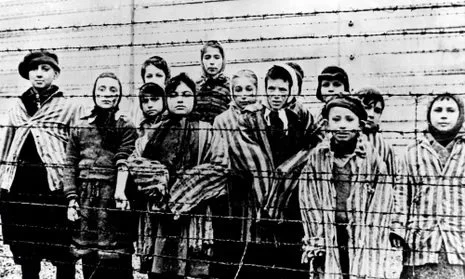
Echoes of concentration camps and inhumane torture from the Hereo genoocide can be seen within the later adaptions of Jewish extermination. However, distinctions must be made between the two through the sheer difference in brutality. The GSWA genocide can be characterised by widespread death caused by violence and starvation. The Germans employed systems of concentration and death camps which Baer describes as “prototypes for Auschwitz”. Further the indigenous peoples suffered inhumane acts of rape, intentional starvation and murder which charaterised the death of approxiamtely 80% of the Herero people and a further 50% of the Nama people. The Holocaust saw the carrying of these methods, however, it was taken to a whole new level of extreme. The Jewish quality of life was “abysmal” (p71 armenia). The Holocasut was “radically violent”, seeing Jewish people driven out of their homes, confined to ghettos, or expelled into concentration camps, receiving “murderous brutality” (p71 armenia). The establishment of the Concentration System at its peak consisted of well over 10,000 camps supported by railway, junction points, shipment points, industrial murder. The preemptive murder of Soviet Jews, soldeirs and Slav civilians in the expansion of the East demonstrates high numbers of deaths were amassed not only in concentration camps but “deranged shooting sprees”. It is evident that methods of extermination in GWSA showed itself again in the Holocaust, however the argument of finding “colonial roots” (moses ardent reading) in this is difficult to accept due to the sheer indifference in brutality.
Further, German thinking on the Jewish question fluctuates dramatically as the war escalates. As suggested by Moses, the goal of extermination “only became priority” (325) as the fear of internal security threats grew, serving as a critique for its colonial “continuity”. The Holocaust hgighlights how war may change genocide and exacerbate terror, establishing itself as a genocide not inherently connected with colonial intent. The atrocities to exterminate the Jewish threat became a process that changed dramtically to promote forced migration, to killing squads, to then extermination camps seeing inhumane and ruthless murders of peoples. With the pressures of external wars being fought, these genocides were heavily conditioned by and adapted according to wartime necessities. The justification to commit violent atrocities became more apprarent (p82). War gave justifications and orders to commit atrocitioties, turning soldiers “curel and without feelings” (p82), while moulding states to foster their fears of security threats and encourage dehumanised attacks.
While the Armenian genocide may not be one of colonial intent, it can reveal how the Holocaust equally has connections to genocides which weren’t driven by colonial interest. This is reinforcing Moses, ideas that the Nazi’s did not seek out a colonial rule. The genocide in Armenia, spotlighted the absence of international reprimand to these genocides, providing Hitler will an assumption that the world would not intervene nor hold perpetrators accountable. Hitler explicitly states himself, “Who, after all, speaks today of the annihilation of the Armenians?", drawing connections in how international unwillingness of past genocides, emboldened the brutality of the Holocaust to play out. States did not step in to prevent these atrocities from occuring, and the absense of international response allowed Turkish efforts to eradicate the historical memory of the Armenian people’s and the Nazis to exterminate over 6 million Jews. The West did “appallingly little” (aremni p198) to oppose either cases genocide. The atrocities in Anatolia were “plastered on the front pages” to the world, yet little was done to condemn (p198). Thus showing the global complicity in earlier years towards the Young Turks, provided precedent and formal justification to cover the Holocaust (naimark p84). The lack of global condemnation to the Holocaust was demonstrated as Jewish emigration to other countries grew, countries became unwilling to provide safe haven, as they introduced quotas on emigration numbers. Jewish refugees were seen as a “problem” (p68), revealing an international unwillingness to accept the expansion of an ethno-national state. Thus, Naimark’s connections of genocides that did not have colonial itnentions are equally valid if connections are trying to be made.
As pointed out by Moses, there have been many attempts by historians to turn the motivations of the Holocaust into one of colonialism. However, this is an argument that undermines the sheer brutality of the Holocaust. While the connections within racial ideolgogies and methodologies can be made, it is important that the Holocaust is not simply attributed to a linear progression from colonial genocides. Nazi ideology had uniquely cultivated a fear of the Aryan race being colonised by Jewish people. This fear of evil is what drove an extreme death toll, thus revealing the connections between the Holocaust and colonial genocides can not be deemed as ones of direct causality.