Life in Mae La Refugee Camp.
Suicides, teenage pregnancies and hunger are rising in Thailand’s refugee camps along the Myanmar border as foreign aid cuts begin to bite.
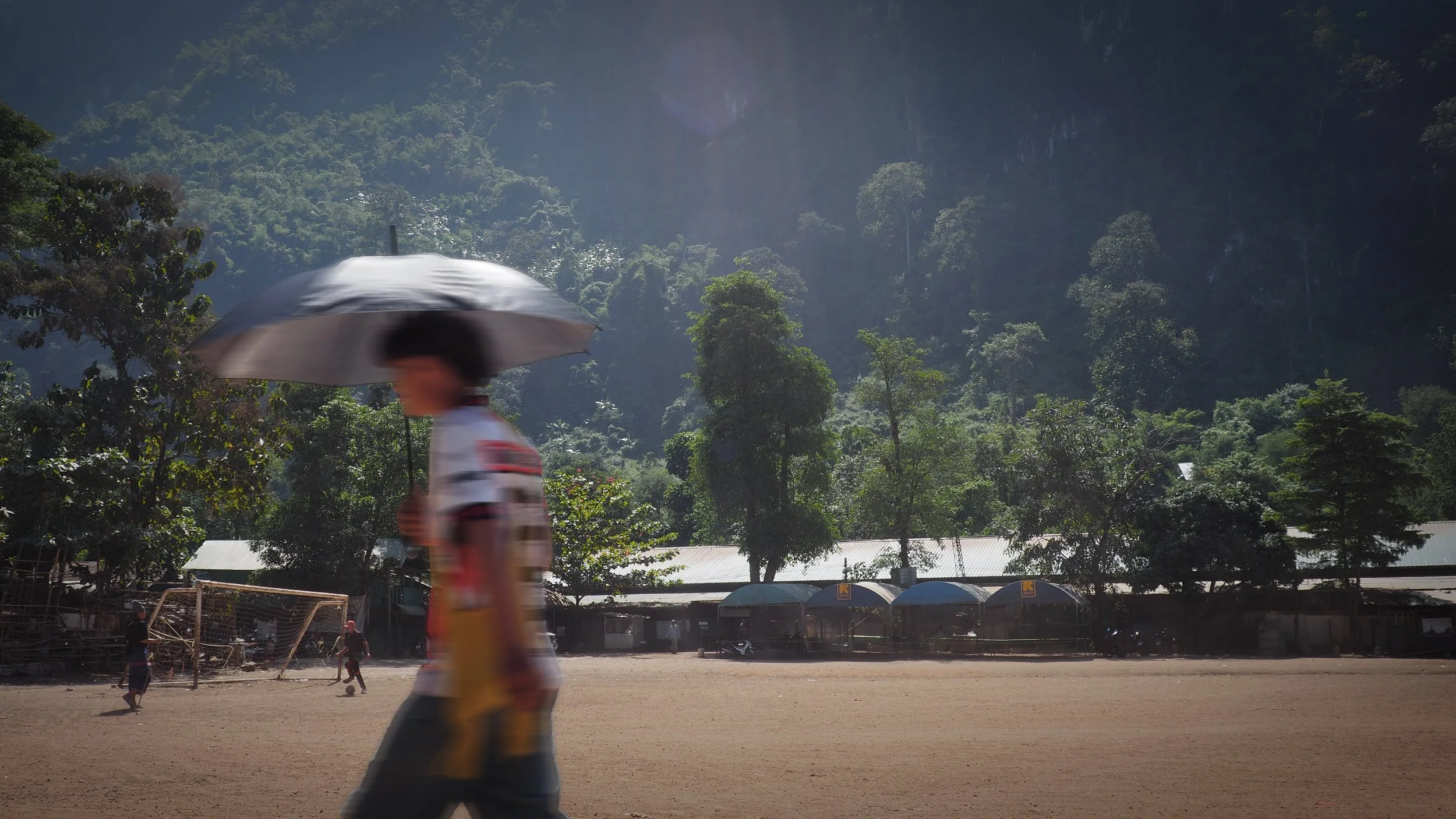
Just sixty-six kilometres north of Mae Sot lies Mae La refugee camp, where the consequences of those cuts are already being felt.
Mae La is the largest of nine refugee camps strung along the Thai–Myanmar border. It spans 180 hectares — about a quarter the size of the coastal town of Thirroul, or roughly the size of Sydney’s inner-city suburb of Redfern. But while Thirroul holds around 6,500 people and Redfern roughly 14,000, Mae La is home to as many as 45,000 refugees. After being granted strict access to conduct interviews and deliver aid with the organisation I worked for, we made the one-hour drive north from Mae Sot. The journey itself felt like a passage into another world. The potholed road was thick with motorbikes, utes and cars packed with people or goods headed toward unknown destinations. Every fifteen minutes or so, we slowed to zigzag through the red-and-white barriers of Thai army checkpoints. My colleagues — Thai and Burmese aid workers — warned me to say little, hide my notebook and camera, and keep my passport ready. “Documentation, please. What are you doing here? Where do you live? Why are you in Mae Sot?” a young Thai soldier asked as he peered through the car window. He looked no older than twenty-one. After some polite small talk, he waved us through.
For many people living along the border, these checkpoints are a routine part of life. Thai authorities maintain a constant effort to catch undocumented migrants crossing the frontier — people who may be detained, extorted, or pushed back across the border into an active war zone.
A town built from exile
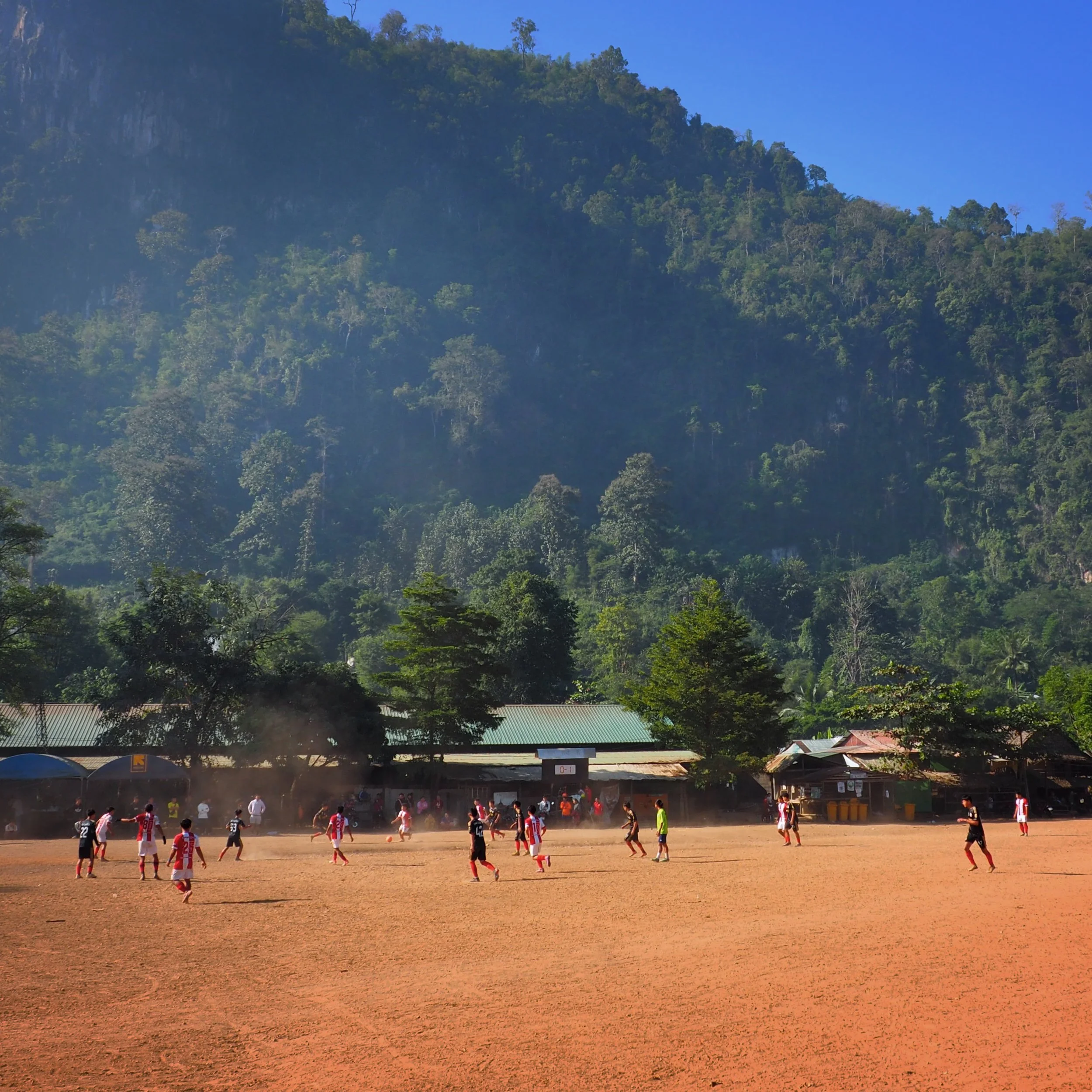
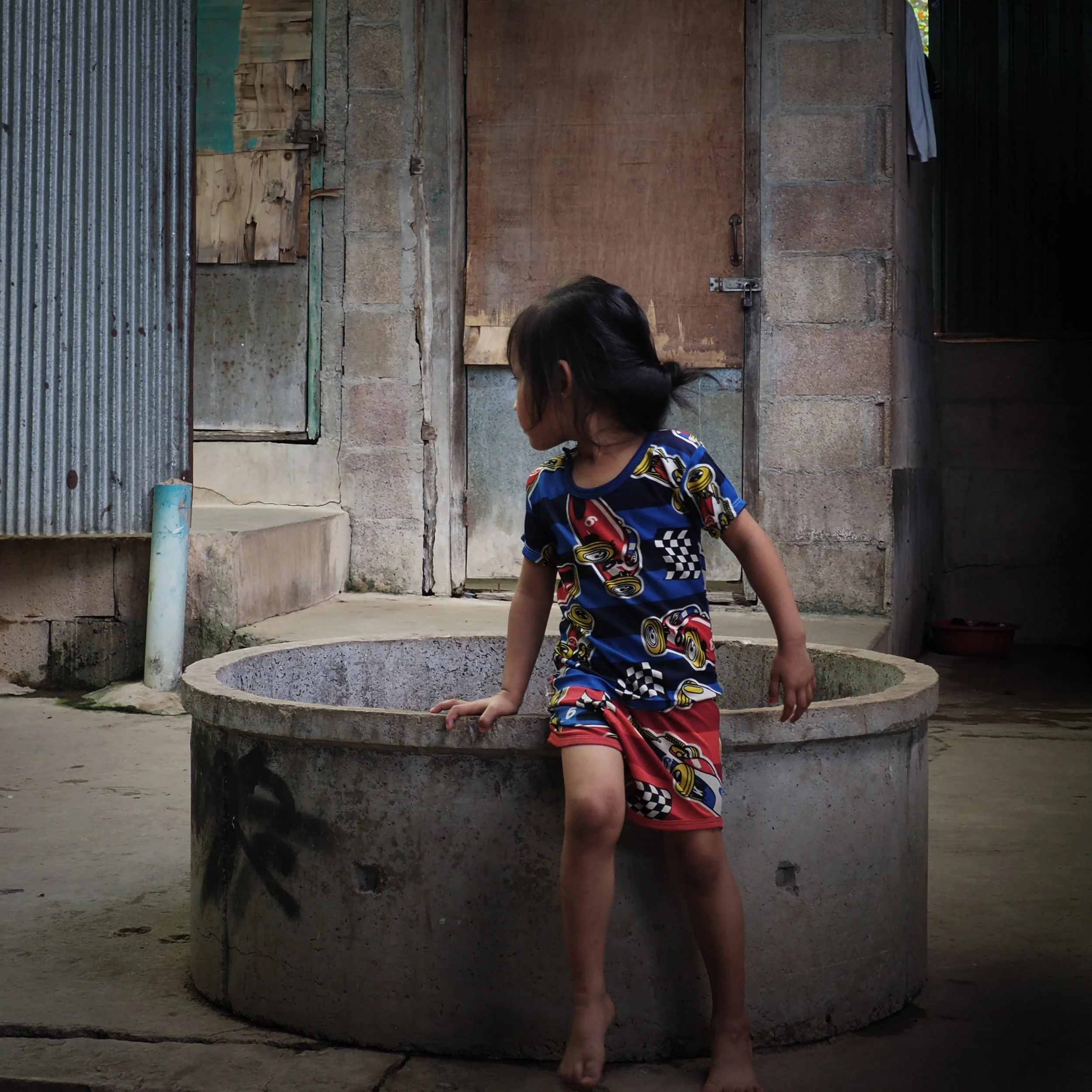
When I arrived at Mae La, a football match was in progress. The field was a patch of orange dirt and rocks, with clouds of dust kicked up by every tackle and turn. The lines on the field were barely visible—more grooves in the earth than painted lines. Monks, families, and children gathered along the edges, cheering. Above the game, the Dawna Ranges loomed silently, rising steeply just beyond the Myanmar border. Mae La feels more like a small town that has developed its own life than just a camp. After forty-two years, it is deeply rooted, with shops, mosques, churches, schools, and even hair salons lining the narrow dirt paths. Children run freely through the lanes, and motorbikes weave between bamboo homes. However, beneath this fragile normalcy, life is strict. Refugees are not allowed to leave the camp to work, hunt, fish, forage, or travel to Mae Sot without official permission, which can take days to obtain. Leaving without a pass risks arrest or deportation. Many residents have spent their entire lives within these confines. My colleague Kar Fu, a 20-year-old Karen aid worker born in nearby Umpiem refugee camp, said, “Everything I know about life was inside the camp. My mother was born there too.”
A life of ration cards
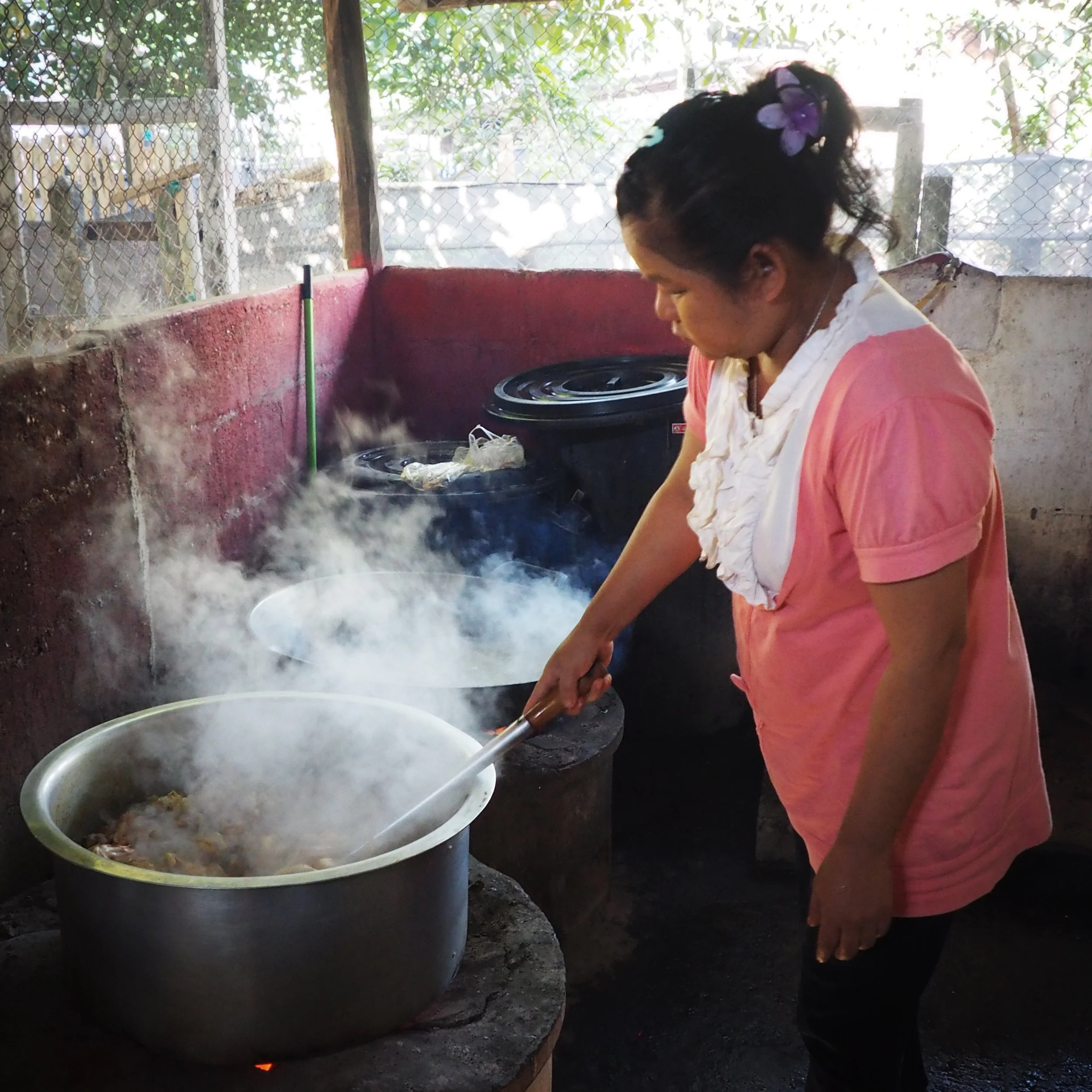
The economic reality of life inside Mae La revolves around aid. In a concrete cooking area near the centre of the camp, women gathered around a massive pot balanced above a coal stove, ladling food into bowls for waiting families. Meals are simple and scarce. Most people eat once or twice a day. Pah Khet, a 50-year-old refugee who has lived in Mae La for nearly twenty years, told me meat is a rare luxury. “Most of the time we only eat rice and vegetables,” he said. To survive, he weaves bamboo mats and baskets, which he sells inside the camp. “Sometimes I can earn a little money,” he said. “But not much.” Now, even the basic food supply many rely on is under threat. “Before, the International Rescue Committee would provide us with food rations,” said a 30-year-old Karen woman who is expecting her first child. “But we’ve been told they will stop at the beginning of 2026. I don’t know what we will do.” Another expectant mother told me she was “really stressed” about the cuts. Her husband works in factories, and relatives in Bangkok send money when they can. “But it won’t be enough to cover our basic living needs,” she said. “Especially with a baby on the way, or for healthcare.” Aid workers say nearly every family in the camp has voiced the same fear. Most households include three to seven people — often more — and few have any stable income.
Hopelessness inside the wire
Beyond hunger, aid workers say something harder to measure is rising inside the camps: despair. During the drive north, my Karen friend Naw Pae* — who grew up in Mae La but now lives in Mae Sot — told me suicides have become more common. “People are sadder than before,” she said quietly. “They feel abandoned.” Many refugees feel trapped between two worlds: unable to return to Myanmar because of war, but unable to move freely or build a future in Thailand. “They cannot see things getting better,” Naw Pae said. “They cannot see a way out.” The situation has worsened as foreign aid shrinks and international resettlement pathways narrow. For many refugees, those programs were once the only visible escape.
May’s future
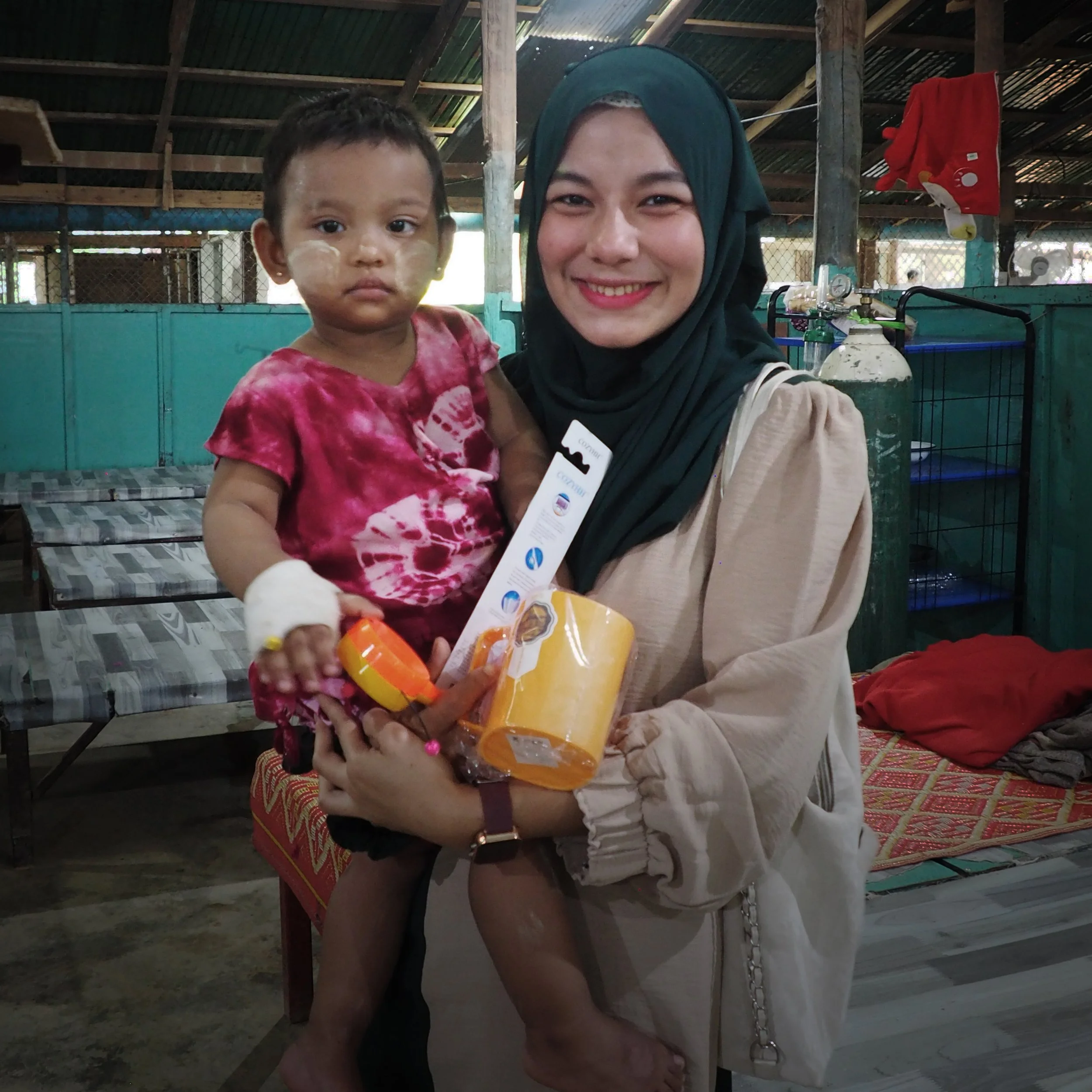
Inside the camp hospital — a dim building where electricity and lighting are scarce — I met May. She had just turned sixteen. Despite everything she had endured, she greeted me with a shy smile that never seemed to fade. “I stopped school when I was young,” May told me softly. “My parents could not afford it.” Education is limited within the camp, but many families cannot afford the associated costs. May left school in grade three. She is now pregnant with her first child. May spoke openly about her nerves. Raising a child inside the camp worries her — everything costs money, even basic necessities. But she also spoke about hope. “I have never left the camp,” she said, smiling shyly. “I want my baby to grow up educated. Maybe my baby will leave.” Her family plans to apply for asylum with the United Nations, hoping one day to reach countries such as Australia or the United States. But refugee visas are increasingly difficult to obtain. For now, Mae La is the only world she knows. She was born here, just as her parents were. Her child will likely be born here, too.
A camp that was never meant to last
The Mae La refugee camp has now existed for more than four decades. Entire generations have been born, raised and grown old behind its boundaries. Medical checkups inside the camp hospital are free, staff told me, but larger procedures and surgeries often require payment that many families cannot afford. For outsiders, visits to camps like Mae La are often described as “fact-finding missions.” But understanding life as a refugee cannot be captured in a few days on the ground. The camps may appear orderly compared with some rural villages across the border, but what visitors rarely see are the invisible restrictions that shape daily life — the inability to leave, to work, to build an independent future. The humanitarian aid system that sustains these camps has grown into a global industry worth billions of dollars each year. Yet when funding dries up, as it is beginning to now, there is often little beneath it to support those left behind. The result is a fragile existence built almost entirely on external assistance. And when that assistance disappears, so too does the thin line between survival and desperation.
The mountains are still watching
When I left Mae La, the football match was still underway. Dust still rose from the field. Children still cheered. And the Dawna mountains still towered silently above the camp. The mountains have watched over Mae La for forty-two years. The war across the border continues. And for most of the world, life inside this camp remains largely unseen.
*Names have been changed
Story and Photos Evie Jones.