One Arm, Still Fighting: A Former Rebel Finds Purpose in Mae Sot.
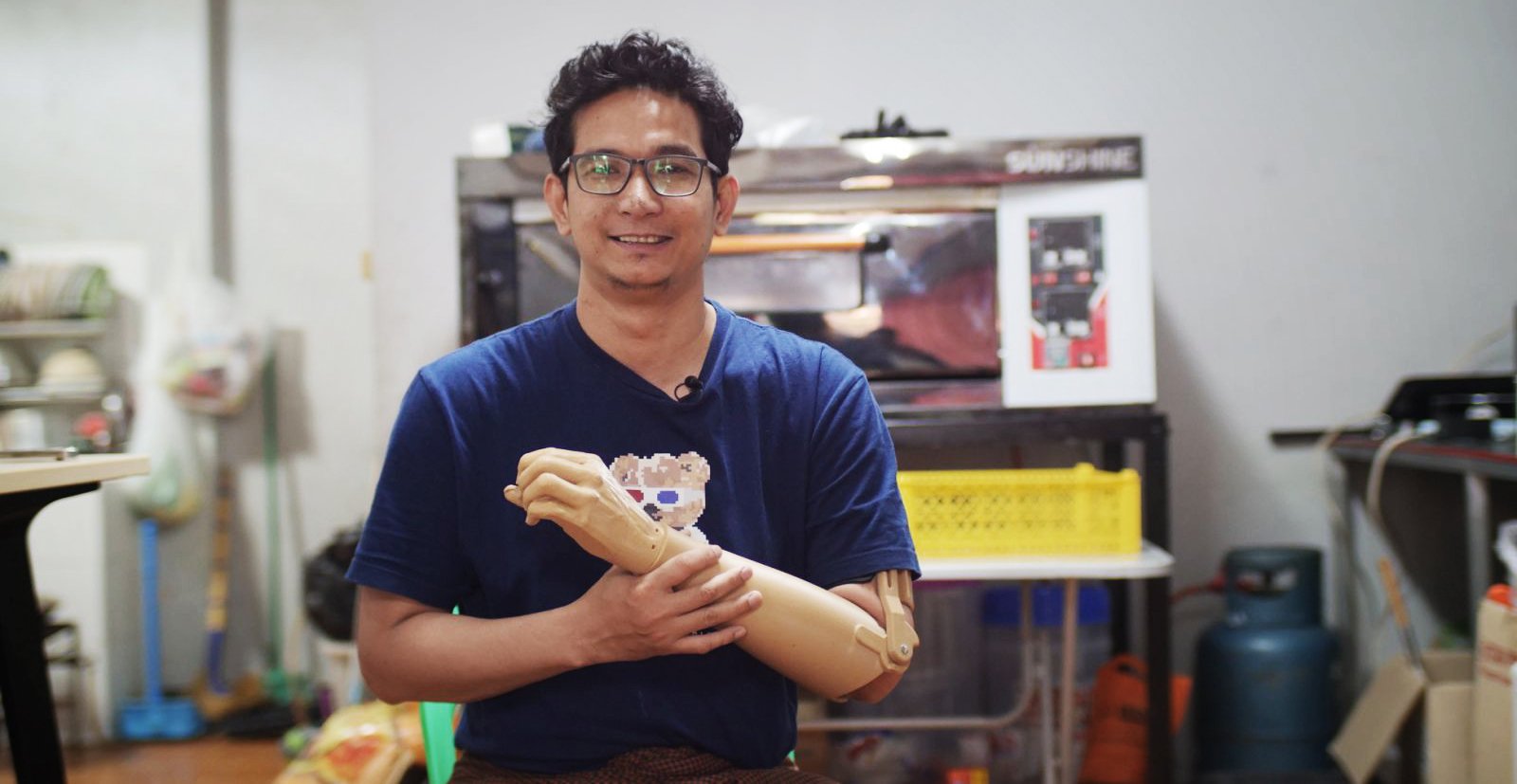
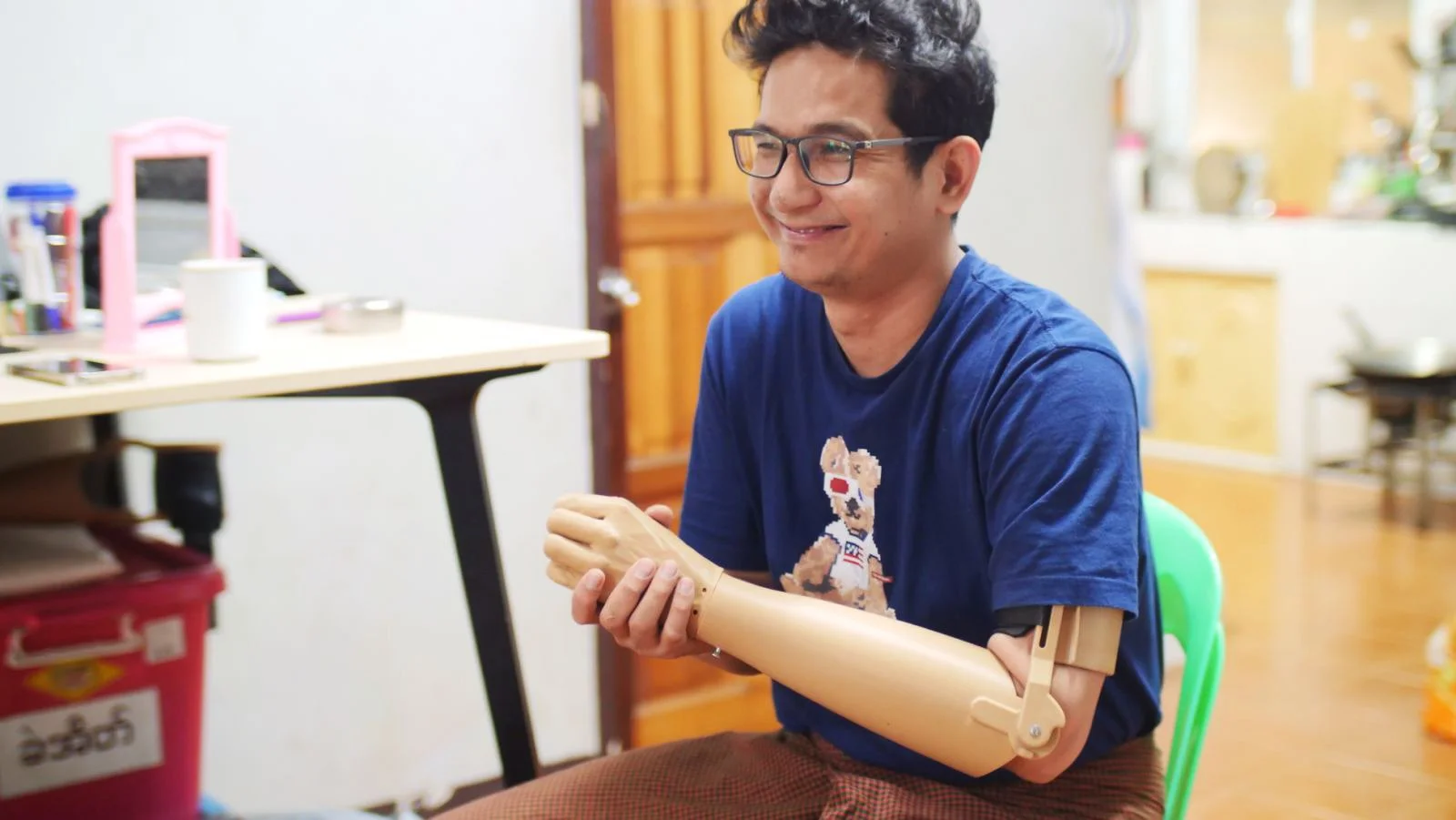
Bar Bu lights a cigarette with his right hand, steadying the lighter against a prosthetic arm. “It is getting out of hand,” he says.
Just days earlier, two young Burmese men shot and killed Thai police officers in Mae Sot, the border town where thousands fleeing Myanmar’s war have tried to rebuild their lives.
Bar Bu shakes his head. “They shouldn’t be doing these wrong things just to survive,” he says. “But the young people are desperate. Some former soldiers have nothing here — no papers, no work, no support. Some will do anything just to survive.” Bar Bu understands that desperation better than most. Three years ago he was testing a grenade for Myanmar’s resistance forces when it detonated in his hand. The blast took his left arm.
From chef to revolutionary
Before the war, Bar Bu lived a very different life. Now 35, he once worked as a chef in Yangon. In his spare time, he taught himself to DJ, playing music at small venues around the city. Everything changed on February 1, 2021. Myanmar’s military seized power in a coup, overthrowing the elected government and triggering nationwide protests. Like millions of others, Bar Bu joined demonstrations against the junta. The military responded with violence, firing live ammunition into crowds of protesters. After watching friends bleed out beside him, Bar Bu made a decision. In April 2021, he left Yangon and travelled to Karen State, where he joined resistance fighters operating alongside the Karen National Liberation Army. The chef became a revolutionary.
Improvised warfare
Resistance forces across Myanmar are severely under-equipped. While the military has imported more than $1 billion worth of weapons — largely from Russia, China and Singapore, according to the United Nations — resistance groups often rely on improvised weaponry. Homemade drones, mortars, grenades and explosive devices have become common tools of the rebellion. Bar Bu became part of that effort. Working with fellow fighters, he helped test and develop improvised explosive devices that could be used against military targets.
The blast
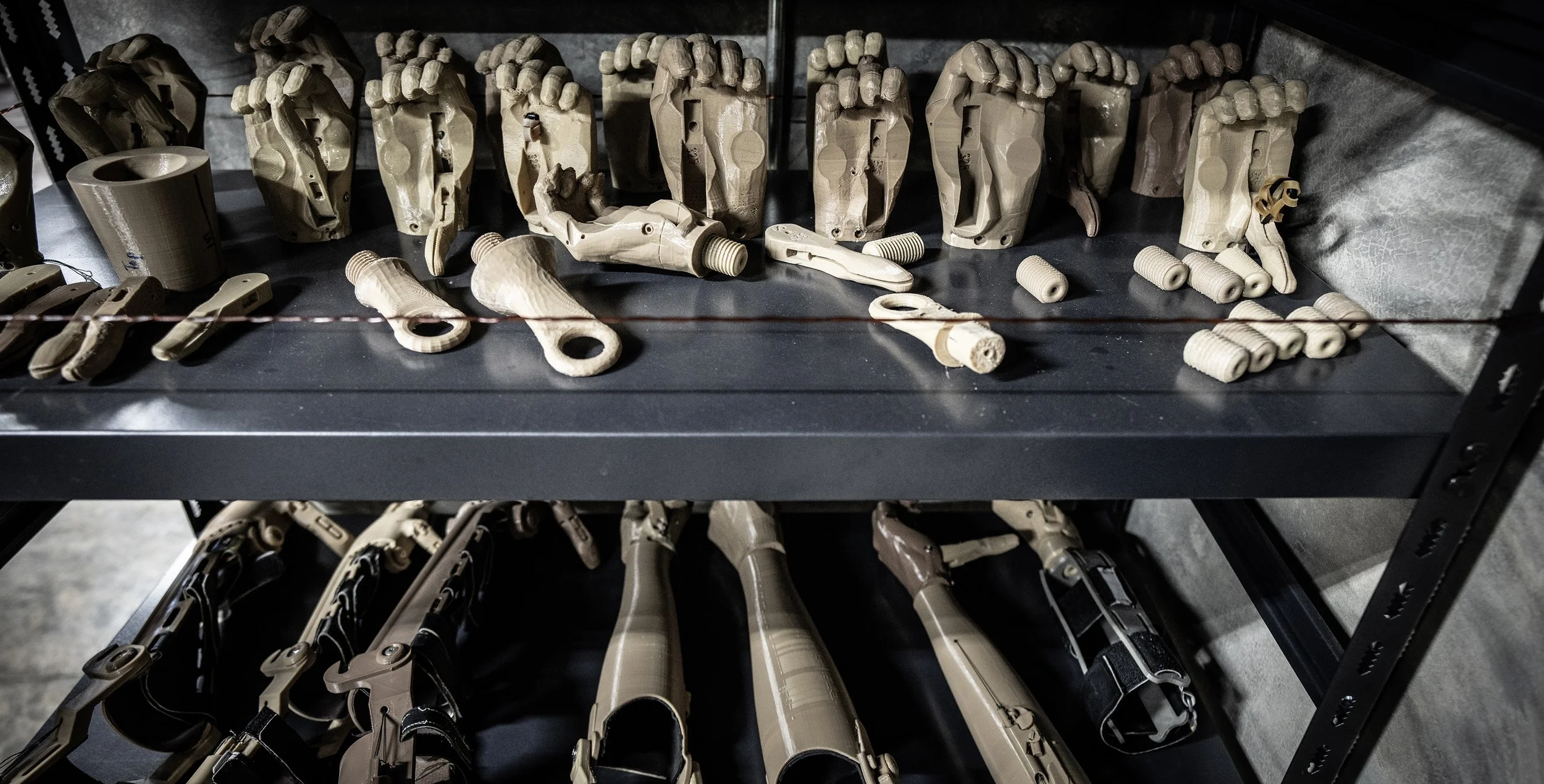
In April 2022, during one of those tests, a grenade prototype detonated in his hand. The explosion was immediate. “I looked down and saw my fingers were mangled,” Bar Bu recalls. “My left arm was completely destroyed.” A frontline medic performed an emergency amputation below the elbow. But the remote clinic lacked the facilities for proper recovery. Doctors urged him to seek treatment across the border in Thailand. By June 2022, Bar Bu had crossed into Mae Sot. There, he connected with the Burma Children Medical Fund, a non-government organisation that provides 3D-printed prosthetic limbs along the Thai–Myanmar border. Since then, he has received multiple prosthetic arms. Adjusting to life with the injury has been difficult. “To be honest, I still struggle to accept the loss of my left arm,” he says. “Sometimes I dream about having both arms and doing things like a normal person.” Still, the prosthetic has helped him regain independence. “It makes me feel like I still have my arm,” he says. “The capability is limited, but I’ve adapted.”
A bakery with a mission
Today, Bar Bu runs BB Bakery on a dusty road on the outskirts of Mae Sot. The small business produces Burmese desserts and baked goods, but its purpose extends far beyond selling food. “When I started the business, I wasn’t thinking only about myself,” he says. “I wanted to share it with others.” Six other former resistance fighters and frontline medics now work alongside him. All were injured during the war. Some lost limbs to landmines. Others were wounded by rocket-propelled grenades, sniper fire or bomb blasts. Many cannot safely return to Myanmar. Yet in Thailand, they live in a legal grey zone. Without proper documentation, they risk arrest or deportation. For them, the bakery provides both income and community. “We help each other,” Bar Bu says.
Feeding the frontlines
Bar Bu’s time fighting in Myanmar’s jungles taught him how critical food can be during conflict. “I’ve been there,” he says. “In the jungle, there is very little food.” Many civilians fleeing the fighting now live in internally displaced persons (IDP) camps scattered across Myanmar’s border regions. Because of the conflict, cooking and gathering food can be dangerous or impossible. “I wanted to keep supporting the revolution,” Bar Bu says. “By giving food, I knew I could help.” His bakery now produces high-calorie energy bars designed for resistance fighters and displaced civilians. Bar Bu has also developed what he calls the Lo Thone emergency kit — survival packs that include water filters, flashlights, medicines and other essentials for fighters operating in remote jungle terrain. “In the jungle, it’s very hard to find clean drinking water,” he says. “So I made sure the kit includes a filter.” The kits also include lighters, emergency blankets and homemade energy bars. “I tried to include the things people need most.”
Finding purpose again
Beyond producing supplies, Bar Bu has begun training injured resistance fighters in vocational cooking skills. The first group of trainees has already completed the program. Another group will begin soon. For many former fighters living undocumented in Mae Sot, the training offers a rare opportunity to rebuild their lives. For Bar Bu, it offers something else. “Helping injured soldiers gives us a sense of purpose,” he says. He pauses, glancing at the prosthetic attached to his arm. “Doing this helps me forget my own pain.” In helping others rebuild their lives, he says, he has begun rebuilding his own.
Story, Video and Photos Evie Jones.