Violating visas to deliver humanitarian aid.
Borders mean more to people than just lines scratched in the dirt by politicians and government officials. Borders can mark the point between justice and injustice, freedom of speech, disease, persecution, torture, hunger, poverty, imprisonment, and the break-up of family. Crossing a border may offer the hope of a better future for the poor; for the persecuted, the chance to escape oppression. But for those caught in the border crossfire, it means death and injury.
I imagined that illegally crossing a border would feel unmistakable. Wired fences, floodlights cutting through the dark, the tension of knowing you are somewhere you are not allowed to be. I imagined a kind of crossing that makes your heart race and your body shake. In many circumstances, it does look like that.
If I were alone, if I were not under the protection of my colleagues, the danger — which was always present — would have made itself far more visible. Instead, naively, the crossing felt quiet. Ordinary, even.
I am travelling from Mae Sot, Thailand, into Karen State, Burma, to visit an internally displaced persons (IDP) camp, to deliver aid and provide support. In doing so, I am violating my Thai visa and illegally entering another country. Leh Khaw, like all IDP camps, sits on the Burmese side; there are no international aid agencies or refugee programmes here.
The doctors of our organisation are taking me with them. These men work as what they call "backpack medics." They carry as many supplies as they physically can into deep jungle frontline clinics, providing whatever medical assistance is possible. Their involvement with pro-democracy movements and their work aiding civilians means their heads are wanted by the military junta. They go by pseudonyms — new identities for protection: Dr X, Dr Ray, Dr Blade, Dr Ultra, Dr Sound.
They tell me about their time in the jungle. On the frontlines, supplies and staff are so scarce that when a patient needs an amputation, the only option is to keep them conscious. There are no ventilators, no anaesthesia. Instead, patients are given an epidural to dull the pain slightly, and the best advice the medics can offer is to bite down on their hand. I cannot begin to imagine the pain of a leg being sawn off while fully awake.
They tell me how few medics there are, how they often work 36 hours straight. When they finally stop, the jungle becomes so cold it's almost impossible to sleep. To cope, they drink "army rum" — a rum specially made by the army — sculling it not for pleasure, but simply to warm their bodies and force themselves unconscious.
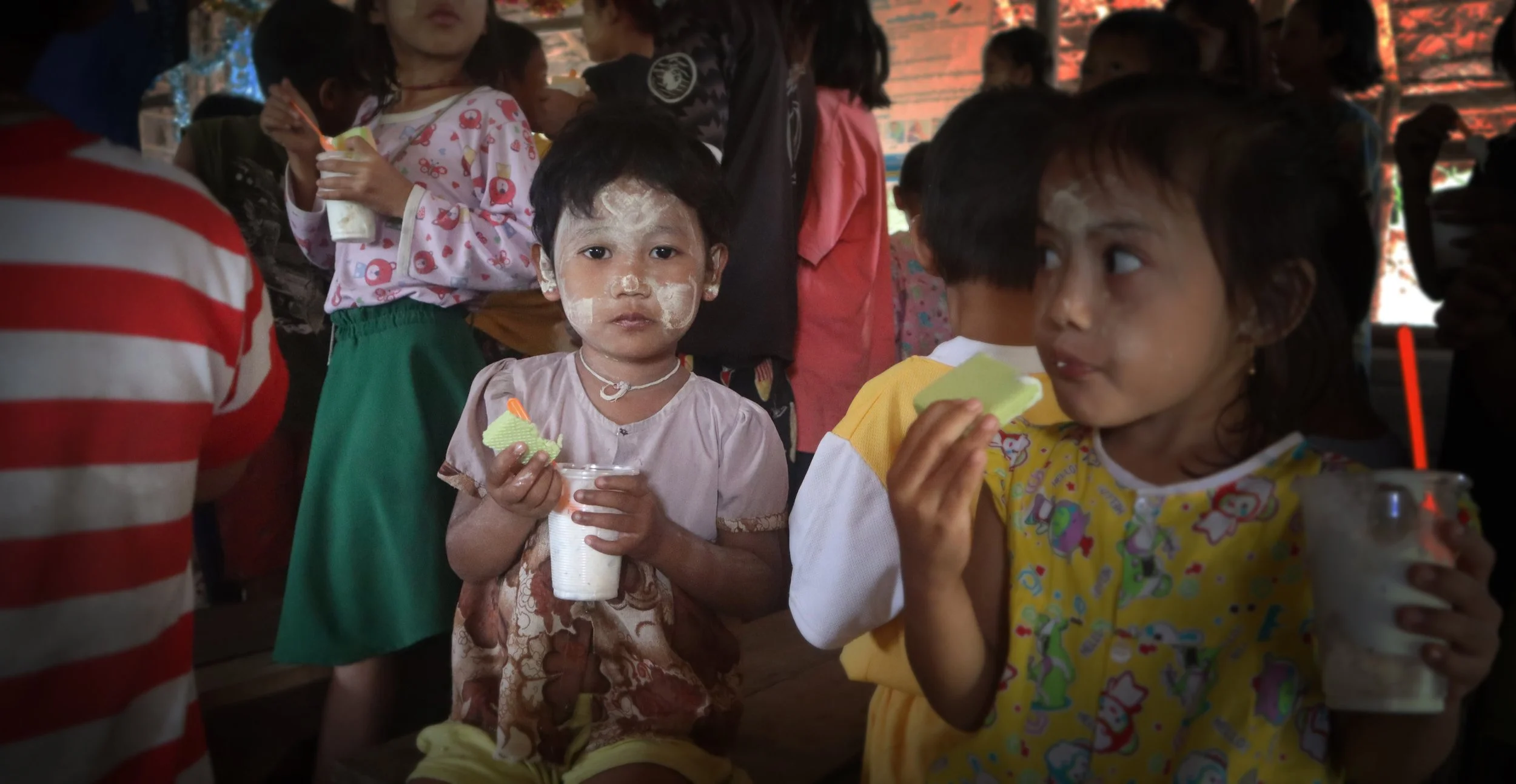
Leh Khaw IDP camp was once Dr Ultra's home. He lived here for several years, helped establish a medical clinic, and ran it before eventually crossing the border to continue his emergency support work.
We pile into an SUV with the supplies we are delivering. There is nothing over there — everything has to be brought in. No rice, no medicine, no guarantees there will be anything tomorrow or the day after. Ice cream sits on the floor, already beginning to soften in the Thai heat, and I wonder if it will survive the journey. The boys climb into the tray, while the rest of us squeeze inside. In the back seat sits a small Karen girl dressed in her traditional shirt and headband. She stares at us quietly, clutching a packet of chips and a doll. She is coming along for the ride.
We drive south of Mae Sot on loaded roads, navigating Thai traffic — where the only rule seems to be that there are no rules — with Burmese country music filling the car. We slow to zigzag through the red-and-white barriers at a Thai army checkpoint.
These checkpoints are routine, expected parts of life in Mae Sot. Interrogation and security become things you no longer blink at. But to an outside eye, the frustration is palpable: the intense scrutiny, the constant effort to catch undocumented migrants, extort them for money, then push them back across the border into an active war zone. These security zones also exist because of growing human trafficking. Kidnappings, organ farming, scam centres — none of this is new.
Eventually, we turn off the highway, moving closer to the Dawna Range and onto a dirt road that climbs through a dusty Thai-Karen village hugging the hillside, then cuts through bean and corn fields before stopping under the shade of a tree. The doctor in the front seat answers calls intermittently, updating those waiting on the other side about when we'll arrive.
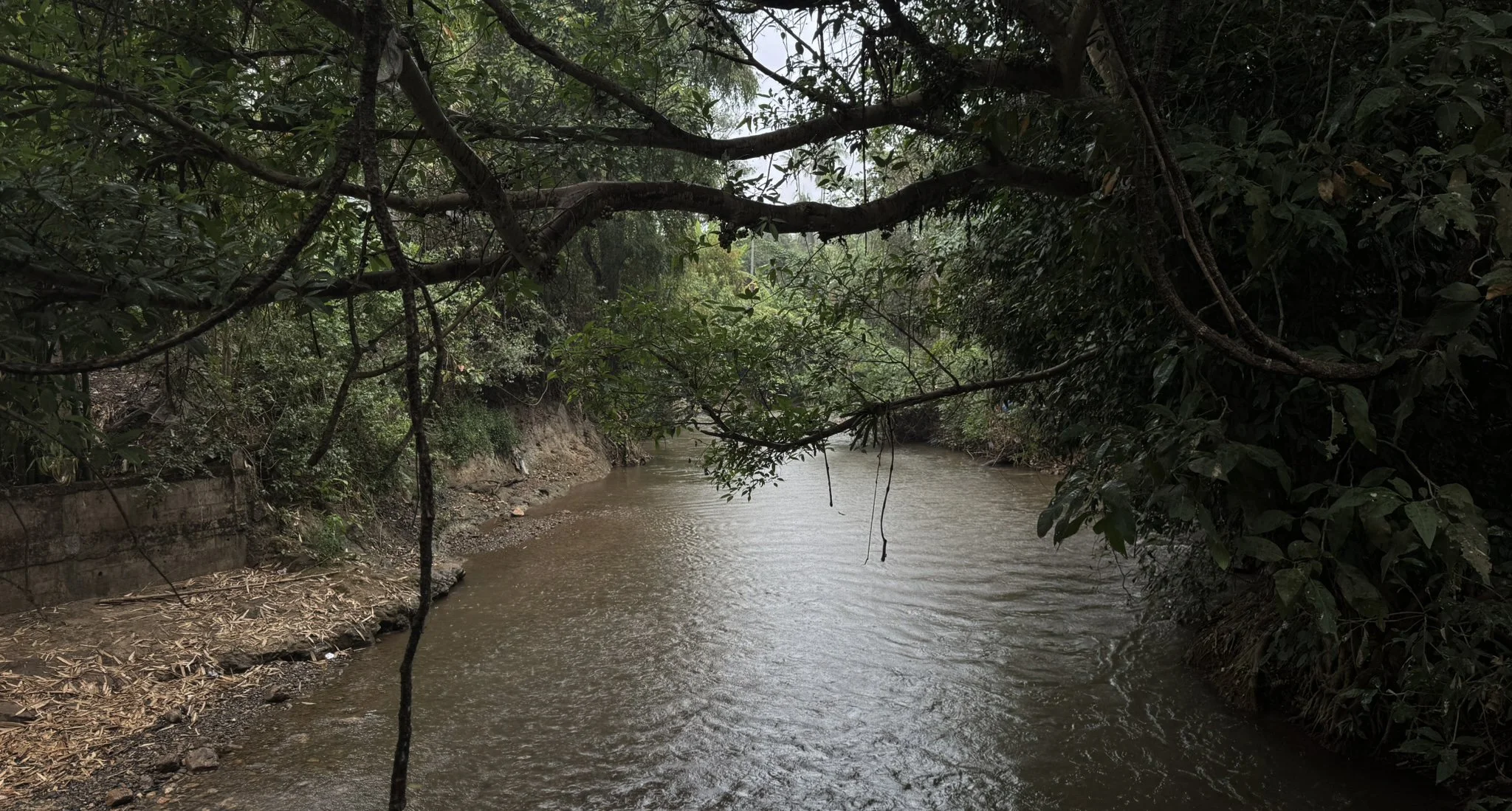
We unload the truck and take a path toward a bridge crossing the Moei River — one of the few rivers in the world that flows south to north. On the riverbanks, children swing from vines and splash in the water, something straight out of The Jungle Book. You wouldn't guess they're swimming in the dividing line between Thailand and Burma.
Waiting on the other side is a group of young boys on motorbikes, some wearing keffiyehs. A band of rebels. Few words are exchanged. The atmosphere is tense as they take our supplies and guide us toward the camp. Looking back at them, I understand the shortness in their manner. The Democratic Karen Buddhist Army (DKBA) are guarding the area. They are not our allies. Though they carry the Karen name, they are aligned with the junta — linked to scam centres, torture, and war crimes.
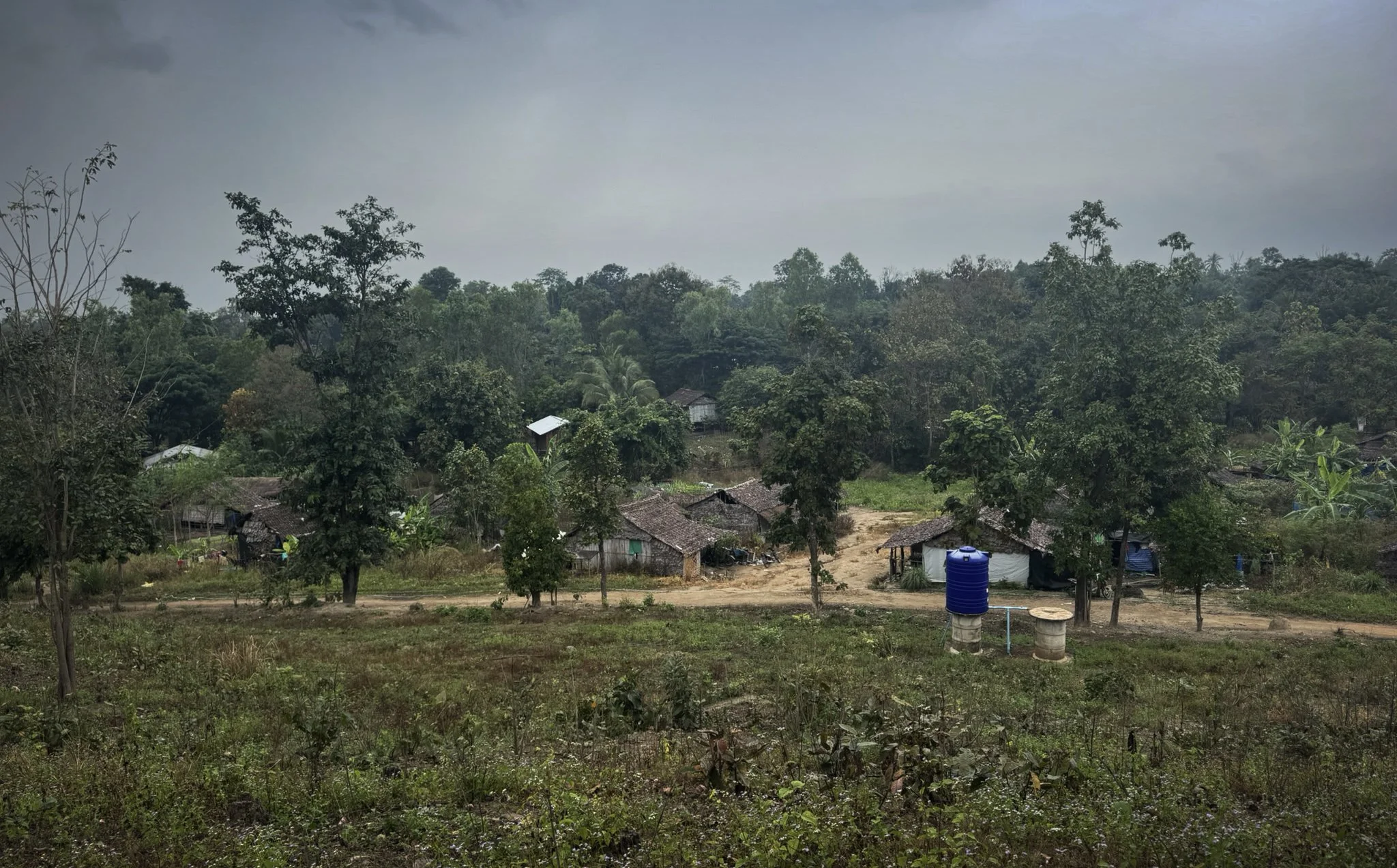
As we walk through the village, the tension sharpens. Soldiers swarm throughout the area. DKBA flags are painted on huts and structures lining the road. I feel watched. As the only young woman in the group, I hesitate to lift my gaze from the ground.
I keep a few metres behind the doctors. Burma takes the top position as the deadliest landmined country in the world. Even when people say they remember where mines were planted, that's no guarantee. During the wet season, mines shift. They are no longer where they once were.
As we edge closer to the camp, I look up to a flat field where two boys — maybe five years old — chase each other. One throws exaggerated punches, mimicking combat moves. I think of my own brother, once obsessed with toy guns and play fighting. But this feels different. This is not imitation learned from movies or video games. This is learned from reality. These boys grow up surrounded by armed men, explosions, and death. Watching them play like this breaks my heart, because for them, there is a real chance that one day it will stop being play.
I expect wire fencing, blockades — something to mark the entrance to the IDP camp. Instead, the doctors point to a small body of stagnant, rubbish-filled water. We jump across it. That's the boundary.
We arrive at the Laukaw Internally Displaced Persons Camp in Karen State, Myanmar. The camp was established after a Myanmar military attack on Lay Kay Kaw, a village originally created in 2015 for returning refugees and later a sanctuary after the 2021 coup. Over the years, it became a focal point of conflict between the junta and Karen-led resistance forces. At the time of writing, the junta has recaptured the area.
Around 350 people live here.
International law deems the bombing of IDP camps illegal — a clear violation of human rights. In reality, these camps have been bombed, and continue to be. The junta does not distinguish between civilian and combatant, legal or illegal. Humanity or evil.
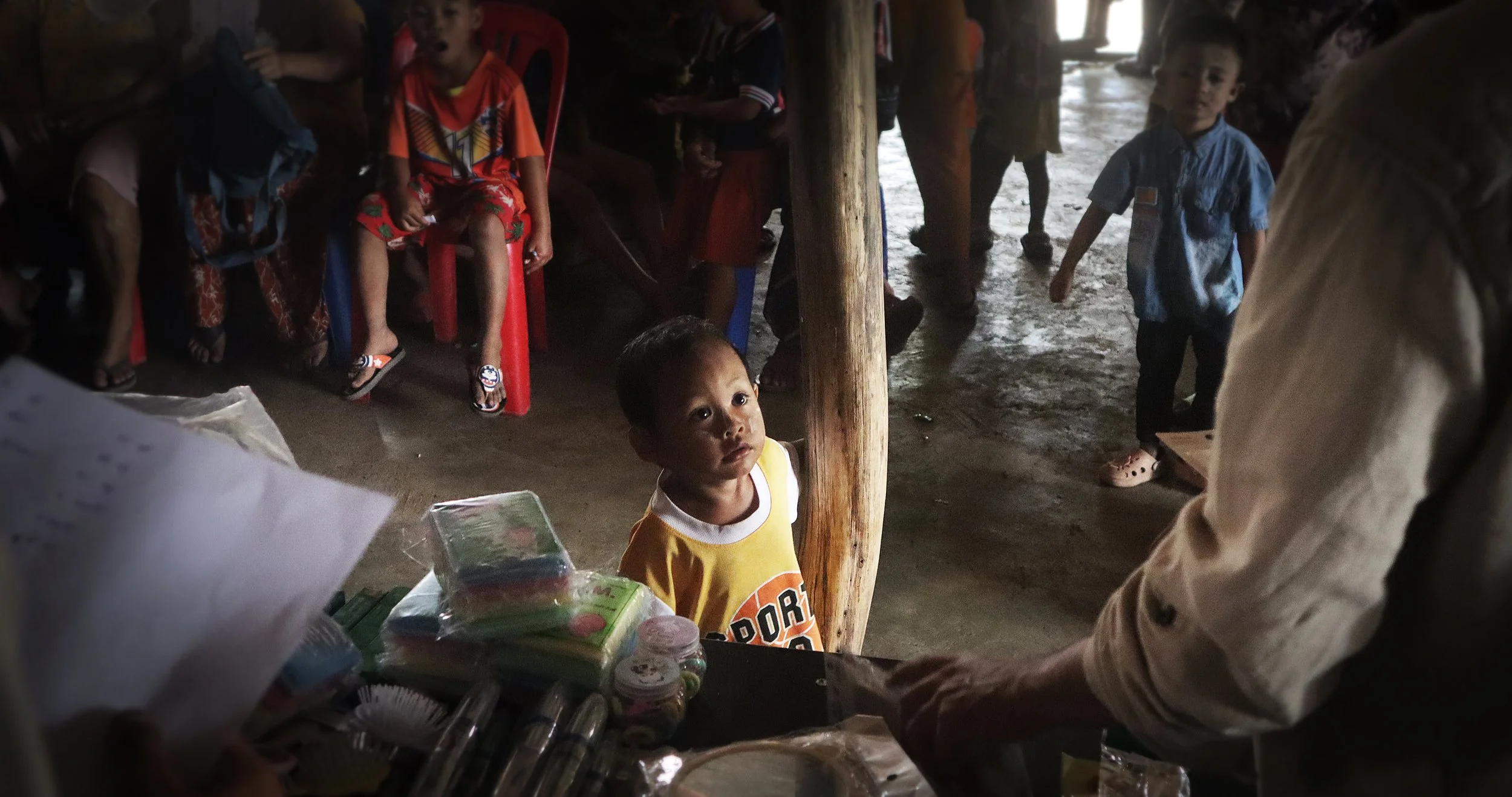
The camp is small, lined with bamboo huts. We are taken to the hut Dr Ultra once lived in. Clothes we've brought are dumped into piles, and the young rebels immediately begin sorting through them.
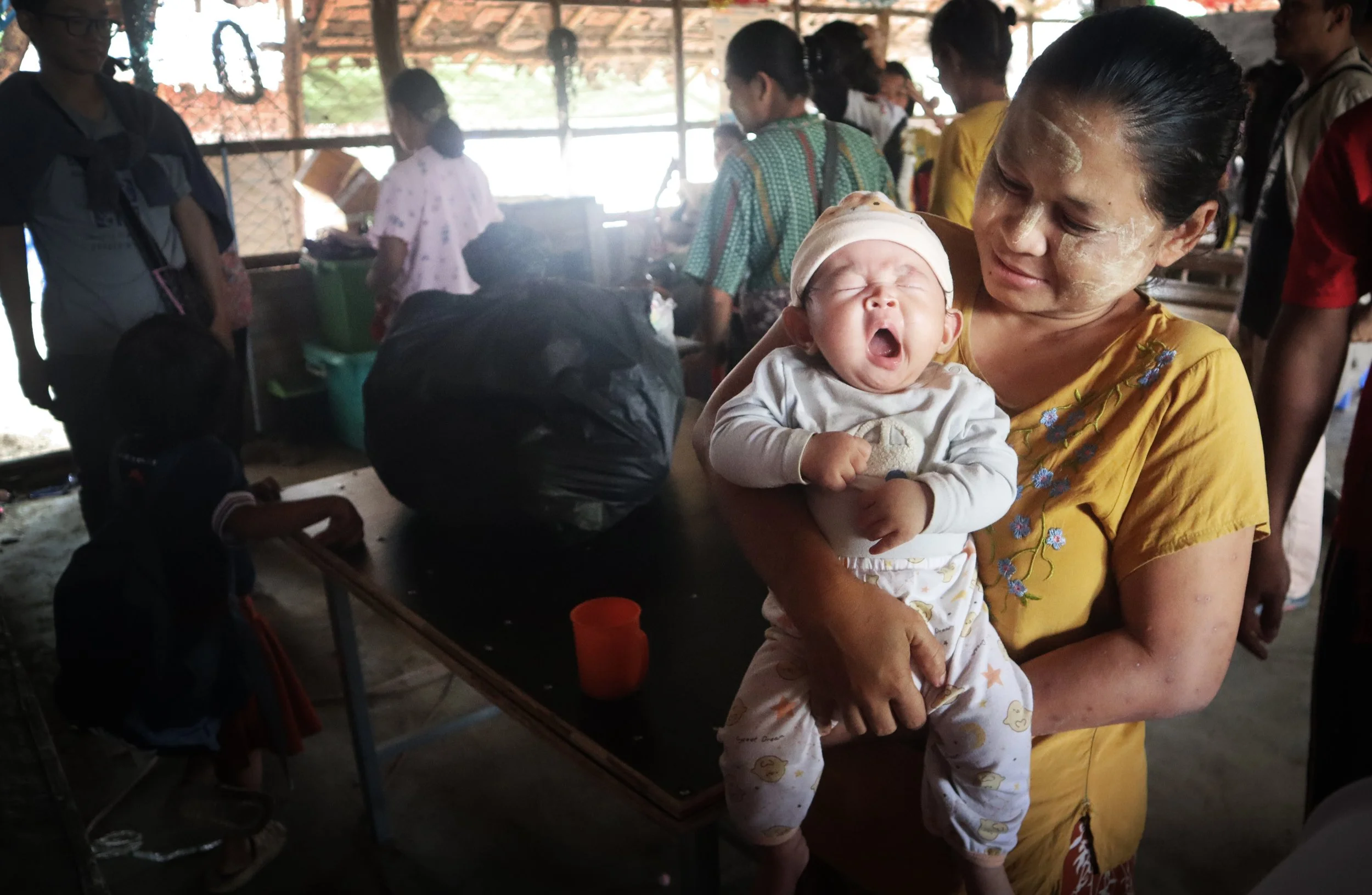
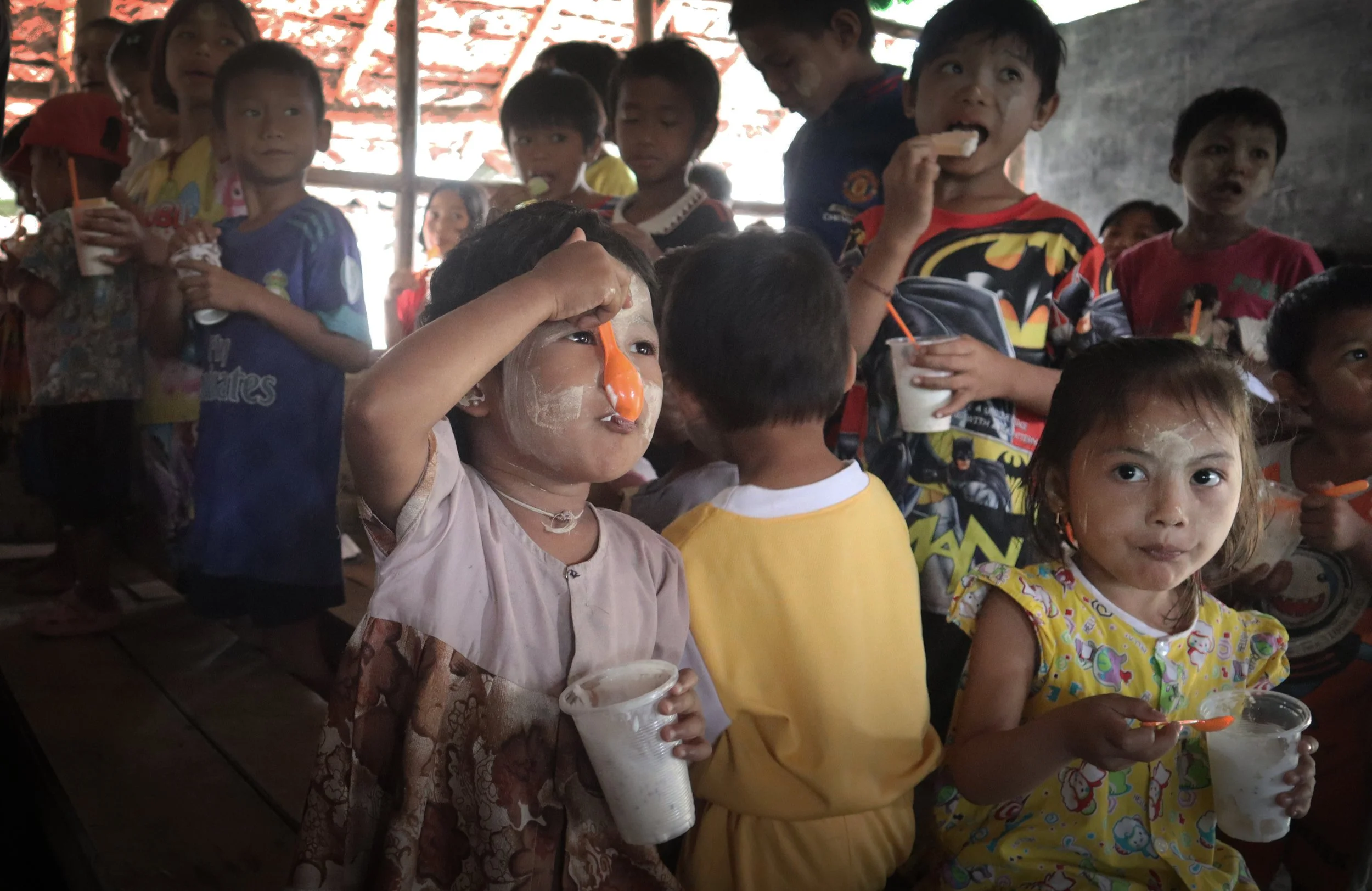
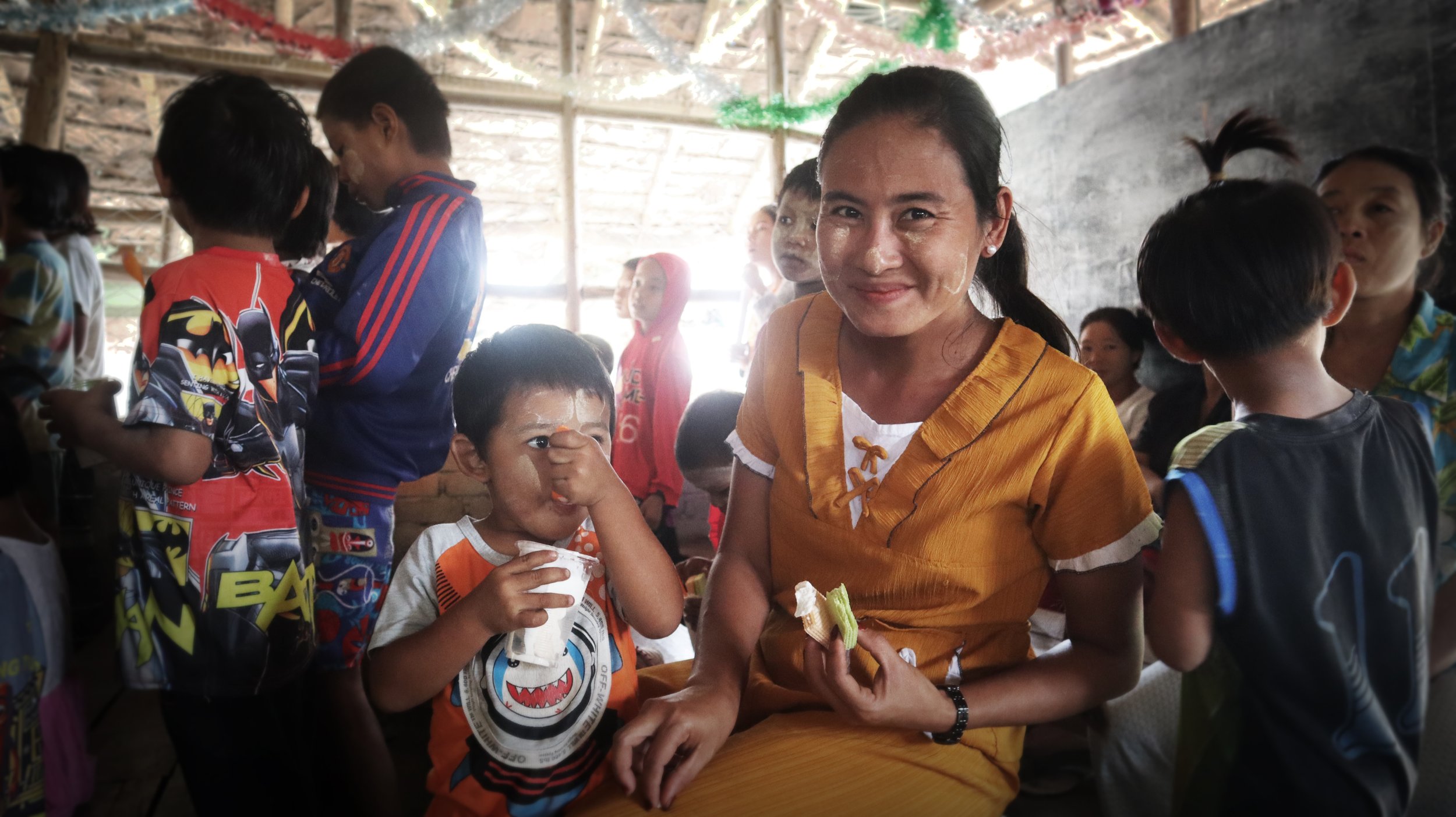
Next, we are guided into a larger makeshift hut — the camp's church and community space. There is a small raised stage and about eight pews. On one side, a loud, joyful group of children sing alongside camp leaders playing guitar and percussion. On the other side sit parents, grandparents, elders — watching proudly. The Christmas spirit fills the space.
The children sing Burmese Christmas carols, fidgeting and whispering, distracted, the way children everywhere are. The universality of it makes me smile. Not everything has been taken from them by war. It doesn't feel like a "camp" as imagined in the West — no harsh fencing, no silent despair.
We serve the ice cream. The kids love it. Faces smeared, sugar highs kicking in, chaos unfolding happily. As we prepare to serve the main meal, an elderly woman yells, "Give us food or I'm leaving." I laugh. There is something I appreciate in their ability to joke — even about the uncomfortable power imbalance we bring simply by being here. Sometimes it's hard not to feel like people are being observed through a cage.
What catches me off guard, stepping back and taking it all in, is how different this feels from Mae La camp — heavy with grief and recent suicides following the news of US aid cuts. This place, despite having far less international support, feels resilient. It forces me to confront the darker side of aid: how dependency can quietly take root through drip-fed funding rather than sustainable systems. Here, without that drip, something else has grown instead.
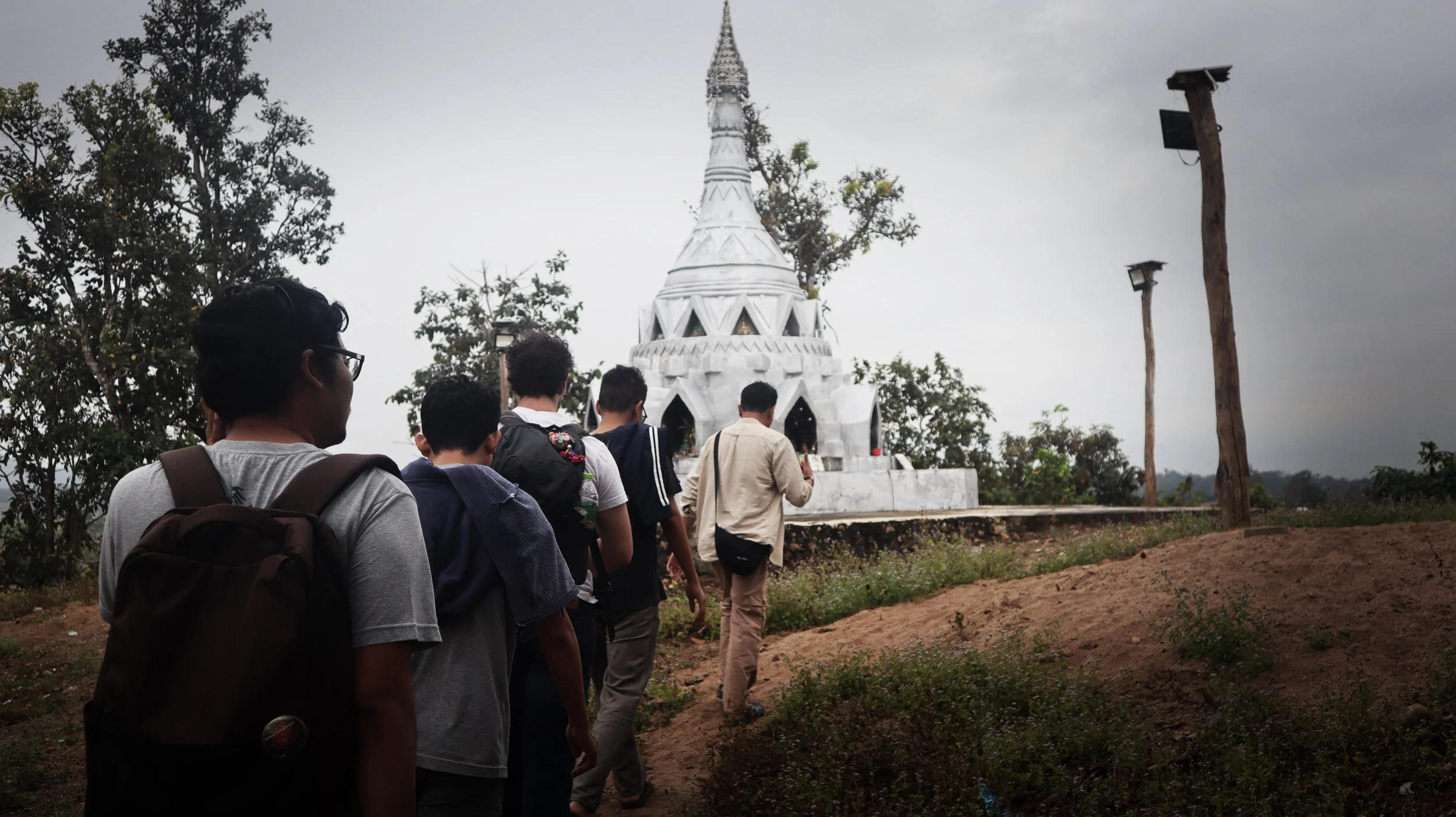
Before we leave, the doctors take me up a hill to a white pagoda overlooking Burma. To the right, Mandalay Division. To the left, Mon State. The view is breathtaking — rolling jungle and endless green. The sun begins to set, painting the land gold. Burma is called the Golden Land, and standing there, I understand why.
As the sun deepens into red, we hear mortars firing in the distance. The ground lets out a deep bellow as explosions tear through it. The beauty collapses back into reality.
We ride motorbikes back through the camp and toward the bridge. We cross the river. Just like that, we are back in Thailand.
It would be easy to feel underwhelmed by how simple it was to illegally enter a country at war. But that ease is the story. I could cross because others absorbed the risk for me. Because foreigners attract attention, and my presence made everything more dangerous — just not for me.
For me, illegally crossing a border was an experience. For the people on the other side of it, crossing that same border — or being unable to — is a life.
Story and Photos Evie Jones.